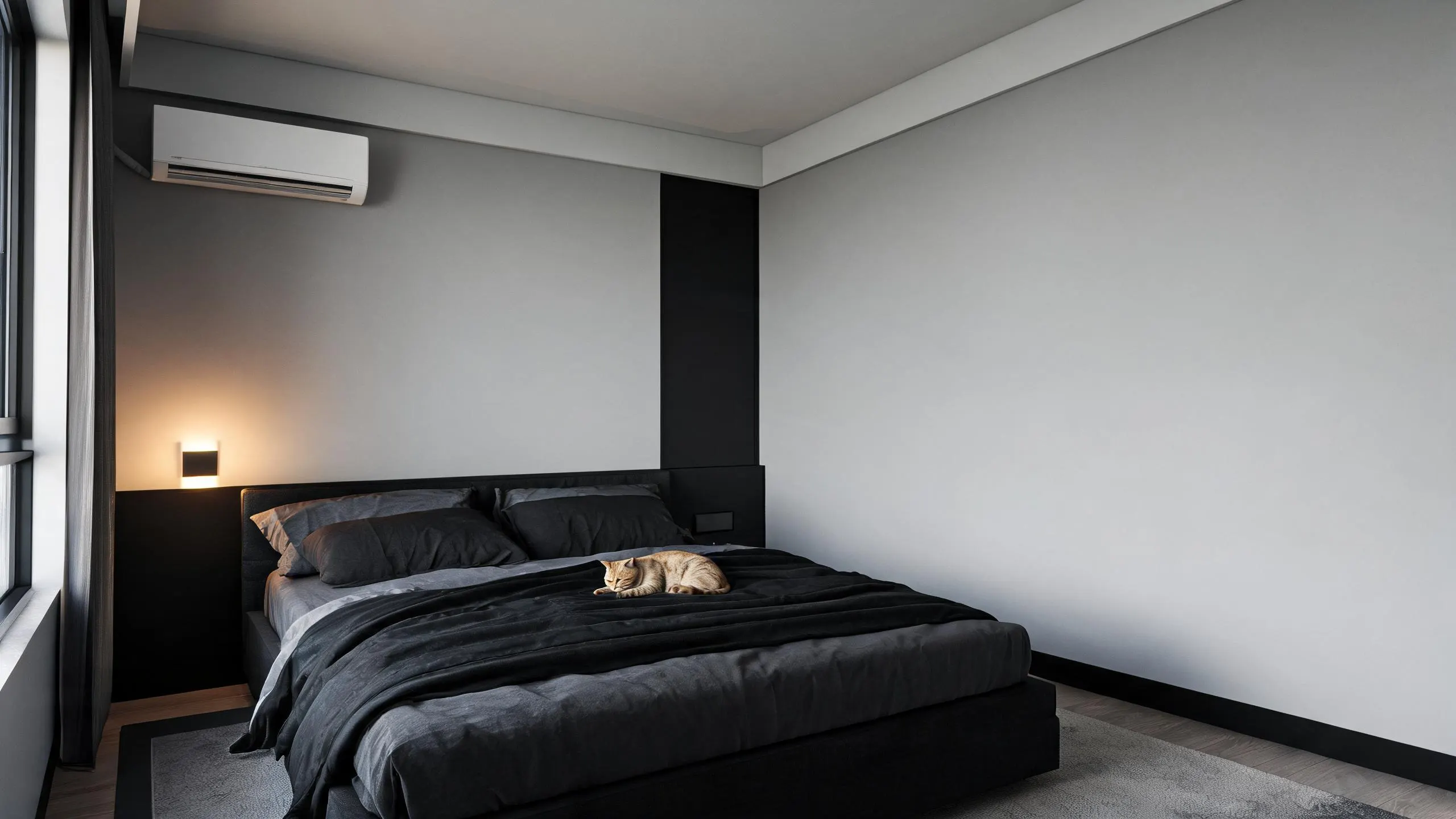
Mini Split Installation in Houston, TX
A new system here will heat from November through February and cool from April through October every year. Tell us about the house, and a licensed contractor who covers Harris County will get in touch.
Tell us about the job
It takes about a minute.

In Harris County, a mini-split works most months of the year
Cooling runs April through October here, seven months, with summer afternoons averaging 93°F. Heat is needed November through February, when winter nights average 45°F. A mini-split installed here spends most months doing one job or the other, so it needs to hold up to long summer duty and still perform on cold winter nights.
Any mini-split installed new has to meet 14.3 SEER2 for cooling and 7.5 HSPF2 for heating, the federal minimum for split-system heat pumps. Power matters too. A third of Texas households went at least 24 hours without power in 2024, and the area has seen 178 damaging wind events over the past ten years. A mini-split that comes back on its own once power returns is one less thing to deal with after a storm.
- 4 months
- November through February, your system heats
- 7 months
- April through October, it cools
- 45°F
- the average winter night it heats against
- 93°F
- the average summer afternoon it cools against
NOAA nClimDiv, 1991–2020 normals
Texas requires HVAC contractors to hold a state license.
The Texas Department of Licensing and Regulation tests HVAC contractors before it issues that license, and it keeps a record of who holds one. The license belongs to the contractor, not to any single job, so it tells you this person or company met the state's standard, not that this particular installation was checked as it happened.
For a mini-split installation, that check comes from the local building office instead. Most cities and counties in Texas require a permit for this kind of work and send an inspector out once it is done, and that inspection is what confirms the wiring, the mounting and the refrigerant lines were done right, separate from whatever the contractor's license already tells you.
Source: Texas Department of Licensing and Regulation
- Is a mini split worth it?
- For most Houston homes, yes. It runs as a heat pump, so the same unit handles your winter nights down near 45°F and your summer afternoons up around 93°F without switching systems. Houston needs heat or cooling 11 months of the year, so a unit that does both is earning its keep most of the year here. A contractor can look at the space it would serve and tell you what size unit makes sense.
- How many rooms can a mini split cover?
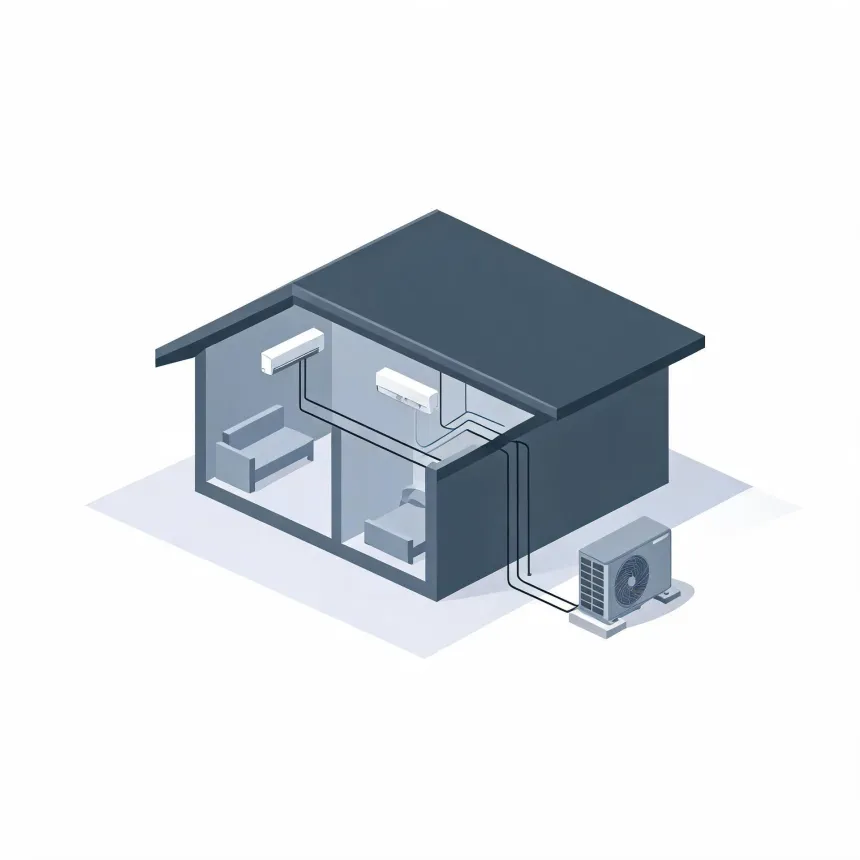
- A single outdoor unit can run more than one indoor head, so it can cover more than one room. Each indoor head heats and cools the room it's mounted in, and adding heads to a multi-zone setup lets the system reach further into a house. The tradeoff is that more heads on one outdoor unit means less capacity to spare for any single room, so a contractor sizes the system to how many rooms you actually need covered and how big each one is.
- Can a mini split heat a whole house?
- It can, if it's sized and placed for that. A multi-zone system with a head in every room heats the same way a central heat pump does, by moving heat instead of burning fuel for it, and it'll do that fine through Houston's winter nights in the mid-40s. What decides whether one system does the whole job is whether every room can get its own head or enough airflow from a nearby one. A contractor can walk the house and tell you whether one system covers it or whether you need it split into zones.