
Mini Split Installation in Sugar Land, TX
A new system here will heat from November through February and cool from April through October every year. Tell us about the house, and a licensed contractor who covers Fort Bend County will get in touch.
Tell us about the job
It takes about a minute.

In Sugar Land, a mini-split works most of the year
Cooling runs April through October here, seven months of summer afternoons near 93°F. Heating picks up the other four months, November through February, with winter nights averaging 46°F. That's eleven months where your mini-split is doing one job or the other, so it needs to hold up on both ends.
A new unit installed today has to meet 14.3 SEER2 for cooling and 7.5 HSPF2 for heating, the federal minimum for split-system heat pumps since January 2023. That's the baseline. Given how long the cooling season runs here, it's worth asking what a unit does above that minimum, since it will spend more months cooling than heating.
- 4 months
- November through February, your system heats
- 7 months
- April through October, it cools
- 46°F
- the average winter night it heats against
- 93°F
- the average summer afternoon it cools against
NOAA nClimDiv, 1991–2020 normals
Texas requires HVAC contractors to hold a state license.
The Texas Department of Licensing and Regulation tests and records the contractor, not the job itself. That means the person or company doing the work has passed the state's requirements, but the license does not follow the mini-split into your home to check the work when it is done.
That check comes from your local building office. Installing a mini-split in most Texas cities and counties needs a permit before the work starts and an inspection once it is finished, and that inspection is what confirms this particular installation was done right, separate from whatever the contractor's license already tells you about them.
Source: Texas Department of Licensing and Regulation
- Is a mini split worth it?
- For most homes here, yes, especially if you're heating or cooling a room your ductwork doesn't reach well. Sugar Land needs cooling from April through October and heat from November through February, so a system has to work most of the year, and a mini split handles both with one unit. It also skips duct losses entirely, since it delivers air directly into the room. Whether it makes sense for your whole house depends on your layout, and that's worth a contractor's eye.
- How many rooms can a mini split cover?
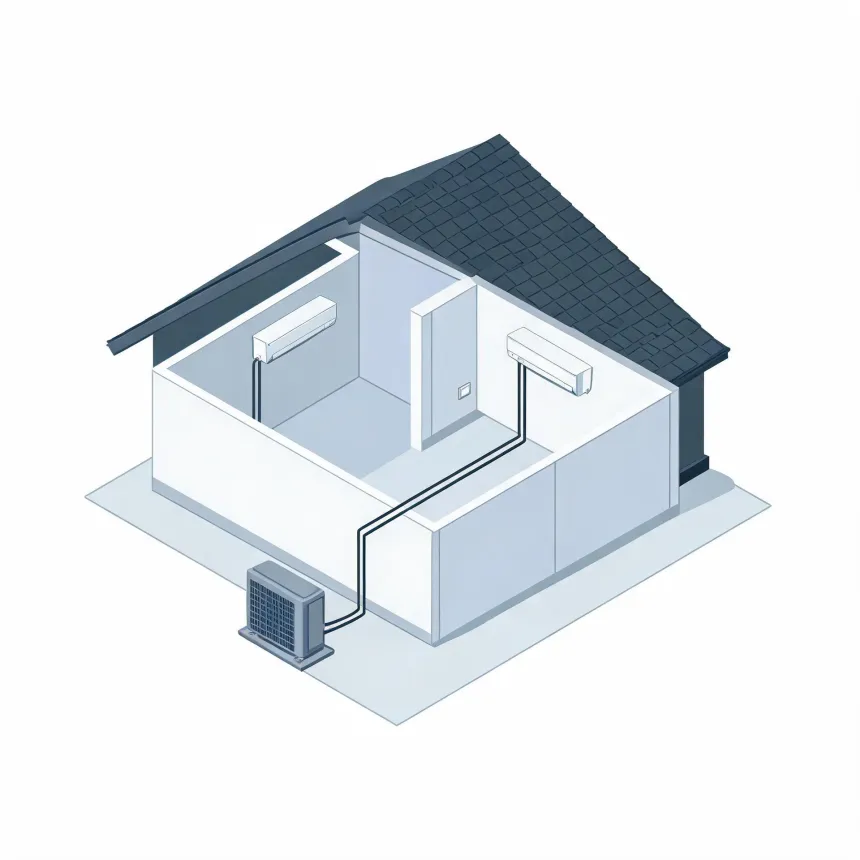
- A single outdoor unit can run several indoor heads, so one system can cover a few separate rooms or zones. Each indoor head is sized for the room it's in, and you set the temperature in that room independent of the others. How many you actually need comes down to square footage and how the rooms are laid out, which is something a contractor sizes room by room.
- Can a mini split heat a whole house?
- It can, if there are enough indoor heads placed to cover every room, but a single indoor unit usually isn't enough for a whole house. Sugar Land only needs heat about four months a year, with winter nights averaging 46°F, so the heating demand isn't extreme. A mini-split heat pump is built to handle that kind of climate, but the system has to be sized and placed room by room to actually cover the whole house, not just the room the unit sits in.