
AC Maintenance in Houston, TX
Air conditioners here run from April through October, so March is the time for a tune-up. Tell us about your system, and a licensed contractor who covers Harris County will get in touch.
Tell us about the job
It takes about a minute.

Seven months of Houston heat wears on your AC
Your air conditioner runs from April through October here, seven months straight, with summer afternoons averaging 93°F. That is a long stretch for the compressor to carry.
A tune-up checks the refrigerant charge and the condenser coil, the parts that carry that load. It catches a coil coated in grime or a charge running low before the compressor has to work harder to keep the house cool.
- 7 months
- April through October, your air conditioner is on duty
- 93°F
- the average summer afternoon it cools against
- 149 hail events
- in ten years, and hail bends the fins on outdoor coils
- 178 wind events
- in ten years, and wind drives debris into outdoor units
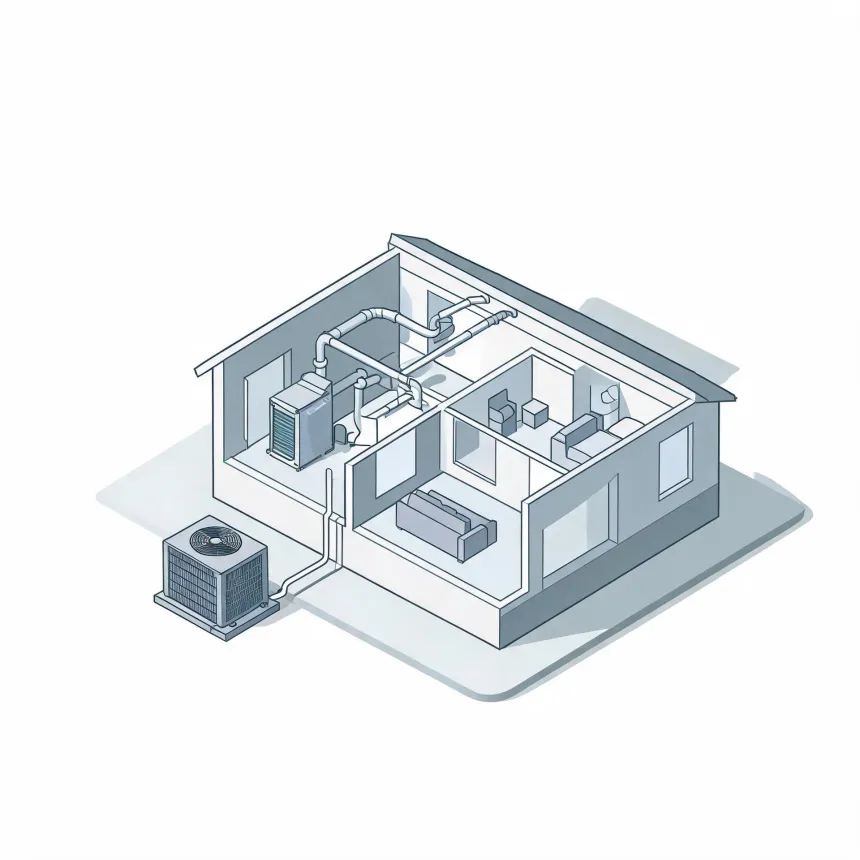
NOAA nClimDiv, 1991–2020 normals

Book your AC tune-up in March, before homes here start needing cooling in April.
- Jan
- Feb
- Mar
- Apr
- May
- Jun
- Jul
- Aug
- Sep
- Oct
- Nov
- Dec
A tune-up checks the refrigerant charge, cleans the coils, tests the capacitor and tightens the electrical connections.
Texas requires HVAC contractors to hold a state license.
The license is issued by the Texas Department of Licensing and Regulation, and it belongs to the contractor, not to any single visit. That covers the person doing the work, not each job they do.
For maintenance on your air conditioner, that license is what stands behind the work. If the technician opens the refrigerant side of your system to check the charge or the coil, federal law also requires EPA Section 608 certification, the same rule that applies in every state. Between the two, you have a contractor licensed by the state and a technician certified to handle refrigerant without venting it into the air.
Source: Texas Department of Licensing and Regulation
- What does AC maintenance include?
- A technician checks refrigerant levels, cleans the condenser coil, and tests the capacitor and contactor. They also check the condensate drain for clogs, since that's what causes water damage when it backs up, and inspect the blower and ductwork for airflow problems. Loose electrical connections get tightened too, since a system running 7 months a year sees a lot of wear on those parts.
- How often does an air conditioner need maintenance?
- Once a year, ideally before the cooling season starts. In Houston that means scheduling it before April, since the system will run pretty much nonstop from then through October. A unit that sits idle for a few months in winter and then gets asked to work through afternoons averaging 93°F needs to start the season with clean coils and the right refrigerant charge.
- Is AC maintenance worth it?
- Yes, especially in a climate that demands 7 months of cooling a year. Regular maintenance catches a failing capacitor or a dirty coil before it leaves you without air conditioning during the stretch when you need it most. It also matters after a hard storm season. This area has seen 149 hail events and 178 damaging wind events over the last ten years, and a technician checking the outdoor unit after that kind of weather can catch bent fins or hail damage before it turns into a bigger repair.