
HVAC Installation in Houston, TX
A new system here will heat from November through February and cool from April through October every year. Tell us about the house, and a licensed contractor who covers Harris County will get in touch.
Tell us about the job
It takes about a minute.

Eleven months of work a year, out here
Your system barely gets a break in Harris County. Cooling runs April through October, seven months, with afternoons averaging 93°F. Heat takes over November through February, four months, on nights that average 45°F. That leaves one month where the system sits idle, and 11 months where it carries the house.
55.4% of homes here heat with electricity, so a new system is doing real work in both seasons, not just standing by for summer. Power is not guaranteed when it is needed most. A third of Texas households went at least 24 hours without power in 2024, and the last ten years brought 178 damaging wind events and 2 winter storms through the area. Whatever gets installed here needs to hold up to that, not just to a mild afternoon.
- 4 months
- November through February, your system heats
- 7 months
- April through October, it cools
- 45°F
- the average winter night it heats against
- 93°F
- the average summer afternoon it cools against
NOAA nClimDiv, 1991–2020 normals
Texas requires HVAC contractors to hold a state license.
The Texas Department of Licensing and Regulation tests and records the contractor, not the job. That means the license tells you the person or company has met the state's standard, but it does not follow the crew to your house or get checked against this particular installation.
For a job like this one, the permit is what covers the work itself. In most cities and counties around Harris County, putting in a new furnace, air conditioner or heat pump needs a permit from the local building office, and an inspector checks it once the work is done. That inspection is what confirms the new system was installed to code at your address, separate from whatever the state's license already says about the contractor doing the work.
Source: Texas Department of Licensing and Regulation
- When should I replace my HVAC system?
- Once your system is old enough that repairs are getting frequent or expensive, replacement usually makes more sense than continuing to fix it. Age matters here because a Houston system runs most of the year, 7 months of cooling and 4 of heat, so the wear adds up faster than it would somewhere milder. Rising energy bills, uneven temperatures room to room, and a system that runs constantly without keeping up are all signs the equipment is losing efficiency. A contractor can look at the specific system and tell you whether it makes more sense to repair or replace.
- Should I replace my furnace and air conditioner at the same time?
- If both are near the end of their life, yes. Your furnace and air conditioner share the same air handler or coil in most systems, so they are matched to work together. Replacing one and keeping the other means pairing new equipment with an old coil or blower, which can mean the new unit never runs at the efficiency it is rated for. If only one has actually failed and the other is still working well, a contractor can tell you whether the parts are compatible enough to replace just the one.
- What happens during an HVAC installation?
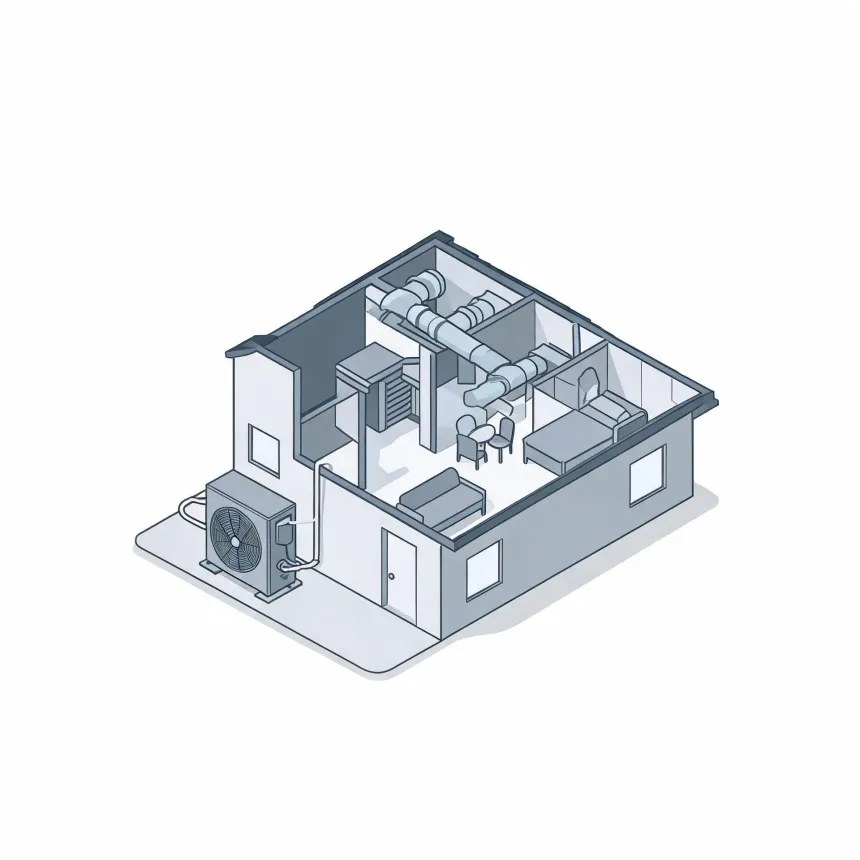
- A contractor removes the old furnace, air conditioner, or both, along with the coil and ductwork connections that go with them. The new equipment gets set in place, connected to the ducts, refrigerant lines, gas line or electrical circuit, and the condensate drain. Once it is running, the contractor checks refrigerant charge, airflow, and thermostat operation before calling the job done. Texas requires HVAC contractors to hold a state license through the Texas Department of Licensing and Regulation, so it is worth confirming that before work starts.