Profile view of a bearded man wearing a dark baseball cap and a dark gray T-shirt against a plain off-white background.

Birds nesting in a dryer vent in Texas

Duct and vent cleaningTexas
Step 1 of 3

What kind of equipment?

Why are birds nesting in my dryer vent?

You went outside to check the dryer vent and heard chirping, or you noticed the flap won't close all the way anymore. Something has built a nest inside, and you're not sure how it got in or what to do about it. In Texas, this is common enough that it's worth understanding why it happens before you decide what fixing it actually involves.

Birds find the warm, sheltered duct and build there

Dryer vents push out warm air, and a dark, protected tube looks like a good place to raise a brood to a bird outside looking for shelter. If the flap on the outside hood is bent, stuck open, or missing its spring, there's nothing to stop a bird from walking right in. Small birds like sparrows and wrens are the usual culprits, and they tend to look in spring when they're nesting anyway. Once a nest is built, it blocks the duct. Lint has nowhere to go but back up, and the dryer has to work harder to push air through. That's a fire risk, and it's also why a dryer can start taking longer to dry a load than it used to.

A white hooded dryer vent with a louvered grille screwed to beige horizontal lap siding above a lighter foundation wall.

The vent flap should swing free

A clear dryer vent has a flap that hangs loose and closes on its own when the dryer shuts off. Air pushes it open during the cycle, then it drops back down. Nothing blocks the opening, and nothing sits on the louvers waiting to get in.


A wall-mounted plastic dryer vent hood on light-colored horizontal vinyl siding, clogged with lint and debris hanging from its opening, above a gray painted foundation.

A blocked vent invites more than lint

Once lint builds up in the opening, the flap can't seat shut anymore, and a gap stays open year round. That gap looks like shelter to a bird in spring, and the lint already there makes easy nesting material once one gets inside.

Leave the Nest or Clear the Vent

Leave it alone

  • A nest left in place keeps drying out the exhaust path, so every load takes longer and the dryer runs hotter than it should.
  • Lint packed around a nest is dry and sitting right next to a heat source, which is how vent fires start.
  • Moist air from the dryer has nowhere to go but back into the laundry room, and in a Texas summer that room is already fighting humidity.
  • Birds come back to the same spot once they've nested there, so next spring you're dealing with the same vent again.
  • The flap stays propped open by nest material, which gives the next bird, or a mouse, an easy way in during the fall and winter months.

Have it cleared out

  • A contractor who works on vents year round knows where birds build in Texas, usually just inside the hood where it's dry and out of the wind.
  • Clearing the nest and the lint around it restores the airflow the dryer was designed to push out.
  • A local contractor can check whether the flap still seals once the nest is gone, since a bent or stuck flap invites the next nest.
  • Getting matched with one contractor means one company calling you back, not five, and that company is licensed to do this work in Texas.
  • Once the vent is clear, the dryer stops working against a blockage, which is easier on a system that already runs on electricity most months of the year.
A white plastic hooded dryer vent with a mesh screen, fastened by four screws to beige horizontal lap siding above a concrete foundation wall.

Vent clear and capped

This is what a dryer vent should look like. The flap hangs loose, the screws hold the cap flat against the siding, and the mesh screen stays open. Air from the dryer pushes the flap out during a cycle and it falls shut again after, with nothing nesting behind it.

A white plastic hooded dryer vent with a louvered grille mounted on horizontal vinyl siding above a textured concrete foundation wall.

Vent clogged and blocked

Dust and lint have built up across every opening in this cap, the kind of buildup that gives birds something to grip and build on. Once that happens, the flap can't seat right anymore, and whatever lint keeps coming through has nowhere to go but back into the vent.

What's that nest doing to your laundry room

A towel that used to dry in one cycle now needs two. The laundry room feels warmer than it should, and you can smell something faintly burnt by the time the cycle ends. Clothes come out hotter to the touch than normal, and the dryer itself seems to run longer before it shuts off. Outside, the vent hood might be stained or have grass and twigs poking out from under the flap. None of this is just an inconvenience. A blocked vent means lint has nowhere to go but back into the dryer housing, and lint sitting against a heat source in a Texas summer, when the whole system is already working harder in the heat, is how vent fires start.

A dusty white plastic dryer vent hood with lint-clogged louvers mounted on beige horizontal vinyl siding above a concrete foundation wall and a bed of rounded gray rocks.
Before you get your dryer vent cleaning
A white plastic louvered dryer vent hood mounted on beige horizontal lap siding above a concrete foundation wall bordered by gravel.
After you get your dryer vent cleaning
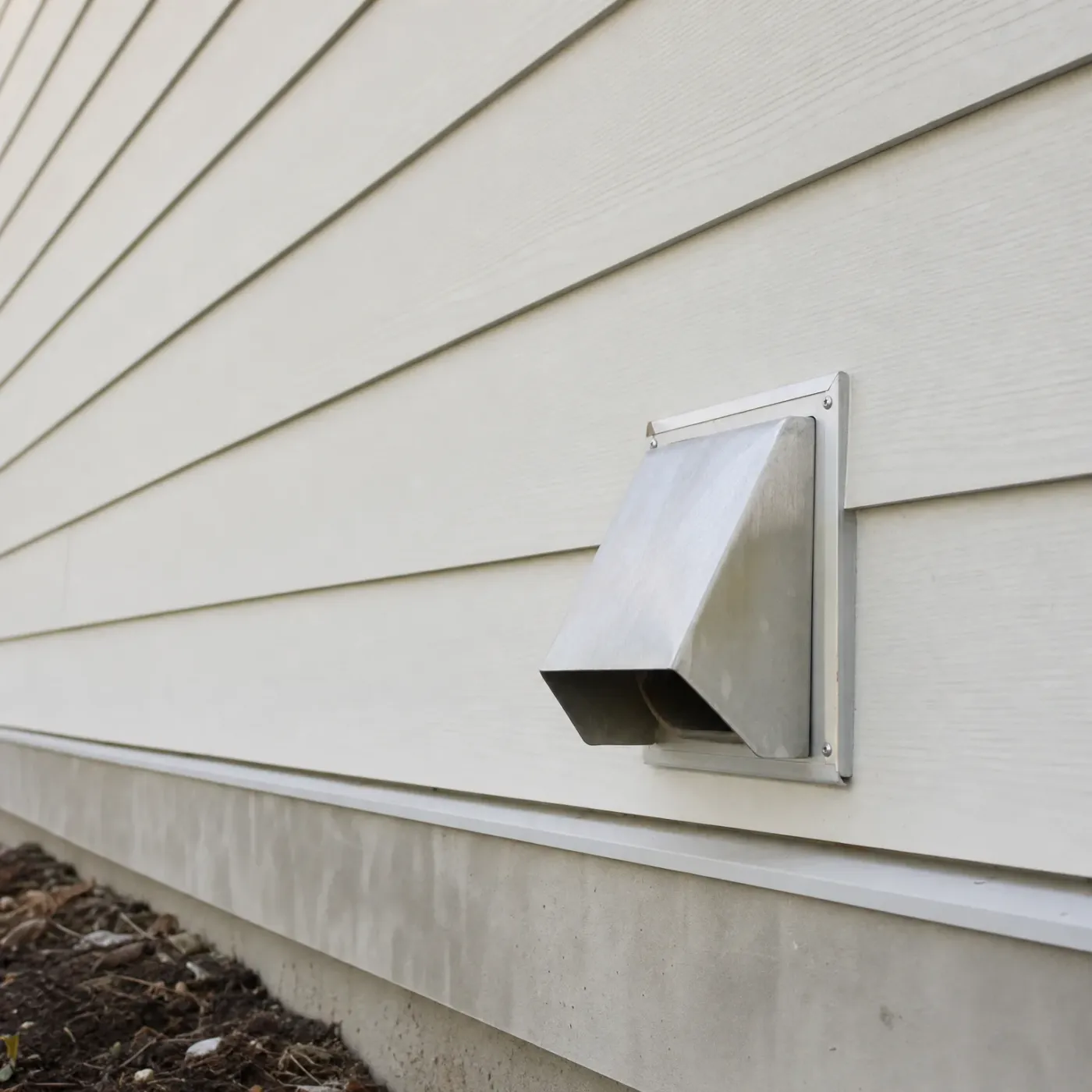
A metal hooded dryer vent mounted on cream-colored horizontal lap siding above a concrete foundation, with bare soil at the lower left.

A pro who works on dryer vents

Your dryer vent cleaning request goes to one local pro.

Your dryer vent cleaning request goes to a local pro who does this work.

Find a pro near me

No fee to send it, and nothing to sign.

A woman stands in the open front doorway of a single-story house with stone and wood siding while a man in a dark polo shirt and cap walks toward it along a concrete path.

Why birds pick a dryer vent in the first place

A dryer vent looks like a hole in the wall with warm air coming out of it, and to a bird hunting for a nest site that's exactly what it wants. The duct behind the flap is dark, dry, and sheltered from rain, and the warmth from your last few loads lingers in there. Once a bird gets the flap propped open with a few twigs, it keeps building, layering in more material until the duct is packed tight. Some birds work fast, finishing a nest in a day or two once they've settled on the spot.

The part that matters is where the blockage sits. A nest built right at the hood is one thing. One pushed further back into the duct is another, because clearing it means working from both ends and knowing how far your duct run goes before it hits a joist bay or turns. A contractor who clears vents in Texas through the spring nesting months has pulled nests out of straight runs and out of ducts with two or three elbows, and knows which tools reach which distance. That's not guesswork from outside the wall, it's matching the job to how your vent is actually built.

A gray upholstered sofa with a beige cushion and knit blanket beside a curtained window, with a white mug and a book on a dark wooden table in the foreground and a lit lamp in the background.
A smiling gray-haired man in a dark wool coat with snow flecks stands in a dimly lit home entryway, with a lit table lamp, potted plant, framed pictures and a living room visible behind him.
An older man with gray hair and a beard, wearing a snow-dusted dark coat and knit scarf, stands smiling in a dimly lit house entry with a lit lamp, mirror, and a living room with snow visible through the window behind him.
An older man with gray hair and a beard, wearing a dark snow-dusted coat and plaid scarf, stands smiling in a warmly lit hallway with a lamp, side table and glass-paned doors behind him.
An older man with gray hair and a beard, wearing a dark coat dusted with snow, stands in a home entryway with a lit lamp, a staircase railing, and a living room with large windows behind him.
A white hooded dryer vent with a square screwed-on flange mounted on gray horizontal lap siding, above a concrete foundation wall edged with gravel stones.
The flap sits flush against the siding and hangs loose over an open hood, the way a working vent should look from the yard.
A lint-clogged hooded dryer vent mounted on light gray horizontal lap siding above a concrete foundation wall.
Lint cakes the louvers and holds the flap open, leaving a gap birds can work their way through to build inside.
  1. A bird packs nesting material behind the loose vent flap.

  2. The nest blocks airflow, so lint starts collecting around it instead of blowing outside.

  3. A contractor opens the vent hood and pulls the nest and packed lint out by hand.

  4. The duct gets run with a brush to clear lint stuck further back.

A woman wrapped in a thick fleece blanket sits on a sofa holding an open book, beside a lit table lamp and a frost-covered dark window.
A smiling older woman with gray shoulder-length hair in a cream cable-knit turtleneck sweater stands behind a wooden board holding a round loaf of bread, in a warmly lit kitchen with a dark window and shelves behind her.

Power costs 15.40 cents per kilowatt-hour statewide

At 15.40 cents a kilowatt-hour, a blocked vent costs you twice. The dryer runs longer to push air past the nest, and with electric heat in most homes here, that extra runtime shows up on the bill every single load until someone clears it out.

EIA-861 2025 statewide residential average

Clearing the nest, clearing the problem

  • A nest in the vent is a mechanical blockage, and clearing it is what brings the dryer back to a normal cycle time.
  • The flap should hang loose and close on its own once the dryer stops, so that's the thing to check after the vent is cleared.
  • A local contractor who clears vents all season knows the difference between a fresh nest and old packed lint, and checks for both.
  • One contractor takes the call, looks at your vent, and handles the job without a string of other companies also contacting you.
  • Until the vent is cleared, the dryer keeps pushing air against a blocked path, and that shows up as longer cycles and a hotter laundry room.
  • A vent that's been nested in once is worth a look each year, since the same gap in the flap can invite another bird back.

The chirping and the slow drying cycle both trace back to the same blockage. Once the nest and the lint packed around it come out, the dryer has a clear path again and the laundry room stops running warm. That's the whole fix. Nothing about a bird nesting in a vent calls for anything more than getting it out and checking that the flap moves the way it should afterward.

A contractor who works vents all season in Texas has opened plenty of these. They know what a nest built this spring looks like next to lint that's been sitting for a couple of years, and they check the flap and the mesh screen while they're in there, not just the duct. That's the kind of look a blocked vent needs, someone who's seen the difference between a quick clear-out and a vent that's going to get nested in again because the flap never sat right to begin with.

When you request service through this page, one contractor gets your information, not several. That means one call back, from someone local who's already set up to handle this kind of job, instead of fielding offers from companies competing for the work. They'll look at your vent, tell you what they find, and go from there.

A vent that's held a nest once is worth watching. The gap that let the bird in doesn't close itself just because the nest is gone, so a yearly look keeps this from becoming a repeat call.

Corner of a house with cream horizontal lap siding and tree shadows, beside a covered porch with a square column, wooden deck, steps, white balusters, and a shrub at right.
Corner of a white clapboard house with a multi-pane wood window in warm low-angle sunlight, with hydrangea shrubs and other green foliage growing along the base and dark trees behind.
A wooden front door with divided-light glass panes set under an arched entry on a white shingled house, with a black wall lantern, a tall gray planter, flowering shrubs, and a flagstone walkway.
Exterior corner of a house with cream horizontal siding, a dark-framed three-section window, and a stone veneer foundation, with white hydrangeas and clipped shrubs along a paved walkway and tree branches overhead.
Corner of a white-clad house with a dark-framed grid window, dark downspout and eaves, surrounded by trimmed hedges, shrubs, white hydrangeas and a leafy tree in sunlight.

Get your dryer vent to the right pro

Your request stays with one local pro.

Get my match

Sending the form costs nothing.