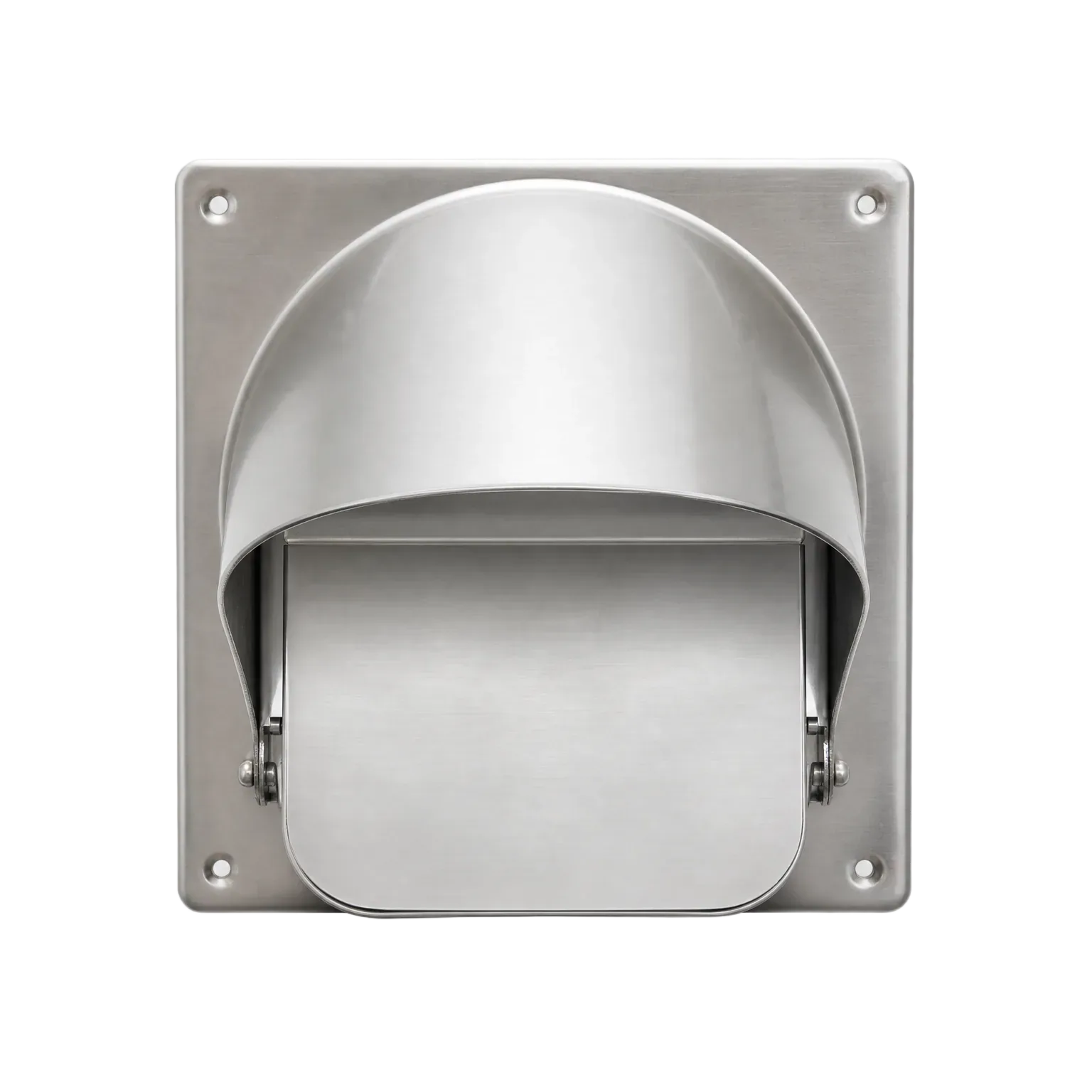

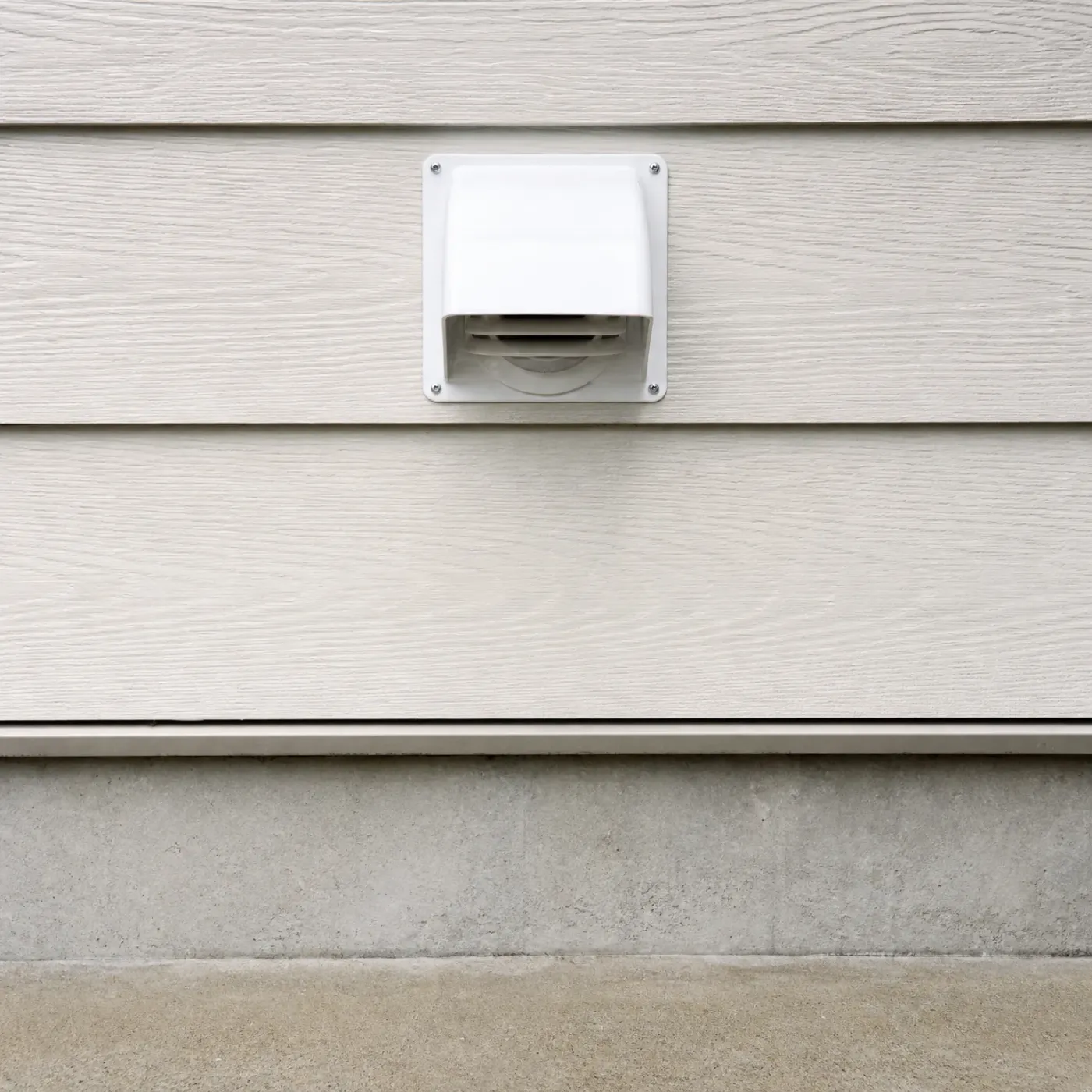
Vent cap sitting clean and flat
The louvers hang loose and the cap sits flush against the siding. Air passes through on every load and the flap swings shut as soon as the dryer stops. Nothing is holding it open.
Once a year is the general rule, but in Houston most homes do better on a tighter schedule. Lint builds up inside the vent every time you run a load, and it catches on anything that isn't a straight shot to the outside, a long run, extra bends, a cap that's been knocked loose. Humidity here makes that lint damp and sticky instead of loose and dry, so it clings to the inside of the duct rather than blowing out with the air. A dryer fighting a clogged vent takes longer to dry a load and runs hotter doing it, and a hot, blocked vent is how dryer fires start. If your dryer runs long, the top feels hot to the touch, or you notice a burning smell, the vent needs attention now, not at the one-year mark. For most households here, checking it every six months and cleaning it when lint has built up is the safer habit.
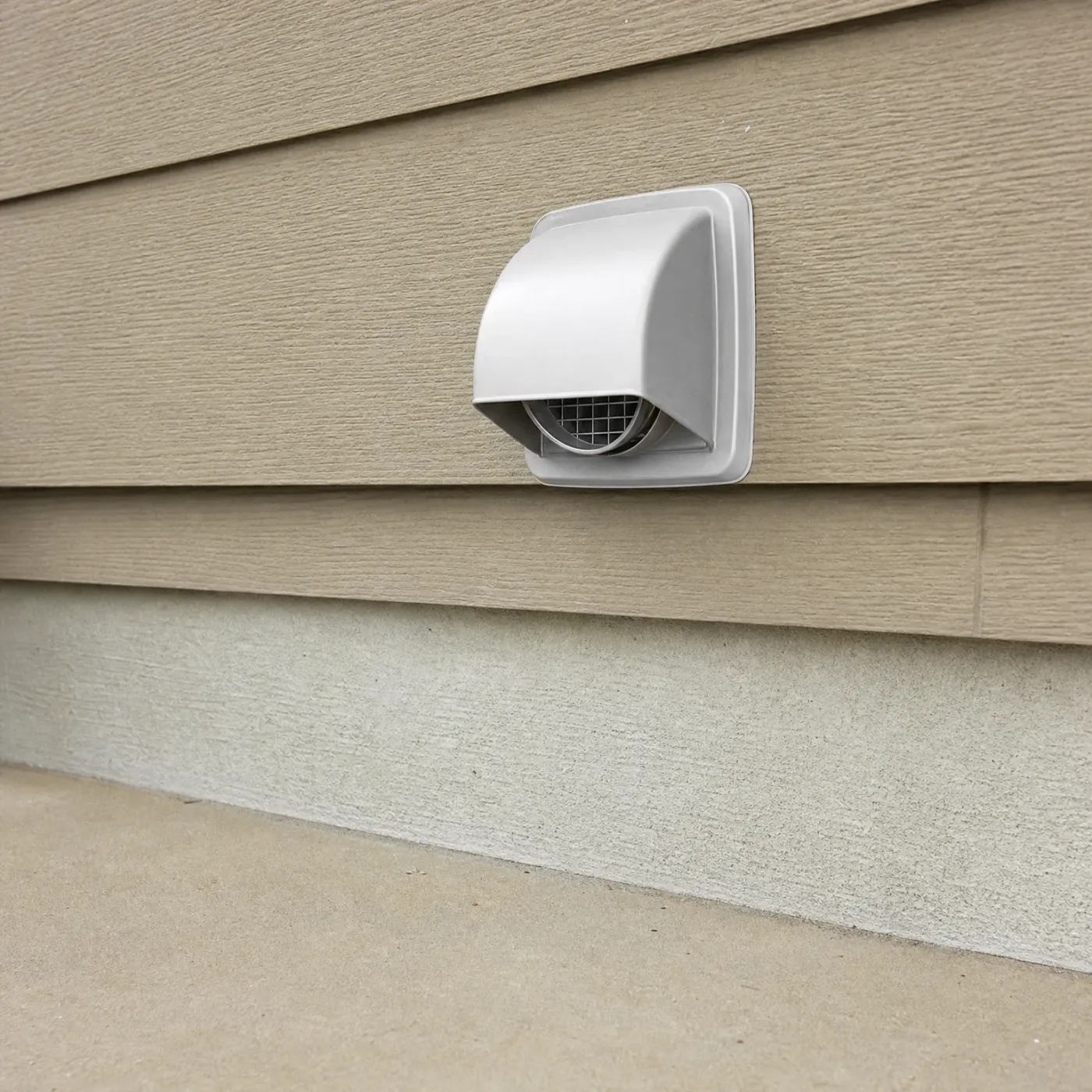
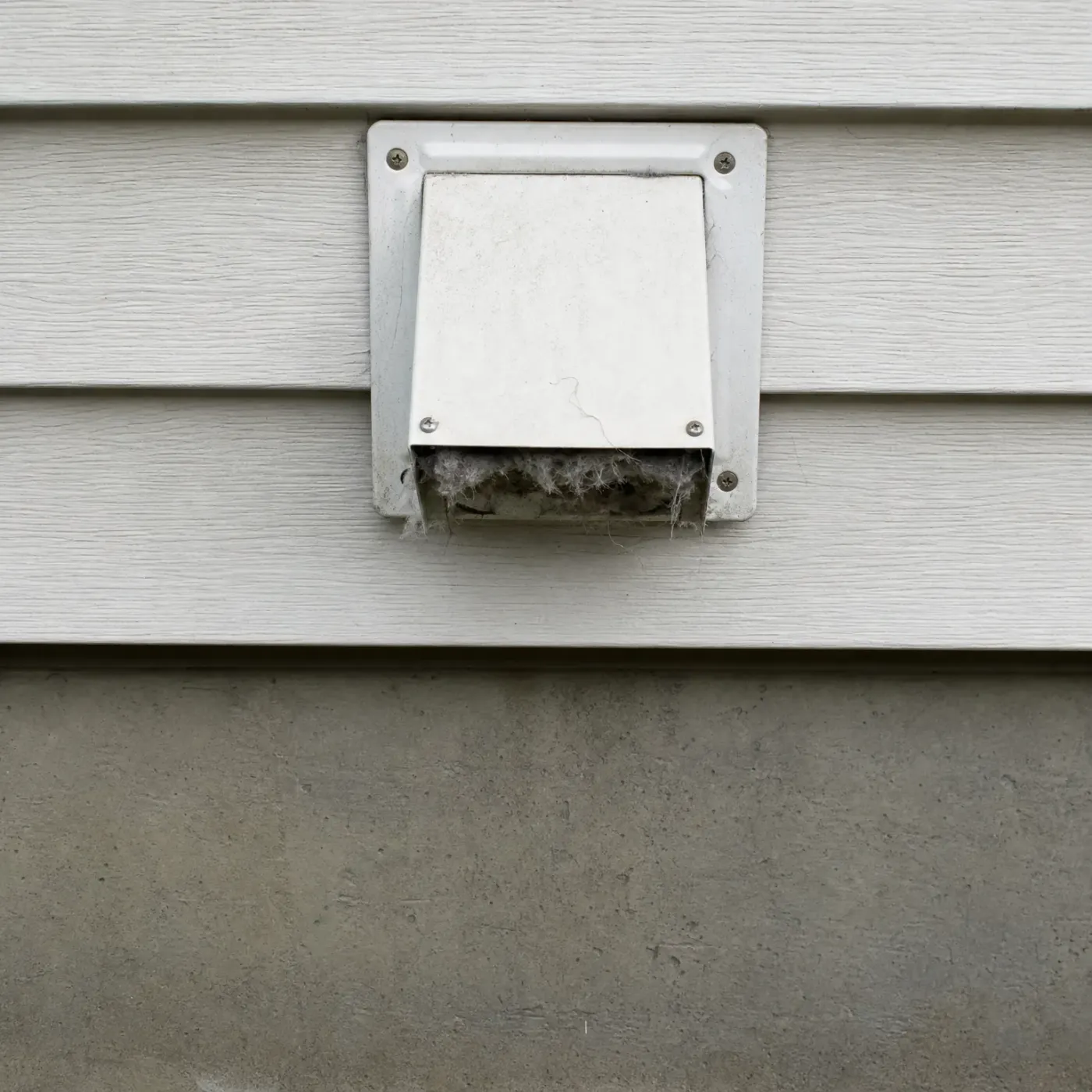
A dryer vent doesn't clog evenly. Every load sends warm, damp air down the duct, and in Houston that air is already carrying more moisture than it would somewhere dry, so the lint inside it sticks rather than blows clear through. It builds fastest at the joints where two sections of vent meet and at any bend, because airflow slows right at those spots and lint drops out of it. A vent that runs a long way to the outside wall, or one with several turns to get there, gives lint more places to catch than a short straight run does. The dryer has a thermal fuse that's meant to cut power when airflow drops too low, and a vent that's half blocked with lint is exactly the kind of restriction that trips it. Even the cap on the outside wall has its own flap and screen, and those catch lint too, separately from whatever's built up inside the duct itself. A vent can look fine at both ends and still be packed solid in the middle.
2.73 people per household on average
A typical household here runs 2.73 people, so the dryer in your house is likely running most days of the week, not once or twice. More loads means more lint moving through that vent every month.
Half the homes here were built by 1988
Half the homes in Harris County went up in 1988 or earlier. A vent run that old has had decades to pick up extra bends or sagging duct from repairs, both of which slow the airflow lint rides out on.
Power here costs 16.78 cents per kilowatt-hour
Electricity here runs 16.78 cents per kilowatt-hour. A vent that's partly blocked makes the dryer run longer to dry the same load, and that extra run time shows up on the bill every month it goes unfixed.
ACS 2020-2024 · EIA-861 2025
Lint builds up on the inside walls of the vent duct
Damp Houston air keeps that lint sticky instead of dry and loose
Airflow slows, so the dryer runs longer to dry each load
A technician runs a brush through the full duct run
Towels or jeans coming out damp after a full cycle is usually the first sign. You might also notice the top of the dryer feels hot, or the laundry room holds onto heat and a faint burnt-dust smell after a load. Outside, the vent cap flap barely moves even on high heat, when it should be pushing air out hard enough to flutter. Lint showing up around the cap or the dryer running longer than it used to both point the same direction. Left alone, a blocked vent makes the dryer work harder every single load, and a dryer that's struggling to push air out is also pushing exhaust back where it shouldn't go.
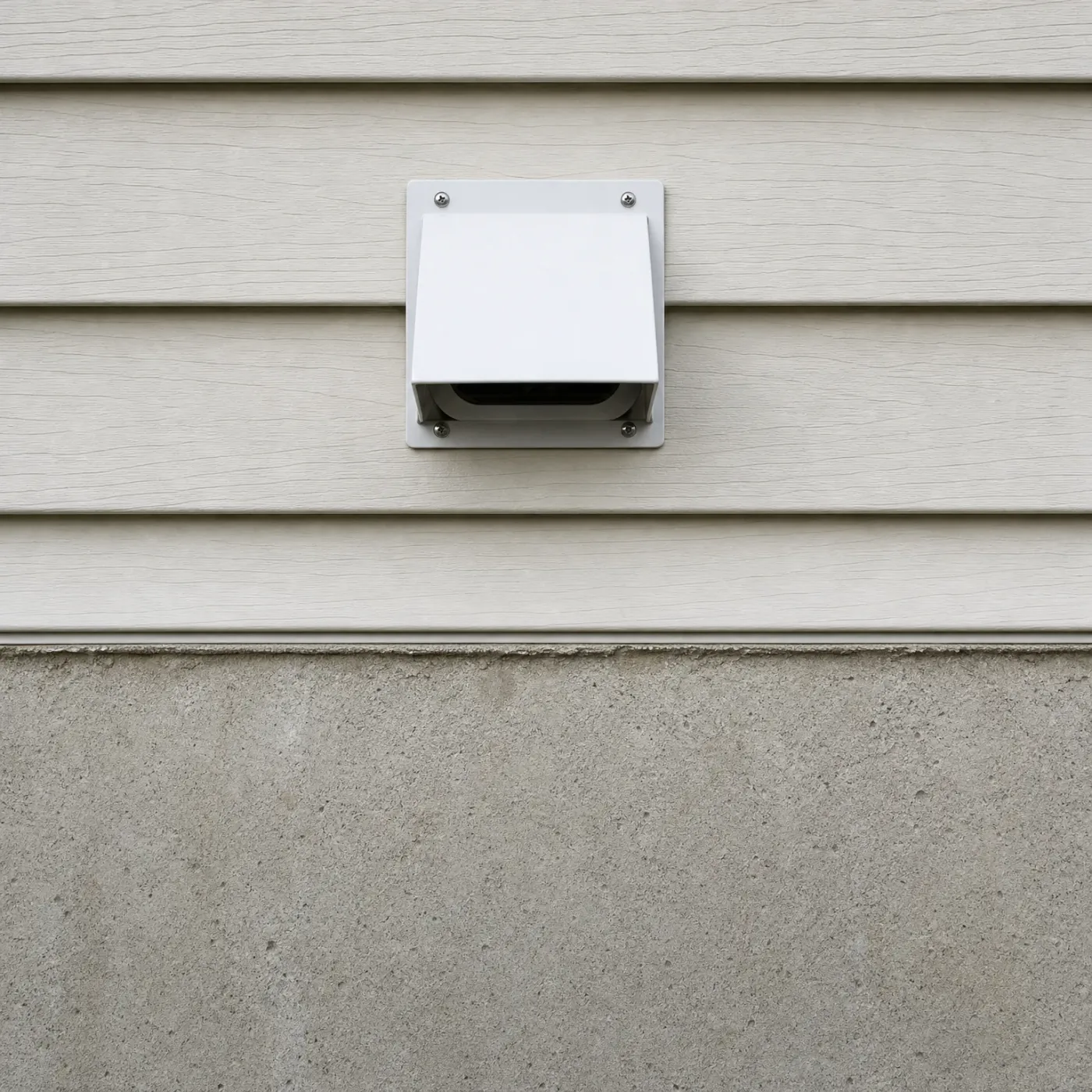
The louvers hang loose and the cap sits flush against the siding. Air passes through on every load and the flap swings shut as soon as the dryer stops. Nothing is holding it open.
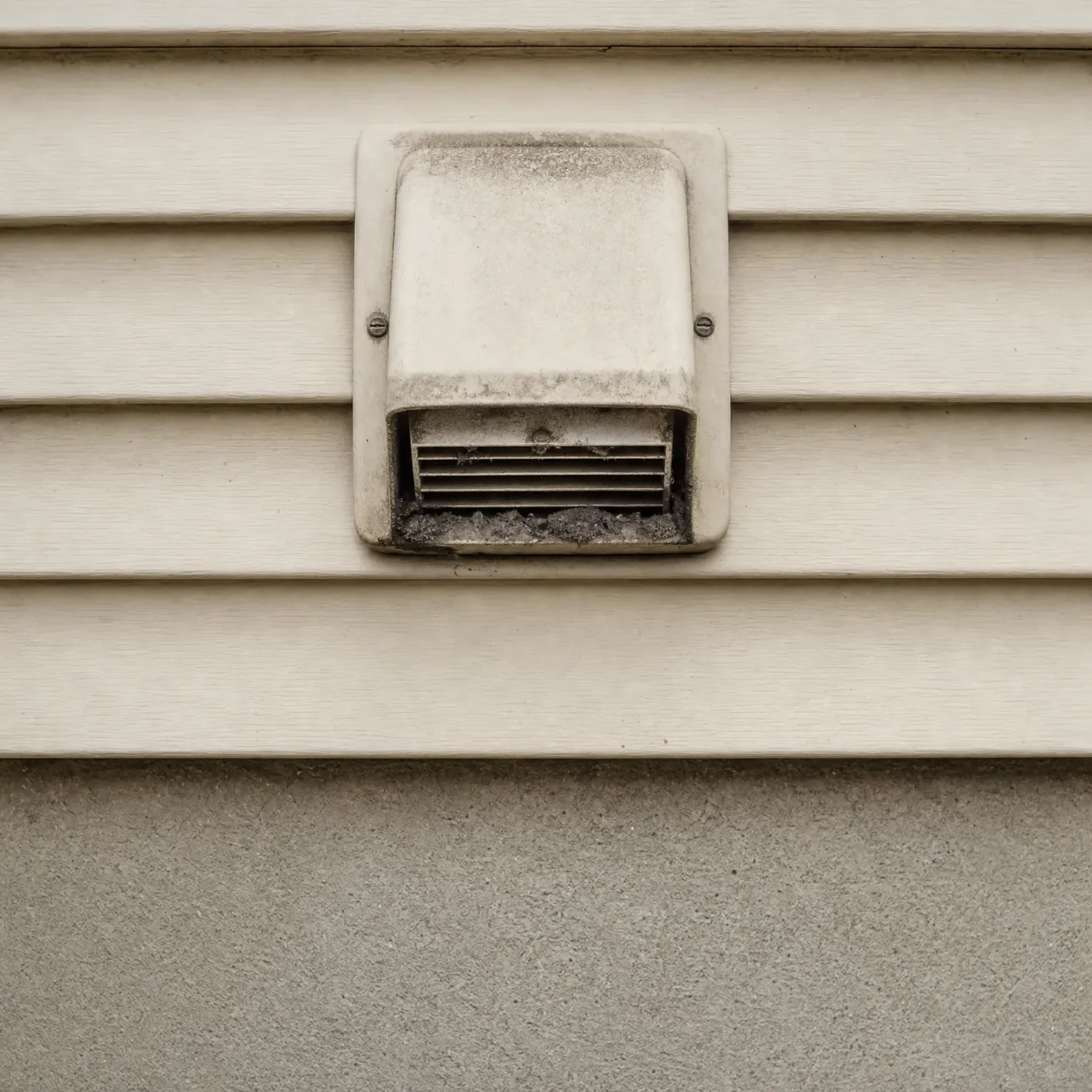
Gray lint has built up around the louvered opening until the cap can barely move. Air that should be pushing outside is fighting through a clogged screen, and some of it is backing up into the duct instead.

A dryer fighting a clogged vent runs longer on every load. That shows up on the electric bill, and with power costs what they are in Harris County, a dryer running two cycles instead of one isn't a small add. It also means more heat held inside the drum and the duct, on top of a laundry room that already sits warm most of the year.
There's a safety side too. Lint is fuel, and a vent that can't push air out gives it somewhere to collect. You could spend an afternoon calling around, checking reviews, and explaining your vent setup to three different companies, or you could send one form and let someone else sort out who's available and qualified. That part of the job doesn't have to be yours.





You've read what's driving this: the bends in your vent run, the humidity that keeps lint sticky, the household running loads most days of the week. None of that changes on its own. What usually happens next is someone spends an evening searching for a vent cleaning company, calling a few, explaining the same thing about the damp towels and the hot dryer top to each one, then waiting on quotes to compare. Send the request here instead and that part is done. You're not left sorting through names or repeating yourself to whoever picks up the phone. The dryer still needs the work. The vent still needs the brush run through it, cap to drum. But the part that was yours, the finding and the calling and the comparing, is off your plate the moment you send it. Handle the finding now, before another load goes through on two cycles instead of one.

It's almost nine on a Tuesday and you're still in the laundry room. The second cycle just ended and the towels on top of the dryer are warm but not dry, still heavy and damp through the middle. You've got work in the morning and a stack of folding ahead of you either way. The room's held onto the heat from both runs, that close, overworked feeling in the air. You press a towel to your cheek out of habit, checking, and set it back down with the rest. Outside, Houston's humidity hasn't let up since the sun went down. You're already doing the math on a third cycle.
With 2.73 people in the average Harris County household, most homes are running the dryer close to daily, not saving it for the weekend. That pace fills the vent with lint faster than a one or two person household would, which is why the yearly schedule falls short here.
ACS 2020-2024
A vent cleaned on schedule lets a load of towels come out dry in one cycle, every time, without the dryer running hot or long to finish the job.
A vent left too long means the same load takes two cycles, the laundry room holds heat after you're done, and the dryer is working harder than it should to move air at all.


Once a year is the number most people start with, and it's not wrong everywhere. It's just not built for a Harris County home running loads most days of the week, with a vent that bends more than once on its way outside and humidity that keeps every bit of lint sticky instead of loose. Put those together and the yearly schedule runs out before the year does. You don't need a sensor or a service plan to know where you stand. The dryer tells you. One cycle turning into two, a warm top panel, a laundry room that holds heat after you've folded everything and put it away. Those are the same signs whether your house was built last year or thirty years ago. A cleaned vent doesn't change what your dryer is or how hard it has to work. It just lets the air move the way it's supposed to, out through a clear duct instead of one packed with damp lint, so a load of towels comes out dry the first time. What changes once you send the form is the part that has nothing to do with the dryer at all. No searching for someone who works on vents, no calling three places and getting voicemail, no explaining the same two-cycle problem over again to whoever finally picks up. That work goes to someone else. Where you stand with the vent itself doesn't change until it's cleaned, but getting there stops being something you have to manage.

Answer a few questions instead of calling shop after shop.