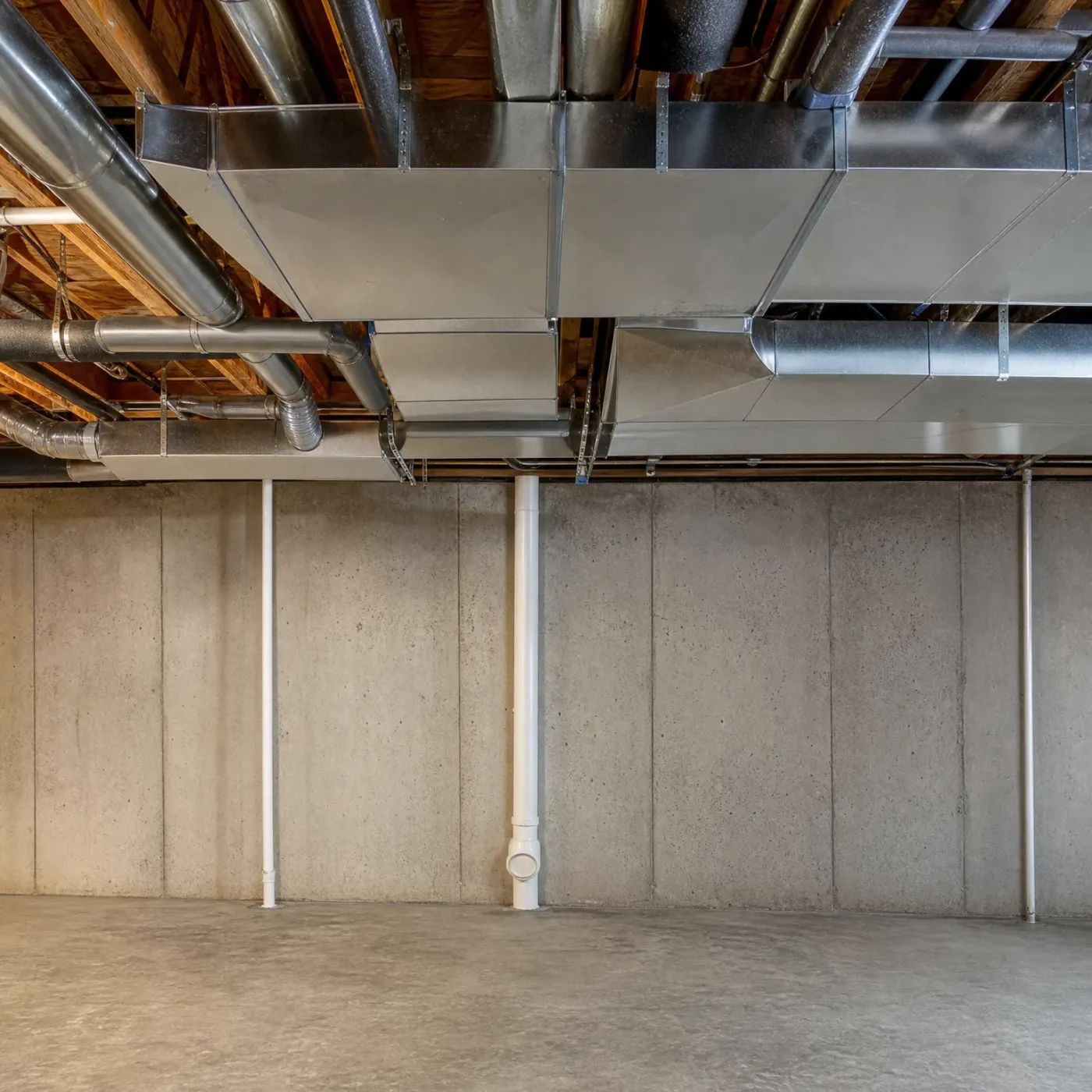
Unfinished basement with concrete floor and walls, exposed wood joists, steel support columns, and two furnace-type units connected to sheet-metal and flexible insulated ducts.

Get matched with a duct system pro in Tarrant County

Signs of leaky ductwork in Fort Worth, TX

Your ducts run hot in summer and your bills seem high for what the thermostat says. That can mean air is leaking out before it reaches your rooms. Below are the signs to check around your house, room by room, and what to do once you spot them. If it looks like your ducts need work, you can get matched with a local contractor who handles duct systems in the Fort Worth area.

Find my pro

A leaky duct shows up as rooms that never match the thermostat. One bedroom runs warm all August while the hallway outside it feels fine. That happens because a split or loose joint in the ductwork lets cooled air spill into the attic or under the house before it reaches the vent. You might also notice a vent blowing weak where it used to blow strong, or dust streaking the wall around a return grille, which means it's pulling in attic air instead of room air. In Fort Worth, where summers stay hot for months and most homes cool and heat with electricity, that lost air is lost money every single day the system runs. A higher bill next to a house that still feels uneven, room to room, is usually the clearest sign of all. Sealing those leaks is a job for someone who can pressure test the system and find where it's actually losing air, not just guess at it.

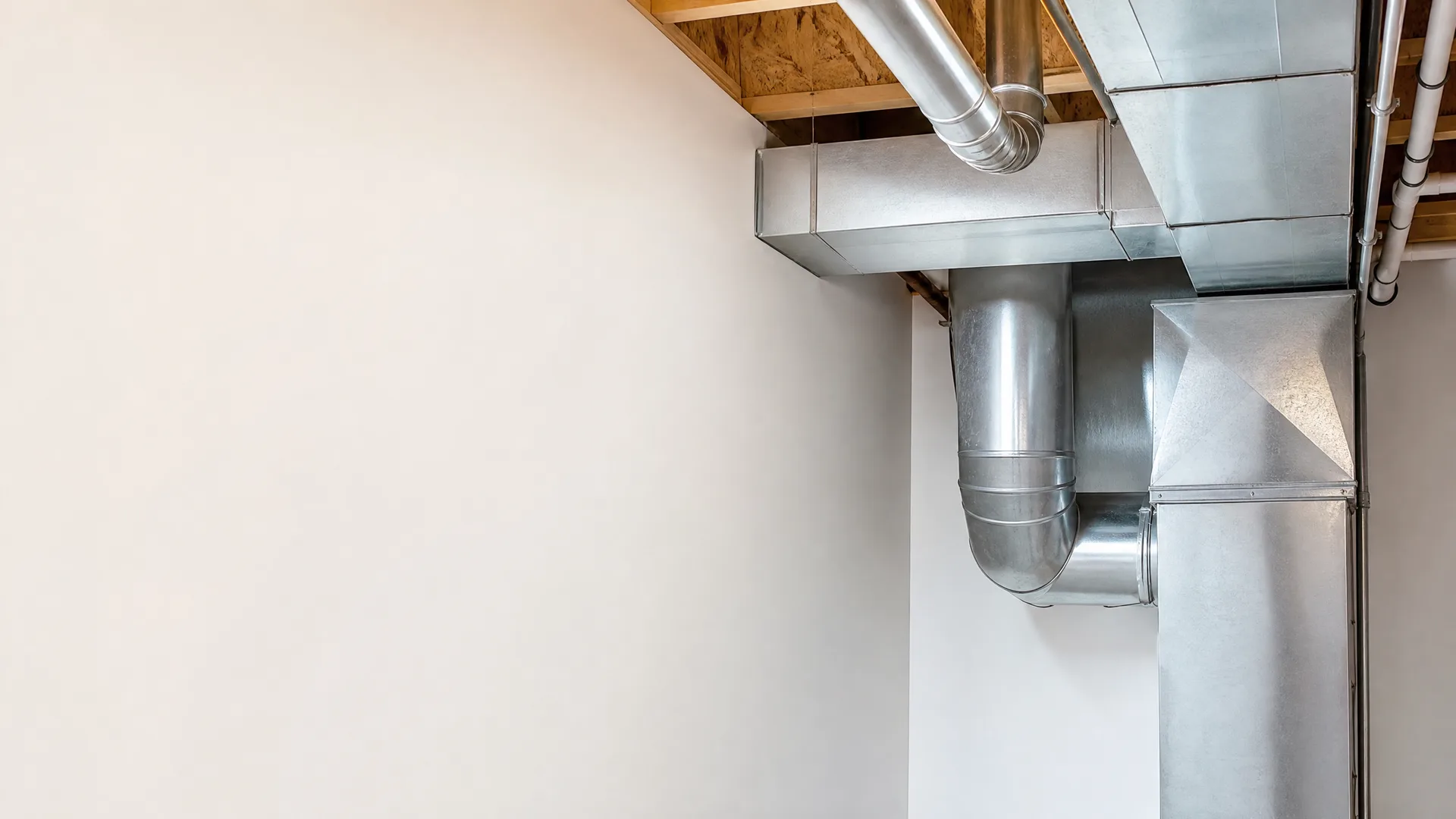
Galvanized sheet-metal ductwork and pipes running along an unfinished basement ceiling beside a plain beige wall, with a gray equipment cabinet below.

Why the attic run matters most

Most duct runs in Fort Worth homes pass through the attic, and attic air in August can sit well above 120 degrees. A leak there doesn't just lose cooled air, it pulls that superheated attic air back into the duct through the same gap. Your system ends up fighting attic heat before the air even reaches a vent. A run through a garage or crawlspace can do the same thing in reverse during a cold snap in January.

Galvanized sheet metal rectangular and round HVAC ducts running along a ceiling and down a white interior wall, with exposed wood joists and subfloor above.

What a pressure check finds

A contractor can test this with a duct blaster, a fan that pressurizes the system and measures how much air escapes before it reaches your registers. The test gives a leakage number you can compare to what the system should be moving. It also points to which runs are losing air, so sealing effort goes where the leak actually is instead of every joint in the attic.

Why does duct age matter so much in Fort Worth?

  • Half the homes here were built by 1990

    Half the homes in Tarrant County were built in 1990 or earlier, so a lot of ductwork has had decades of attic heat to crack joints and tear seams.

  • Heat runs November through March

    Heat runs November through March here, which is short enough that a leak can go unnoticed for years before the gas or electric bill makes it obvious.

  • Cooling runs May through October

    Cooling runs May through October, six months of attic heat pressing on every duct run, which is what turns a small gap into a real leak.

ACS 2020-2024 · NOAA nClimDiv 1991-2020

Empty concrete-walled basement room with bare floor and an exposed wood-joist ceiling carrying galvanized rectangular and round sheet-metal ducts, black pipes, and wiring.

Ductwork sealed and sound

This is what a duct run should look like. The metal is bright, the joints are tight, and every branch line holds its shape where it meets the trunk. Air moving through here stays inside the duct from the furnace or coil all the way to your register.

Empty concrete-walled basement room with exposed wooden joists and galvanized rectangular and round ductwork plus pipes running across the ceiling.

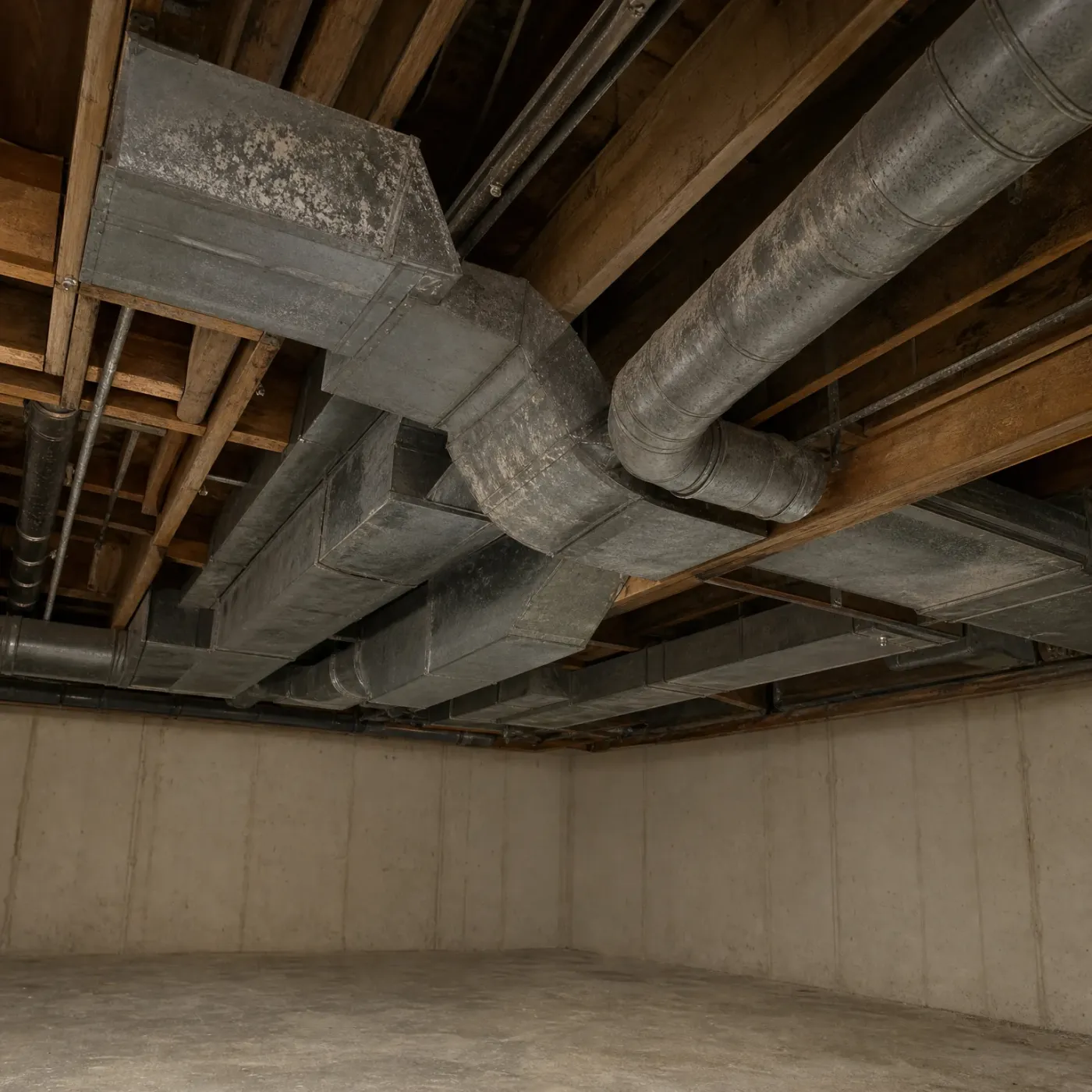
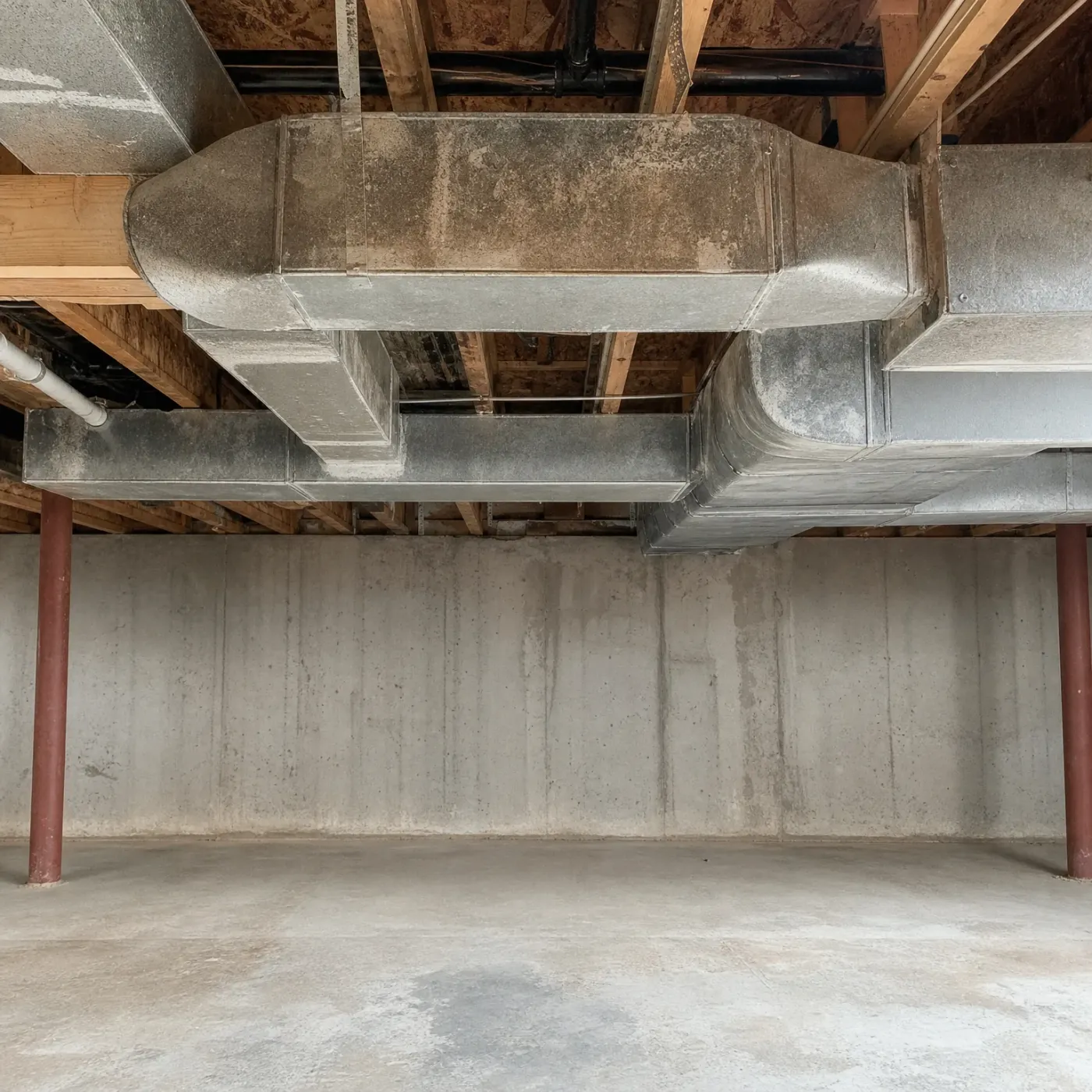
Ductwork failing with age

Years of attic heat have done this to the metal. The surface has oxidized, seams have opened at the joints, and some runs sag where the hangers have loosened. Every gap here is a place where conditioned air escapes before it reaches a room.

Check It Yourself or Call a Pro

Check it yourself

  • Hold your hand along each supply register while the system runs. A weak, barely-there airflow at a register far from the furnace often means the duct feeding it has a leak somewhere between.
  • Look at flex duct and metal joints in the attic or crawlspace for torn tape, cracked mastic, or a connection that has pulled apart at the collar.
  • Check your electric bill against last year's for the same month. A jump with no change in how you run the thermostat points at conditioned air escaping somewhere.
  • Feel around duct boots and joints near the furnace closet for a draft when the system is running. Air moving where the duct is sealed means it's leaking there.
  • Notice if the attic access hatch or the space around it feels warm to the touch in August. Leaking supply air can push warm attic air back toward the house.

Call in a contractor

  • A contractor pressurizes the duct system and measures how much air is lost, which tells you whether the leak is a small gap or a torn section losing real volume.
  • A smoke pencil or fog test finds the exact point of a leak hidden behind insulation or inside a wall cavity, something you can't see by eye.
  • A contractor checks every joint and seam along a run, not just the ones you can reach, including sections buried under insulation in the attic.
  • Sealing done with mastic or mastic tape at every joint holds up to attic heat far longer than duct tape, which a contractor will have on hand and you likely won't.
  • Someone who works on Fort Worth duct systems all year knows which runs typically fail first in homes here and checks those points without having to search the whole system.
Dim interior corner of a room with a ceiling air vent, a beige wall, a cream curtain beside a window showing bare trees, and a dark ceramic vase of flowers on a wooden side table behind a light upholstered sofa back.

It's a quiet Saturday afternoon in April, warm enough that the system has started cycling for the season. You're sitting on the couch when the light through the window catches the ceiling vent above you, and you notice the grille is gray with dust, a thin film of it dulling the furniture underneath too. You wipe a shelf and it's gritty again within the week. It isn't dirt coming from nowhere. A duct with a torn seam can pull dust and insulation from the attic and push it straight into the room through that vent. You sit back down, meaning to mention it to someone who'd know what to check.

Find a duct system cleaning pro in Tarrant County

You can check for gray dust rings, weak airflow, and rooms that run warm, but a leak behind the drywall or deep in an attic run stays hidden from the couch. Someone who works on Fort Worth duct systems all summer knows which joints give out first in this kind of heat and can pressure test a run instead of guessing at it from a register. A local, licensed contractor can look at what you've found, check the runs you can't reach, and tell you whether it's a few joints or a full re-seal. Sending this to one contractor instead of several means one visit, one assessment of your actual ductwork, not a round of competing quotes before anyone's even looked at your attic. If August bills and uneven rooms are already bothering you, that's worth having someone confirm now rather than carrying it through another summer.

You can patch the gray dust rings and weak registers you find on your own, and some of what's leaking will stop leaking.

What you can't reach is the split in a trunk line buried under attic insulation, and that one keeps pulling in 120-degree air all summer whether you've patched the rest or not.

An older man with gray hair and a beard, wearing a dark snow-dusted jacket and scarf, stands smiling in a warmly lit interior hallway with a lit table lamp, a vase of dried branches, and a framed picture in the background.
An older man in a dark snow-flecked overcoat and scarf stands smiling in a warmly lit home entryway, with a glass-paned door showing darkness outside and a lamp-lit room visible through a doorway behind him.
An older man with grey hair and a beard, wearing a dark coat dusted with snow, stands in a dimly lit entryway with a ceiling lamp, a side table with two shaded lamps, and a lit fireplace visible in a room beyond.
An older man with gray hair and a beard, wearing a dark coat dusted with snow, stands smiling in a doorway of a warmly lit home with a sofa, lamp and window visible behind him.

Sealed ductwork

Air leaves the furnace or coil and arrives at the register still at the temperature it started. Rooms match the thermostat, and the system doesn't run longer than it should to make up for what it lost.

Find a licensed pro

Leaky ductwork

Cooled or heated air escapes into the attic or crawlspace before it reaches you. Some rooms stay warm all summer no matter what the thermostat says, and the system runs longer trying to catch up.

Find a licensed pro

How do you actually test a duct for a leak?

You've checked registers by hand and looked at what you can see in the attic, but you want something more certain before deciding if a leak is real. A proper test tells you whether the duct system is actually losing air, not just whether one register feels weak, and it's the kind of check that holds up no matter how the house is laid out.

A duct blower test measures how much air the system loses

A contractor connects a duct blower to the system, seals off the registers, and pressurizes the ductwork the same way a blower door test pressurizes a house. The machine reads how much air it takes to hold that pressure, which tells you how much is escaping through splits and loose joints along the way. Some contractors also run a smoke test, releasing smoke into the duct and watching where it escapes at a joint or seam. Either method finds the leak that's buried under attic insulation or behind a wall, the one a hand on a register or a flashlight in the attic will never catch.

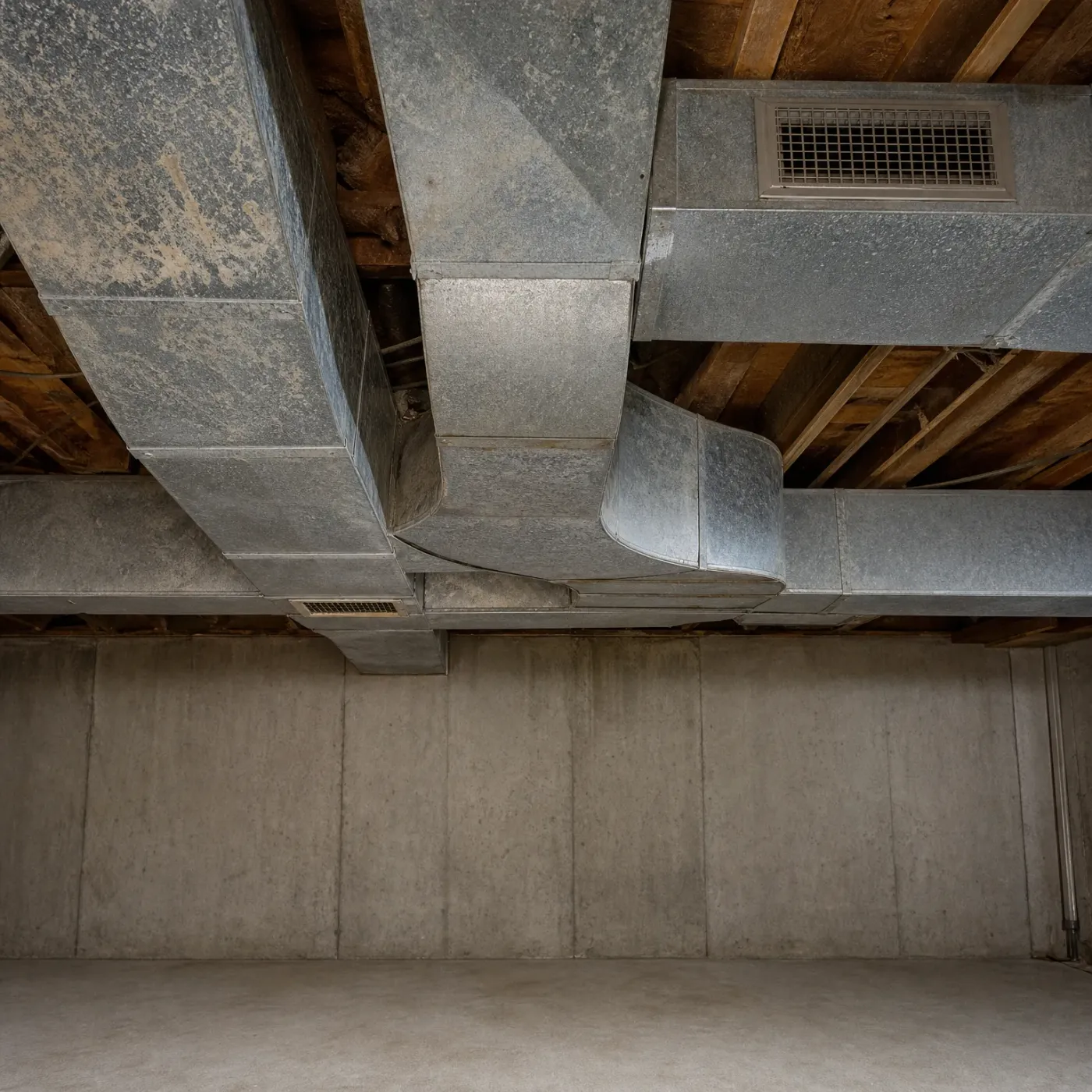
Galvanized sheet metal HVAC ducts with vent grilles run along a wooden floor joist ceiling above bare concrete walls and floor in an unfinished basement.
Before you get your ductwork cleaning
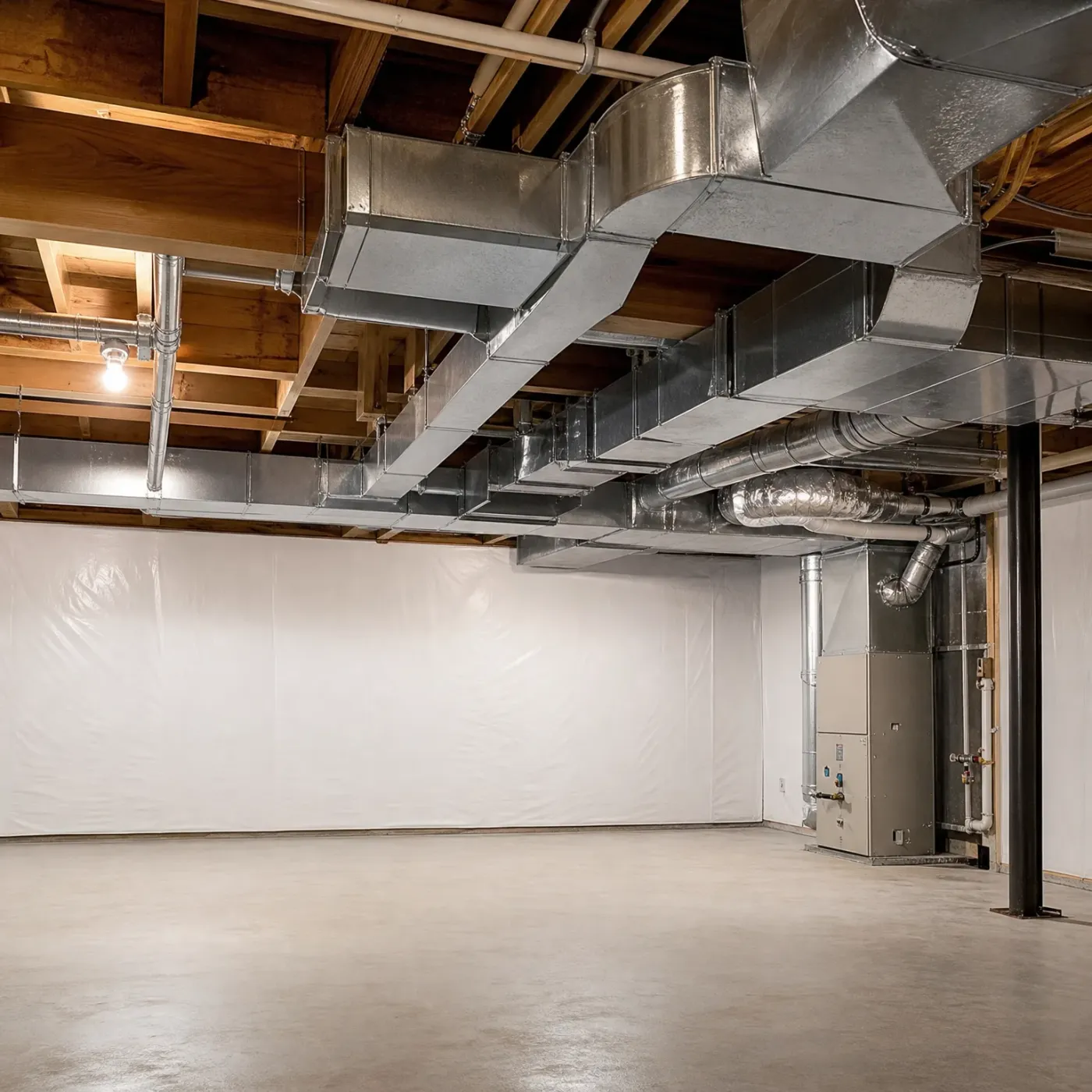
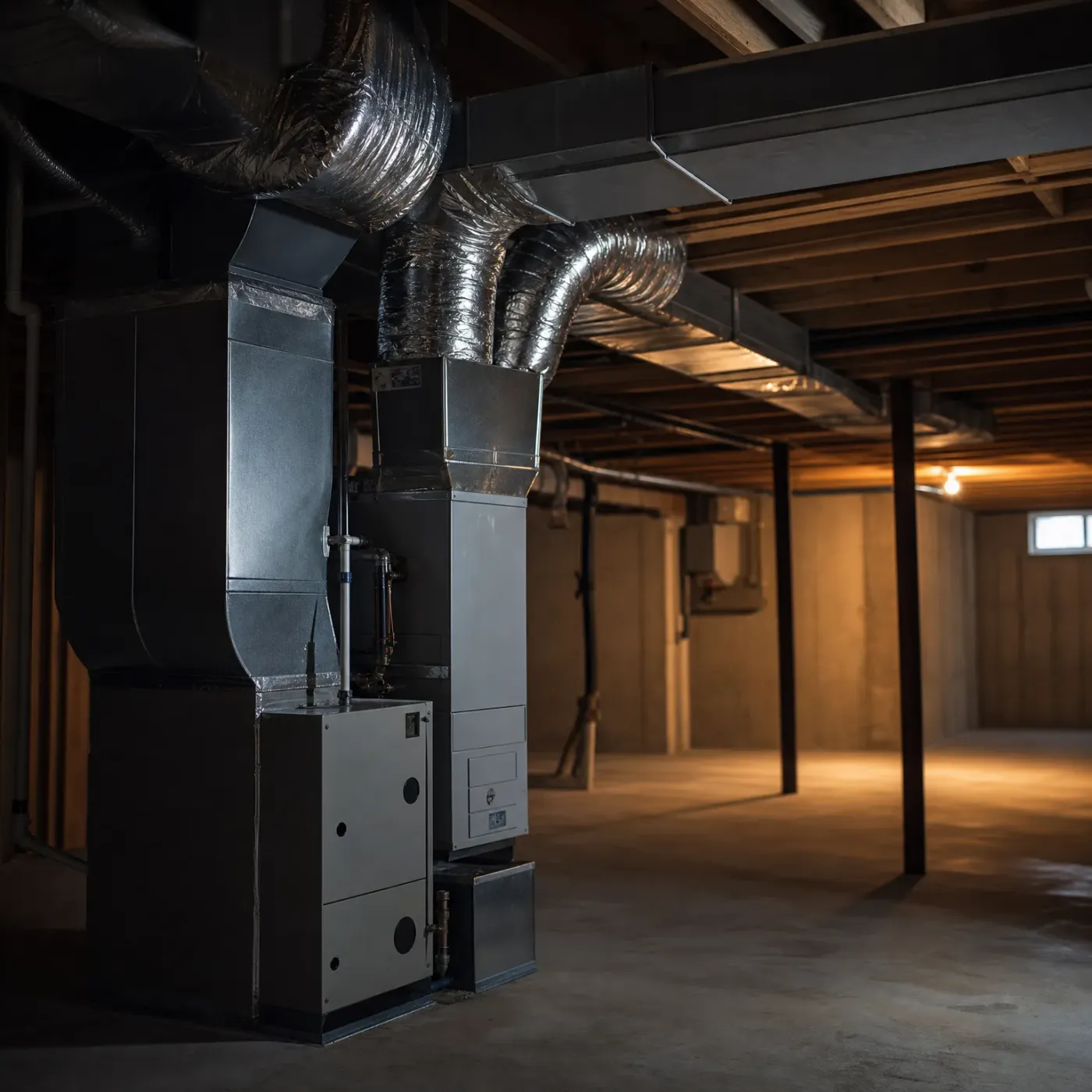
Empty basement with bare concrete floor, white plastic sheeting over one wall, exposed wood joists, galvanized sheet-metal ductwork and pipes overhead, and a furnace unit with a steel support column at right.
After you get your ductwork cleaning

Power here costs 16.84 cents per kilowatt-hour

At 16.84 cents per kilowatt-hour, every bit of cooled air that leaks out of your ducts before it reaches a register is money spent cooling your attic instead of your house. A system working to make up for that loss runs longer and pulls harder on your bill all summer.

EIA-861 2025

Unfinished basement with poured concrete walls, a bare concrete floor, white PVC pipes running down the wall, and exposed sheet-metal HVAC ductwork beneath wood floor joists.
Metal stays bright and every joint holds tight where branch lines meet the trunk, so air moves from the furnace to the register without losing ground.
Unfinished basement with bare concrete walls and floor, galvanized sheet-metal HVAC ducts running beneath wooden floor joists, and two red steel support columns.
Ducts sag off the joists and joints pull apart under their own weight, opening gaps that let cooled air spill out before it ever reaches a room.
  1. A blower door and manometer pressurize the duct system to find leaks.

  2. A smoke pencil or infrared camera locates the exact joint that's split.

  3. Loose connections at the trunk and boots get sealed with mastic.

  4. A final pressure test confirms the duct system holds air.

A woman wrapped in a thick cream knit blanket sits in a chair with an open book on her lap, beside a lit table lamp and a frost-covered window at night.
An older woman in a cream knit sweater smiles while looking off-camera in a warmly lit kitchen, with a round loaf of bread on a wooden board in the foreground and a dark window behind her.
A woman stands in the open front doorway of a single-story house with a covered porch, stone column bases and a dormer window, facing a man in a dark cap and gray polo shirt seen from behind in the foreground.

Your ducts should keep August outside the room, not inside it

A leak shows up the same way every time. One room runs warmer than the thermostat says it should, the register barely moves air, and the bill climbs past what the weather explains. Once you know where to look, gray dust rings and sagging flex duct in the attic tell you most of what's wrong. What they don't tell you is how deep the split runs or whether sealing one joint fixes the room or just moves the problem to the next one.

That's where a pressure test and a look at the whole run matter more than another hour in the attic. A contractor who works on Fort Worth duct systems through the summer has seen which joints fail first in this heat and knows what to check before touching mastic or tape. Answer a few questions about your house and you'll be matched with one local contractor suited to the ductwork you've got, not a handful of companies competing for the same job.

Interior corner of a living room with a beige upholstered armchair holding a textured pillow and throw, a eucalyptus arrangement in a ceramic vase on a wooden table in the foreground, a blurred glass-front cabinet behind, and a potted plant on a sunlit window sill.
A single-story house with horizontal siding and large windows lit from within at dusk, beside a lawn, low path lights and a dark gravel driveway, with pine trees and a distant waterway under an orange and blue sky.

Ductwork Cleaning

A local pro for your ductwork cleaning

Duct and vent cleaningDucts or ventsTarrant County, TX
Step 1 of 2

What ZIP code is the job in?

  • A beige upholstered armchair with a cushion and knit throw sits beside a double-hung window with a woven shade, next to a white fireplace mantel with a lit fire, a vase of greenery, and a round wooden table in the foreground.
    • Get matched with a Tarrant County pro who cleans ducts.
    • Your duct cleaning request goes to a local pro who does this work.
  • A shallow speckled beige ceramic bowl holding a leafy green branch sits on a wooden dresser beside a tall matte stoneware vase, with a window at left and a dark-framed picture at right.
    • One request and the duct cleaning stops waiting on you.
    • Once you send the form, finding a pro is off your list.
  • A ceramic table lamp with a pale tapered fabric shade sits on a rustic wooden table beside a wooden bowl, with a framed artwork on the beige wall and sunlight from a window at left.
    • Skip searching for someone who cleans ducts in Tarrant County.
    • Fill out one short form instead of calling around.
  • A black box-shaped outdoor wall lantern with seeded glass panels and a lit filament bulb mounted on a light gray board-and-batten exterior wall, beside a dark-framed glass door, with green leafy shrubs in the foreground.
    • Your duct cleaning request goes to one local pro.
    • Your request goes to one pro, not a list of companies.