A local pro who services air conditioners gets in touch about the tune-up.
Dust coming out of your vents usually means your duct system is leaking somewhere, pulling in air from the attic instead of moving clean air through the house. In Texas, that attic air carries a lot of fine dust and grit, and once it's in the system it goes straight through to every room. A dirty filter can cause the same thing, and so can a blower wheel that's caked up enough to shed debris back into the airflow.
The muggy summers here don't help. Humidity makes dust stick to coils and ductwork instead of just blowing through, so it builds up and comes loose in batches rather than a steady trickle. If you've noticed the dust getting worse over a few weeks, that's often what's happening.
This is the kind of thing a maintenance visit is built to catch. A contractor can check the filter fit, look at the blower compartment, and see whether the ducts are sealed where they should be. Finding out which of those is actually your problem is most of the work. Guessing wrong means paying for a filter change when the real issue is a duct leak in the attic, or replacing a part that was never dirty to begin with.
Instead of pulling numbers from different companies and trying to describe what your vents are doing over the phone to each one, you can get matched with a contractor who handles maintenance calls like this one in your area. They'll reach out to you directly, already knowing what you're dealing with, so you're not starting the explanation over every time you pick up the phone.
Texas summers put a lot of attic air pressure on a duct system that's already working hard to keep up with the heat. Whatever is causing the dust in your case, it's worth having someone look at it before the next heat wave makes it worse.
Why is my AC blowing dust into my house?
You've noticed dust settling again almost as soon as you wipe it down, and it seems to track back to the vents. You change the filter and it doesn't help for long. It's starting to feel less like a cleaning problem and more like something in the system itself.
A leak in your ductwork is pulling in dusty attic air
Your filter only catches what passes through it. If a duct seam has opened up or a connection has come loose, air gets pulled in from the attic before it ever reaches that filter, and it goes straight into your rooms. Attics in Texas collect a lot of fine dust and insulation particles, especially with the system running most of the year to keep up with the heat. A new filter won't fix a leak, and tightening the system back up is work for someone who can get into the attic and find where the air is actually getting in.
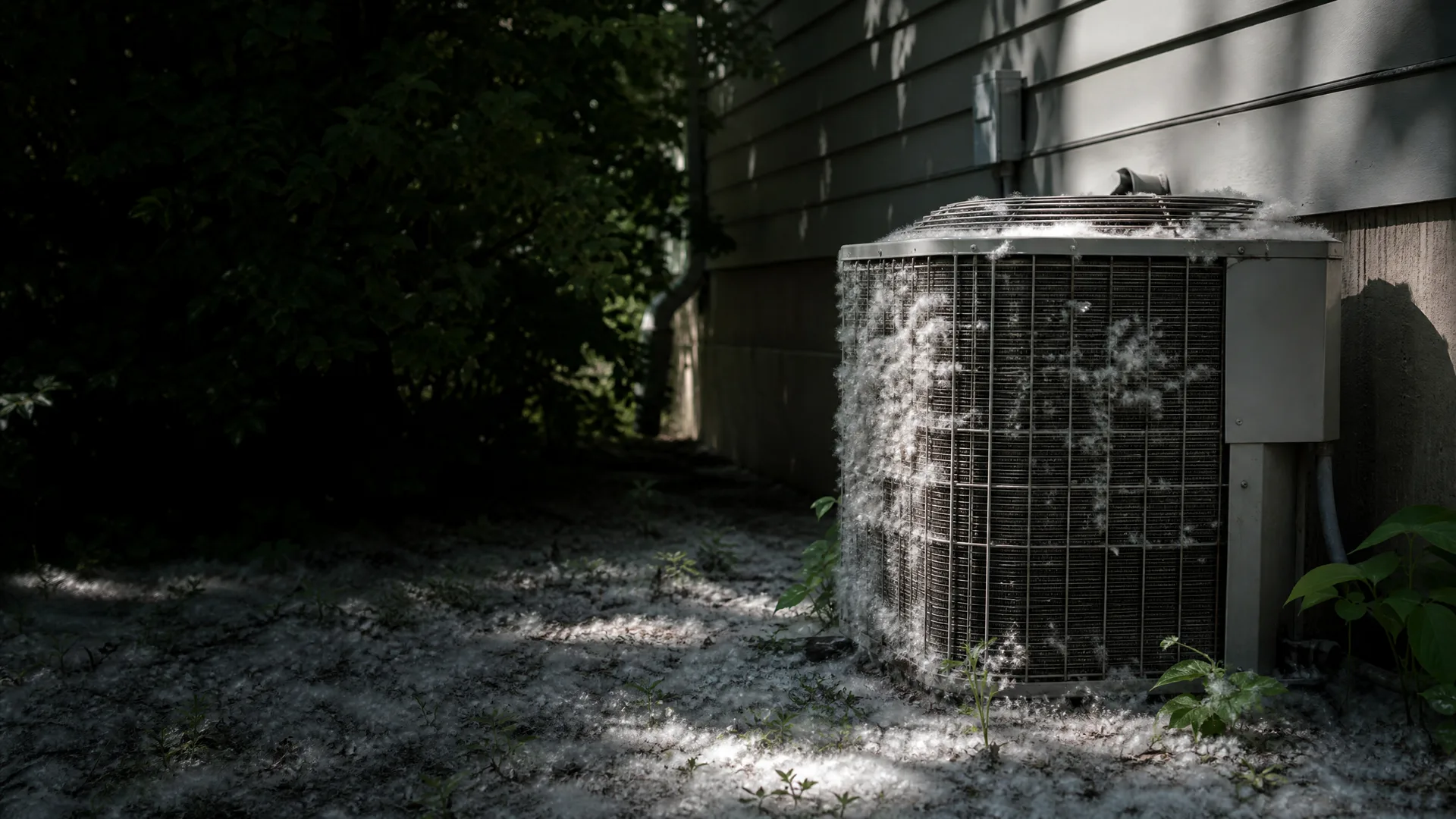
You're out pulling weeds along the side yard in late May, the kind of muggy afternoon that's already normal for Texas by then. You walk past the condenser and notice the fins look almost furry, covered in a layer of white fluff off the cottonwood trees that line the block. You brush a hand across it and some comes loose, but most of it's packed in tight between the fins. You think about the dust that's been showing up on the windowsills inside, and it clicks that the unit working this hard, pulling air through a screen of fluff, might have something to do with it. You straighten up, wipe your hand on your jeans, and head back inside, meaning to look into getting someone out to check it before the worst of summer hits.
One form instead of hunting for a pro who does air conditioner tune-ups.
Sending the form costs nothing.
Averaged across the state, summer air here holds a dew point of 68°F, according to NOAA climate data. That's thick, damp air, and your AC has to pull a lot of moisture out of it before the house feels dry. All that condensation forms on the evaporator coil inside the air handler. If dust is riding in through a duct leak, it doesn't just float past that coil, it sticks to the wet surface, and the dust that doesn't stick gets carried on through the damp ductwork and settles back out once it hits the drier air in your rooms. A coil caked in dust and moisture also drains slower, so you might notice water pooling near the unit or the system running longer than it used to.
NASA POWER T2MDEW county cells weighted by homes
Why does the dust keep coming back so fast?
You run a rag over the TV stand on Monday and by Thursday there's a film on it again. Dust shows up first on the furniture nearest the vents, then on ceiling fan blades, then on the floor where you can see footprints in it. Some rooms seem worse than others, usually ones at the end of a duct run. You might notice a musty or dry attic smell when the air kicks on, or a faint haze if you catch the light right as air comes through the grille. If this keeps up without anyone looking at the ducts, that attic air keeps riding into your house along with whatever it's carrying, and the system keeps working harder to push conditioned air through the gaps it's losing along the way.
1
Attic heat and pressure push air through gaps in the duct seams.
2
Dusty attic air gets pulled into the duct system through those leaks.
3
The blower pushes that dust-laden air straight out through your vents.
4
Dust settles on furniture and floors faster than a clean system would allow.
What this is doing to your house
Every cycle your AC runs is pulling in another round of attic dust and pushing it through the house. That's the film on your furniture by Thursday, the gray buildup on the return grille, the reason the kids' rooms always feel a little dusty no matter how often you vacuum. It's not your house being dirty. It's the duct system doing this on a schedule, all summer, every time the compressor kicks on.
Leaks like this don't fix themselves, and they tend to get worse as duct seams age and the attic keeps putting pressure on them. Finding someone who actually seals ducts, rather than just talking about it, usually means a handful of calls, explaining the same thing to each one, then sitting with quotes that don't quite compare. Getting matched with a contractor who handles this kind of leak and has them reach out to you skips that part, so you can get straight to the part where someone looks at your actual ducts.
Coil clear, airflow clean
This condenser sits clear of the shrub beside it, coil guards open and visible. Air moves through the fins with nothing blocking it, so the system pulls return air through the ducts the way it was designed to, not through gaps in the attic.
Coil packed with debris
Here the coil guards are caked in dust, the kind that builds up over a season outside. When a coil gets this covered, the system works harder to move air, and any leak pulling attic dust into your ducts gets pushed through a unit already struggling to breathe.
Before you get your air conditioner maintenanceAfter you get your air conditioner maintenance
68°F dew point
That's how much moisture your AC has to pull out of the air all summer. A maintenance check confirms the coil and drain are handling that load instead of adding dust to it.
A gap in the duct seams stays open until someone seals it. Maintenance finds where attic air is getting pulled in before more dust ends up on your furniture.
Power costs 15.40 cents per kilowatt-hour statewide
At 15.40 cents per kilowatt-hour, every hour your AC runs costs you something, and a system pulling dusty attic air is working harder than it should to cool the house. A maintenance visit checks whether your ducts and coil are costing you more than they need to.
EIA-861 2025 statewide residential average
The dust on your furniture is coming from your attic, pulled in through gaps in your ductwork and pushed out through your vents every time the system runs. Sealing those leaks and checking the coil and drain is what stops it. You could spend an evening searching for a contractor, calling a few, explaining the dust problem over and over, then sorting through quotes to figure out who actually works on duct leaks versus who just wants to sell you a new system. Or you can skip that part. Answer a few questions about your house and your AC, and a contractor who handles this in Texas gets matched to your situation and reaches out to you directly. No more wiping down the same shelf twice a week wondering if it's ever going to stop.