Heat Pump Repair in Sugar Land, TX
Homes here need heat from November through February and cooling from April through October. If your system quits, tell us what it's doing and a licensed contractor who covers Fort Bend County will get in touch.
Tell us about the job
It takes about a minute.
Sugar Land runs its heat pump most of the year
Your heat pump works eleven months here. Cooling from April through October, when afternoons average 93°F, then heat from November through February. That switch happens by way of the reversing valve, and a valve that sticks leaves the system blowing cold air when you called for heat, or running cold when you wanted it off.
The summer side does most of the wearing. Seven months of afternoons near 93°F keep the compressor and outdoor coil working hard, day after day. Winter nights average 46°F, mild enough that the heat pump usually keeps up without help. The bigger winter risk is the power. A third of Texas households lost power for at least a day in 2024, and a heat pump that loses power mid-cycle can come back needing its control board reset, or not come back at all.
- 4 months
- November through February, your system heats
- 7 months
- April through October, it cools
- 46°F
- the average winter night it heats against
- 93°F
- the average summer afternoon it cools against
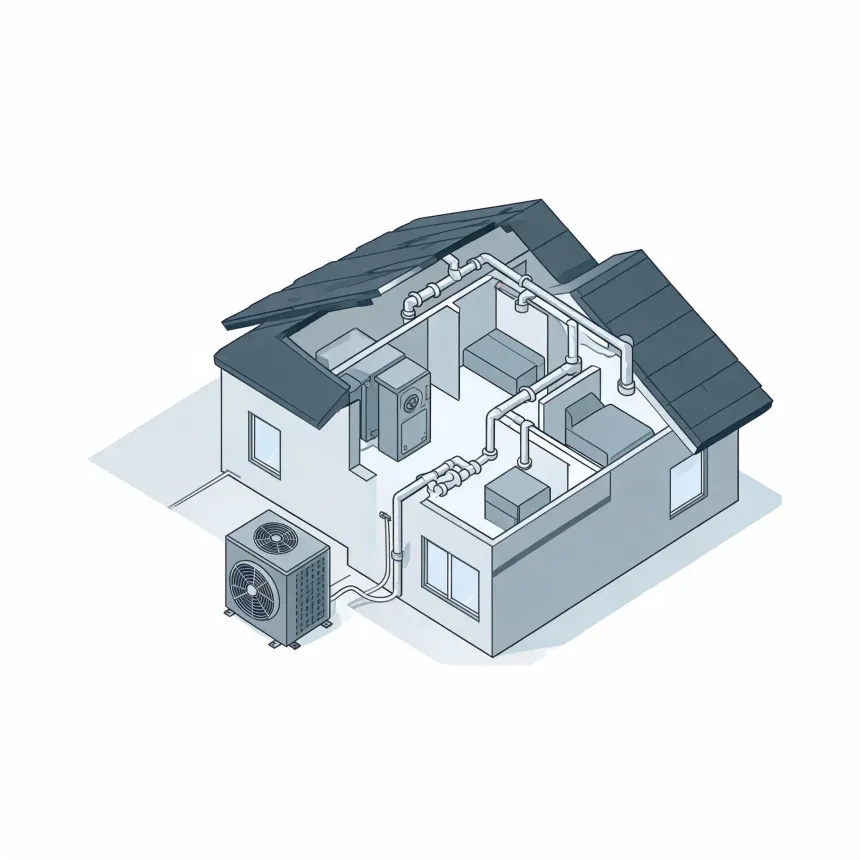
NOAA nClimDiv, 1991–2020 normals
Texas requires HVAC contractors to hold a state license.
The Texas Department of Licensing and Regulation issues that license after testing the contractor, and it keeps a record of who holds one. The license belongs to the contractor, not to any single job, so it is not something reissued or checked each time a truck shows up. It tells you this contractor met the state's standard, not that this particular repair was inspected.
A heat pump repair means someone working on the refrigerant side of the system, and that work falls under a separate rule that applies in every state. The technician has to hold EPA Section 608 certification to legally open that side of the unit. In Texas, the state license and this federal certification are two different things, and a heat pump repair calls on both.
Source: Texas Department of Licensing and Regulation
- Why is my heat pump blowing cold air?
- In defrost mode, your heat pump is designed to blow cold air for a few minutes while it melts frost off the outdoor coil. If it happens once in a while on a cold morning, that is normal. If the air stays cold and never warms back up, the problem is likely the reversing valve stuck in the wrong position, a refrigerant leak, or the outdoor unit not running at all. A contractor can check the refrigerant charge and test the reversing valve to find out which one it is.
- Why is there ice on my heat pump?
- A thin layer of frost on the outdoor coil during a cold snap is normal, and the unit should clear it on its own through a defrost cycle. Heavy ice that builds up and does not melt points to a real problem, usually low refrigerant, a failing defrost sensor or control board, or a fan motor that has stopped turning. If the outdoor fan is not spinning, the coil never gets the airflow it needs to shed ice, even if the rest of the unit sounds like it is running. Leave the ice alone rather than chipping at it, and have a contractor look at the defrost controls and refrigerant level.
- Why is my heat pump running but not cooling?
- If the unit is running but the air coming out is not cold, the most common causes are a dirty air filter blocking airflow, low refrigerant from a leak, or a failing compressor. A filter that has not been changed in a while starves the indoor coil of air and can eventually cause it to freeze up, which cuts cooling even though the system keeps running. Check the filter first since that is the one thing you can rule out yourself. If it is clean and the air is still warm, a contractor will need to check refrigerant levels and test the compressor.