
Mini Split Installation in Denton, TX
A new system here will heat from November through March and cool from May through October every year. Tell us about the house, and a licensed contractor who covers Denton County will get in touch.
Tell us about the job
It takes about a minute.
Denton County asks for both heat and cooling, most of the year
Homes here need cooling from May through October, six months a year, with summer afternoons averaging 94°F. Then heat takes over from November through March, five months a year, on nights that average 36°F. That is eleven months where a mini-split has to be doing one job or the other.
A mini-split is a split system heat pump under the federal standard, so a new one has to meet 14.3 SEER2 for cooling and 7.5 HSPF2 for heating. Those numbers matter more here than in a place that only heats or only cools, since this system will spend nearly the whole year running one side or the other. Power matters too. Texas saw 33% of households lose power for at least 24 hours in 2024, and this county has recorded 20 winter storms and 115 damaging wind events over the past ten years.
- 5 months
- November through March, your system heats
- 6 months
- May through October, it cools
- 36°F
- the average winter night it heats against
- 94°F
- the average summer afternoon it cools against
NOAA nClimDiv, 1991–2020 normals
Texas requires HVAC contractors to hold a state license.
The Texas Department of Licensing and Regulation issues that license after the contractor has been tested, and it keeps a record of who holds it. The license belongs to the contractor, not to any single job, so it covers the person doing the work rather than the mini-split itself.
For an installation like this, the license tells you the contractor has met the state's testing. Most cities and counties also require a permit from the local building office for a job like this, with an inspection once the work is done. That inspection is a separate check on the installation itself, done by the city or county rather than the state.
Source: Texas Department of Licensing and Regulation
- Is a mini split worth it?
- For a lot of Denton homes, yes, especially for a room or addition that never gets right with the main system. A mini split runs on its own thermostat, so it's heating or cooling only the space you're using rather than the whole ductwork. Denton needs cooling May through October and heat November through March, so whatever you install has to handle both, and a heat pump mini split does both from the same unit. A contractor can look at the specific room and tell you what size unit it needs.
- How many rooms can a mini split cover?
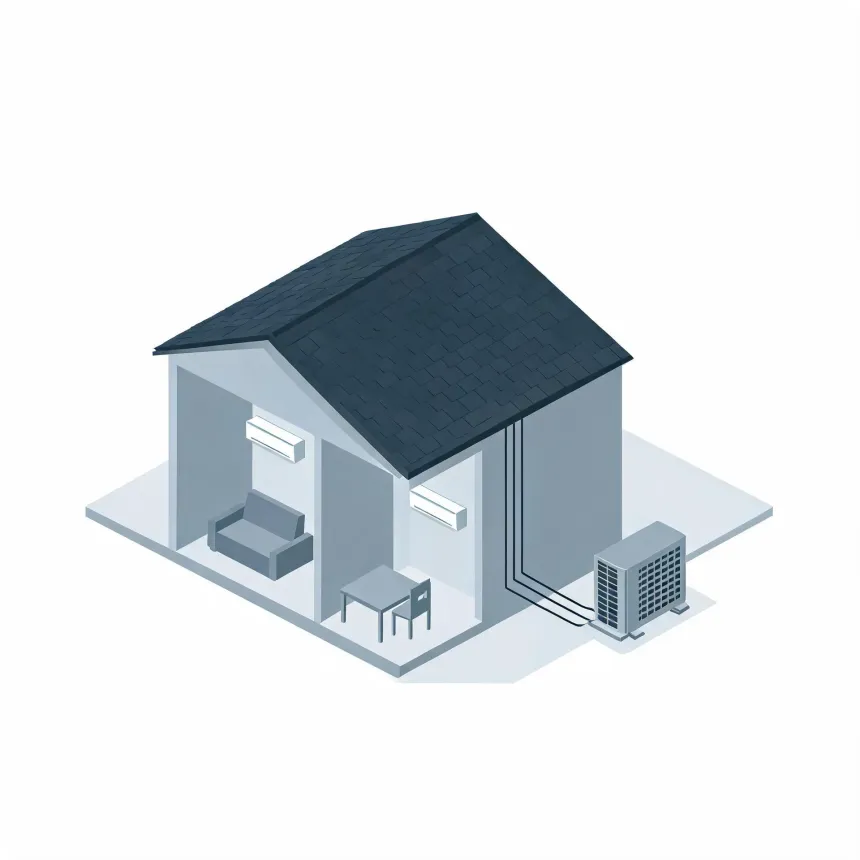
- A single outdoor unit can run anywhere from one indoor head up to five or so, depending on the system. Each indoor head handles its own room or open area, and you set the temperature on each one separately. The right number for your house depends on the size and layout of the rooms you want covered, which is something a contractor needs to walk through in person.
- Can a mini split heat a whole house?
- It can, if it's sized and placed to cover every room, but most houses end up needing more than one indoor head to do it. A mini split heat pump pulls heat from outside air even when it's cold, so it keeps working through Denton winters where nights average 36 degrees. Whether one system can carry the whole house or whether you're better off pairing it with existing ductwork depends on the layout, and that's a call a contractor makes after seeing the house.