Mini Split Installation in Fort Worth, TX
A new system here will heat from November through March and cool from May through October every year. Tell us about the house, and a licensed contractor who covers Tarrant County will get in touch.
Tell us about the job
It takes about a minute.

Eleven months of work in Fort Worth
Your mini-split will run almost year round here. Cooling season stretches May through October, with summer afternoons averaging 94°F, and heat is needed November through March, with winter nights averaging 37°F. That leaves only a month or so when it can rest.
A new unit has to be sized to handle both ends of that range, not just the Texas heat. And it has to meet the federal minimum for split-system heat pumps, 14.3 SEER2 for cooling and 7.5 HSPF2 for heating, if it was built on or after January 1, 2023. With two thirds of homes here heating with electricity, a mini-split that struggles on a cold night is not a small problem.
- 5 months
- November through March, your system heats
- 6 months
- May through October, it cools
- 37°F
- the average winter night it heats against
- 94°F
- the average summer afternoon it cools against
NOAA nClimDiv, 1991–2020 normals
Texas requires HVAC contractors to hold a state license.
The Texas Department of Licensing and Regulation tests and records HVAC contractors before they can take on jobs like this. That license belongs to the contractor, not to any single job, so it travels with them from one house to the next rather than being issued fresh for your install.
For a mini-split installation, that license is the main thing standing behind the work, since Texas puts the state's name on the contractor rather than the job. Most cities and counties in Texas still require a permit for this kind of installation, with an inspection once it's done, so the wiring and refrigerant lines get a second set of eyes beyond the contractor doing the work.
Source: Texas Department of Licensing and Regulation
- Is a mini split worth it?
- For most homes here, yes, especially if you're heating or cooling a room your main system doesn't reach well. Fort Worth needs cooling six months a year and heat the other five, so a mini split earns its keep almost year round rather than sitting idle most of the time. It also runs on electricity, which matters since most homes here already heat that way. A contractor can look at the specific room or addition you're trying to condition and tell you whether it makes sense there.
- How many rooms can a mini split cover?
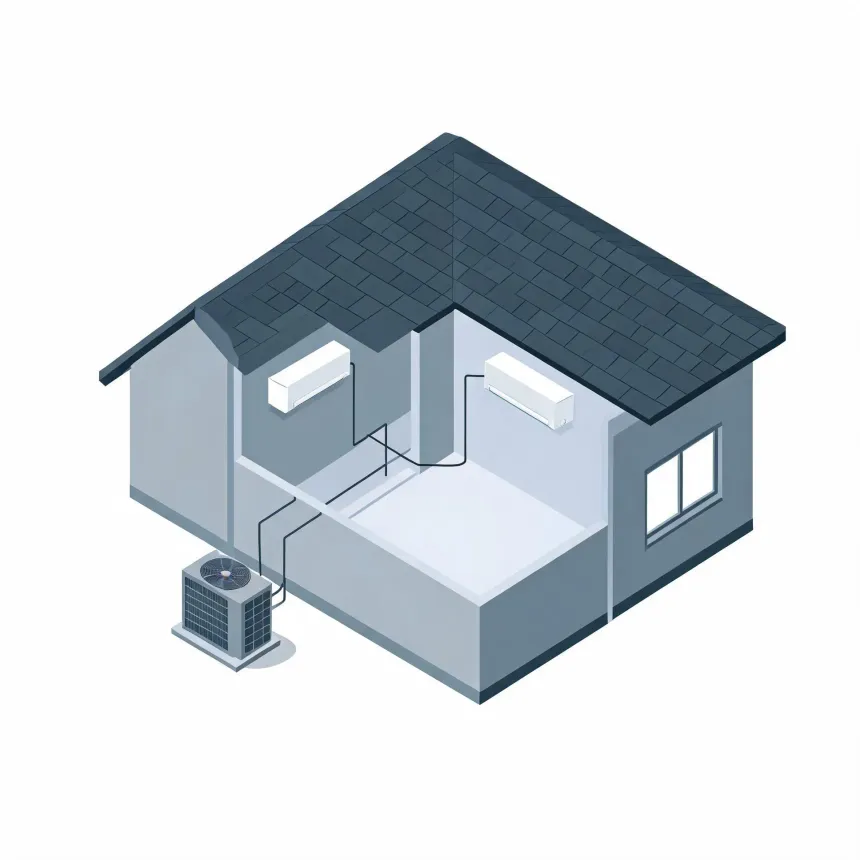
- A single indoor unit is built for one room or one open space. If you need to cover several separate rooms, you'd use a multi-zone system, which runs more than one indoor unit off a single outdoor condenser. Each indoor unit still heats and cools its own room independently. How many zones your home can support depends on the outdoor unit's capacity, which a contractor sizes to the space.
- Can a mini split heat a whole house?
- It can, but only if you install enough indoor units to reach every room, since each one only conditions the space it's mounted in. A multi-zone setup can heat a whole house this way, and it holds up well through Fort Worth winters where nights average 37°F from December through February. Whether that's the right approach instead of a ducted system depends on your home's layout, which is worth having a contractor walk through in person.