
Duct Cleaning in McAllen, TX
Tell us about your home, and a licensed contractor who covers Hidalgo County will get in touch.
Tell us about the job
It takes about a minute.

McAllen ductwork works hard in a short, hot year
Your furnace only runs through December and January here, so for most of the year it's the air conditioner moving air through those ducts, day after day of Texas heat. Dust and pollen settle in the duct walls during all those cooling months, and with the furnace idle most of the year, there's no regular burst of heat to help move that buildup along.
Hidalgo County sees its share of high wind, and Texas homes lose power often enough that systems sit off, then restart, pulling in whatever has settled since the last run. Dust and debris built up in the ducts get pushed straight into the rooms you live in every time the system kicks back on.
- 2 months
- December through January, your furnace pushes air through your ducts
- 10 months
- February through November, your air conditioner does the same
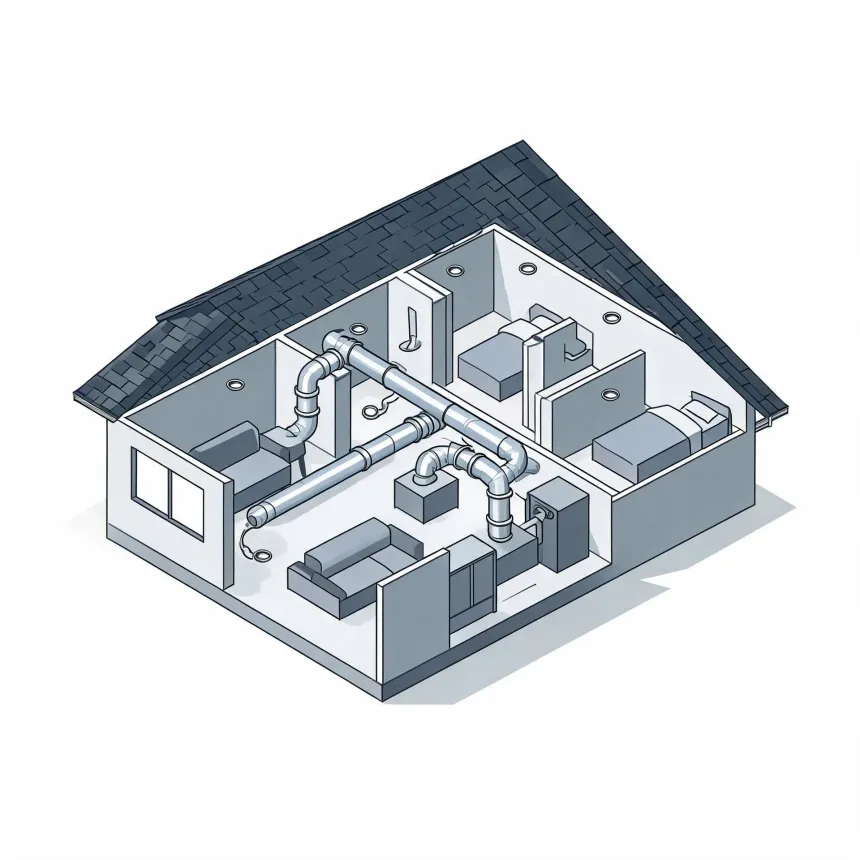
NOAA nClimDiv, 1991–2020 normals
- How often should air ducts be cleaned?
- There is no fixed schedule that fits every home. Most homes only need it when there is a reason, like dust visibly blowing out of the vents, a musty smell when the system runs, or work that was just done on the ducts themselves. Pets, a water leak near the ductwork, or recent renovation work all mean it is worth checking sooner. A contractor can look at the ducts and tell you whether cleaning them now would actually help.
- Is air duct cleaning worth it?
- It is worth it when there is a real reason for it, not just as something to do on a schedule. Visible dust at the vents, a musty smell when the air handler runs, or recent work on the ducts are all reasons to have them cleaned. It will not lower your energy bills and it will not fix a system that is running poorly for some other reason. If you are not sure whether your ducts need it, a contractor can check before doing the work.
- What does air duct cleaning involve?
- A contractor connects a vacuum to the duct system to pull it under negative pressure, then uses brushes or air whips to knock dust and debris loose from inside each duct run so it gets pulled into the vacuum instead of back into the room. The supply and return vents and the grilles are usually cleaned the same way, since they collect the same dust. Afterward the vents get put back and the system is checked to make sure air is still moving through it the way it should.