












Why your heat won't reach upstairs in Texas

RepairFurnace or heatingTexas
Step 1 of 2

What ZIP code is the job in?

Why won't heat reach the upstairs rooms in my house?

You've checked the vents upstairs and the air is barely moving, or it's moving but it's not warm. Meanwhile the thermostat downstairs says it's fine. In a two-story house with one furnace, that gap between floors is common, but it's worth knowing whether it's just how the system was built or something that's actually failing.

Heat rises, but your duct system still has to push it there

Warm air naturally wants to rise, so in theory the upstairs should heat on its own. In practice, your furnace has to force that air through ductwork sized for the whole house, and the rooms farthest from the furnace, usually the upstairs ones, get whatever pressure is left by the time the air gets there. If a duct run is long, pinched, or leaking into the attic, the upstairs rooms lose out first. A single thermostat downstairs also only reads the temperature where it sits, so the furnace stops running once that floor is comfortable, whether or not the air has reached the second floor yet.

A beige residential gas furnace with white PVC vent pipes, copper and yellow gas lines, and adjacent sheet-metal ductwork stands on a concrete floor beside a plain white wall.

Heat rises, your furnace doesn't push it

Warm air naturally moves up through a house on its own, and a lot of homeowners assume that means the upstairs should actually run warmer, not colder. But your furnace still has to force that same warm air through ductwork against that natural stacking effect, called the stack effect. If the blower is weak, a return duct is blocked, or a damper got left shut, the air gives up before it reaches the second floor registers.

A gray high-efficiency furnace with white PVC vent pipes and metal ductwork stands on a concrete floor beside a plain off-white wall in a basement.

One thermostat can't see both floors

Most of these houses run on a single thermostat, usually mounted downstairs, controlling one furnace for the whole house. That thermostat only knows the temperature where it's hanging. Once it reads satisfied, the furnace shuts off, even if the upstairs rooms never caught up. There's no second sensor reporting back from the bedrooms above, so the system has no way to know it left part of the house short.

Is It the Ducts or the Furnace

Ducts and Dampers

  • If the upstairs runs on its own branch of ductwork, a closed or stuck damper can cut off most of the warm air before it ever reaches the vents.
  • A duct that's come loose in the attic will dump warm air there instead of into the room it was supposed to reach.
  • Blocked or crushed flex duct restricts airflow enough that only a trickle makes it up the trunk line.
  • A contractor can check the dampers and the run of duct serving the upstairs to see if the air is actually getting there at all.
  • This is often a fix that doesn't touch the furnace itself, just what's carrying the air after it leaves it.

Furnace and Blower

  • A weak blower motor can move enough air to satisfy the downstairs thermostat without ever pushing hard enough to reach the second floor.
  • A dirty filter restricts airflow at the source, so every room downstream gets less, and the farthest rooms feel it first.
  • If the furnace short cycles, it may shut off before it's built up enough pressure to send air all the way upstairs.
  • A failing blower capacitor can leave the motor running at reduced speed instead of full speed, even though it still turns on.
  • A contractor can test the blower's actual output and see whether the furnace is sized and running the way the house needs it to.
A gray high-efficiency furnace with white PVC vent pipes stands beside sheet-metal ductwork and a water heater in an unfinished basement with concrete walls and wood framing.
Ductwork sized and sealed to carry warm air to both floors, so the upstairs vents put out the same heat as the ones downstairs.
A beige gas furnace with a metal flue pipe stands in a basement against concrete block walls, beside sheet-metal ductwork, copper and white plastic pipes, and a water heater at right.
Ductwork straining to push air through an older system, leaving upstairs rooms colder no matter how long the furnace runs.
  1. The furnace fires up and starts heating the air moving through it.

  2. The blower pushes that warm air into the main trunk line.

  3. The trunk splits into branch ducts heading to each room.

  4. Air has to travel farther and climb higher to reach upstairs.

An older beige furnace with two louvered vent panels stands on a concrete basement floor, connected to galvanized ductwork and a metal flue pipe, with gas piping and flexible conduit on the wall behind.
Before you get your furnace repair
A beige high-efficiency furnace in an unfinished basement, with white PVC vent pipes, a yellow gas line, metal ductwork, and exposed wood framing on a concrete floor.
After you get your furnace repair

Matched to your furnace job

Send the request today and let a furnace pro reach out to you.

No charge to send it. You decide if you hire them.

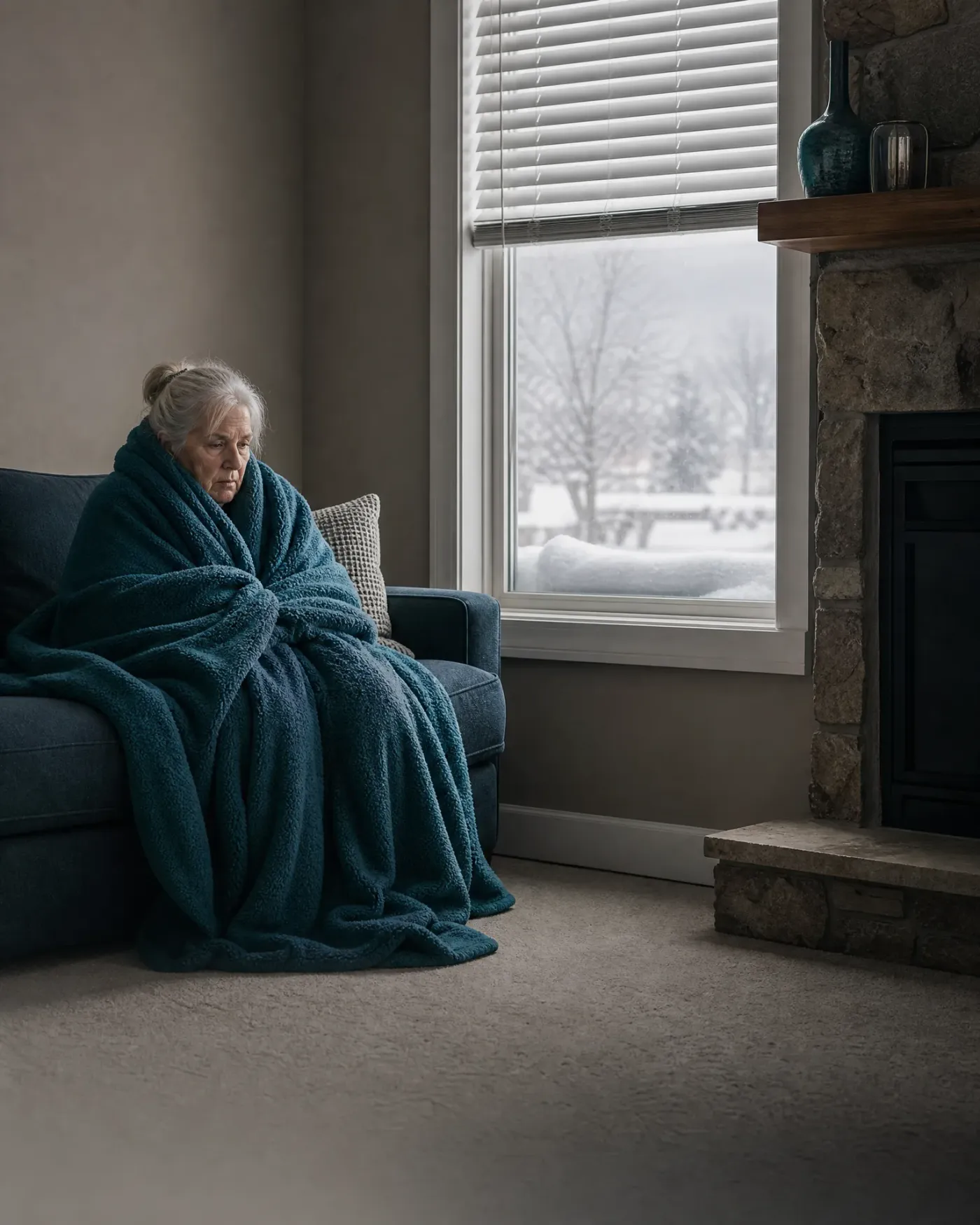
A cold room upstairs is a bedroom somebody has to sleep in. Kids pile on extra blankets, or a space heater comes out of the closet and runs all night next to the bed, pushing the power bill up while the furnace downstairs barely has to work. The thermostat on the first floor reads warm enough, so the furnace shuts off before the upstairs ever catches up, and that gap repeats every night from the first cold snap through the end of winter. A furnace working harder than it should to push air up and across a second floor also wears down sooner, and the rooms it struggles to reach stay the coldest spots in the house no matter how high the thermostat gets set. Left alone, it's not a problem that fixes itself with a warmer week. It's the same uneven heat, the same cold floor underfoot, the same closed-off bedroom, until a furnace repair sorts out why the air isn't getting there.

A smiling man in a dark navy sweater sits on a light sofa in a living room, with a glass bowl of popcorn on a wooden coffee table and bookshelves behind him.
A smiling man in a dark green sweater sits on a tan leather sofa in a dimly lit living room, with a bowl of popcorn in the foreground and a kitchen area blurred behind him.
A smiling middle-aged man in a dark shirt sits on a gray sofa in a living room, with a bowl of popcorn on a side table and shelves, a window and kitchen area behind him.
A smiling bearded man in a dark gray t-shirt sits on a gray couch in a living room, with a large glass bowl of popcorn on a wooden table in the foreground.
A gray high-efficiency furnace in a basement, connected to sheet-metal ductwork on the left and white PVC vent pipes above, with black gas and drain piping and an exposed wood-stud wall with OSB sheathing on the right.

A furnace that's keeping up

This one is sized right and the ductwork around it is sealed tight, trunk and branch lines both. Air moves through it easily, so the climb to the second floor doesn't cost it much heat. Upstairs vents run close to what you feel downstairs.


An older gas furnace with two louvered front panels stands on a concrete basement floor beside galvanized sheet-metal ductwork, pipes, and a weathered concrete wall.

A furnace that's falling behind

This one is older and the ducts running off it show it, loose joints, maybe some rust on the panels. It's working harder to push air the same distance, and by the time that air reaches the upstairs vents, it's lost a lot of what it started with.

A woman with dark hair in a bun reclines on a sofa with her eyes closed, wrapped in a cream fleece blanket, a closed blue hardcover book resting in front of her, with a lit lamp and a vase of dried flowers in the background.
A smiling bearded man in a navy sweater sits at a candlelit dinner table with a glass of red wine, a bowl of salad, and plates of food in the foreground.

Living with it as is

You keep adding a blanket or running a space heater upstairs, the furnace downstairs keeps cycling, and the power bill keeps climbing while the gap between floors stays the same.

Request a pro

Getting it looked at

A contractor checks the ductwork, dampers and furnace output, finds what's actually blocking the heat, and you stop guessing at it room by room.

Request a pro

Winter nights average 41°F statewide

Average overnight low in Texas sits around 41°F in December, January and February. That's not brutal cold, but it's enough that a furnace struggling to push warm air up a flight of stairs will leave the upstairs feeling closer to that 41°F than to whatever the thermostat downstairs is reading.

NOAA nClimDiv 1991-2020 county normals weighted by homes

Where the warm air is going

  • Cold air upstairs while the downstairs thermostat reads fine usually points to ductwork or blower output, not a broken furnace.
  • A damper stuck shut or a duct that's come loose in the attic can cut off most of the warm air before it reaches the second floor.
  • An undersized or poorly sealed duct run forces the furnace to work harder without actually warming the upstairs rooms.
  • A contractor can check dampers, duct runs and blower output and find exactly where the warm air is being lost.
  • Once a contractor takes a look, the guesswork around space heaters and extra blankets is over.
  • Sending the form is the only step left on your end; a contractor takes it from there.

A cold upstairs with a downstairs thermostat that reads fine is not a mystery furnace problem. It's a sign that warm air isn't making the trip from the furnace to the second floor, and that comes down to the ductwork and the dampers more often than the furnace itself. A damper stuck shut cuts off a branch line before the air gets anywhere near the vent. A duct that's worked loose in the attic empties warm air into insulation instead of a bedroom. A duct run that's too small or poorly sealed makes the furnace push harder without the upstairs ever feeling it.

None of that shows up by looking at the thermostat downstairs, and none of it gets fixed by running the furnace longer. It takes someone checking the dampers, tracing the duct runs, and measuring what the blower is actually putting out at the vent, upstairs versus down. That's the kind of check a contractor can do that guesswork from the living room can't.

Once that's done, the extra blanket and the space heater in the corner stop being the answer to a cold bedroom. The form on this page is what starts that. There's nothing else to figure out on your end. A contractor takes it from here, and the search for what's wrong upstairs stops being something you're carrying around every night the temperature drops.

A lit ceramic table lamp with a linen shade sits on a round wooden side table with a small vase of greenery and a dark shallow bowl, beside a beige upholstered sofa with a cushion and knit throw, below a framed artwork on a pale wall.
Corner of a beige linen sofa with a large woven cushion and a fringed knit throw, beside a potted leafy tree in a woven basket against a neutral wall.
Sunlit interior corner with a wood-framed armchair with beige cushions and a striped pillow, a leafy plant in a tall ceramic pot, a window with wood sill showing green foliage outside, and dark wood flooring.
A lit black path light beside a stone walkway leading to a dark front door of a white clapboard house, with shrubs and flowering plants in the bed at dusk.
A covered porch at dusk with a wooden front door, a lit lantern wall sconce on gray horizontal siding, a black rocking chair with a cream throw, a potted white flowering plant, a coir doormat, and a window showing a lit interior lamp.

A local pro for your furnace repair

Once you send the form, finding a pro is off your list.

I'm done searching

You only hire the pro if you want to.





