Profile view of a bearded man wearing a black baseball cap and a dark gray T-shirt against a plain light background.

Signs your furnace is undersized for a Texas home

New system or replacementFurnace or heatingTexas
Step 1 of 2

What ZIP code is the job in?

A furnace that cannot keep up shows itself in a few clear ways. It runs the whole time a cold front sits over your area and the house still feels cool near the floor and the windows. It cycles on and off far more than it used to, trying to catch up and never quite getting there. Rooms farthest from the furnace stay noticeably colder than the room with the thermostat. This happens because the unit was sized for a smaller load than your house actually has, maybe from an addition, more glass, or just a furnace that was undersized from the day it went in. Since most homes here heat with electricity, an undersized furnace also means it leans harder on backup heat strips to make up the difference, and those run up the bill fast. If this sounds like your house on the coldest nights, the furnace itself is the problem, not the thermostat setting or the vents.

A gray high-efficiency furnace with white PVC vent pipes stands against a concrete basement wall beside sheet-metal ductwork, a small condensate pump on the floor, and exposed wood framing at left.
A furnace sized right for your home cycles on, warms the rooms evenly, and shuts off, holding steady through even a hard freeze.
A gray sheet-metal furnace with flue pipe and adjacent ductwork stands against a stone basement wall on a concrete floor, with white PVC and metal pipes running nearby.
An undersized furnace runs nearly nonstop against the cold, straining its gas lines and joints while rooms far from it stay chilly.
A woman with long wavy brown hair in a grey ribbed sweater sits on a couch indoors, looking toward a window, with a potted palm-like plant and fireplace behind her.
A woman with long brown hair wearing a green V-neck top and beige cardigan sits on a light sofa, looking off to the side, with a dining table, lamp and framed picture in the background.
A woman with long dark hair in a cream knit sweater sits on a beige sofa indoors, looking toward a bright window with a houseplant and framed picture in the background.
A woman with long dark hair in a green knit sweater sits on a couch indoors, smiling and looking toward a window with a blurred room behind her.
A woman in a cream cardigan and jeans stands with one hand raised facing an open front door of a gray horizontal-siding house, with a black lantern wall light, a potted shrub with yellow flowers, and a stone-faced porch column.

What an undersized furnace means for your house

You notice it in the rooms farthest from the furnace first. A bedroom at the end of the hall or a room over the garage stays colder than the rest of the house no matter how long the system runs. Since most homes here heat with electricity, that furnace is working against a hard freeze without ever catching up, and the strain shows up on your electric bill before it shows up anywhere else.

A furnace that runs nearly all day during a cold front also wears out faster than one sized to cycle normally. The parts inside it were built for on and off, not on and on. If this sounds like your house, a licensed contractor local to your area can look at the rooms that stay cold and the system that is struggling to heat them, and tell you what size furnace your house actually needs. You would hear from one contractor, not several, and one who installs furnaces in homes like yours every winter.

A living room corner with a light beige sofa holding a textured taupe cushion, a large ceramic vase of olive branches by a window, a framed neutral artwork on the wall, and a dark bowl with stacked books in the foreground.
A gray gas furnace stands on a concrete basement floor, connected to sheet-metal ductwork, white PVC vent pipes, and a yellow gas line, with plastic sheeting covering the walls.

Furnace sized right

This one keeps pace with a Texas cold snap. It fires, runs its cycle, and shuts off. The ductwork and gas piping stay dry and sound, no strain showing anywhere along the lines. You can walk the basement and nothing about it looks worked too hard.


A metal furnace with louvered panels stands against a concrete basement wall, connected to sheet-metal ductwork and a round flue pipe, with wooden framing posts and a pipe nearby.

Furnace running too hard

This one never gets ahead of the cold. Dust builds up around a unit that rarely gets a break between cycles. The piping and ductwork are older here too, but the wear you're seeing is as much about the system running nonstop as it is about its age.

Undersized vs. Right-Sized Furnace

Undersized furnace

  • The blower runs for long stretches and the thermostat still reads a few degrees under what you set it to.
  • A hard freeze or an ice storm is when it falls behind the most, because it has no reserve capacity to call on.
  • Electric bills climb faster than the temperature drop would explain, since the unit leans on its backup heat strips to make up the difference.
  • Rooms on the far end of the duct run or over an unheated garage stay noticeably colder than the room with the thermostat.
  • It short cycles in milder weather, then runs almost continuously once a front moves through.
  • The system shows wear on the gas lines, joints, or blower motor sooner than you would expect, from being pushed past its rated output.

Right-sized furnace

  • It holds the thermostat setting within a degree or two through a hard freeze without running nonstop.
  • Rooms farthest from the furnace warm at close to the same rate as the room with the thermostat.
  • Backup heat strips rarely kick in, so a cold snap does not show up as a spike on the power bill.
  • The unit cycles on, finishes its run, and shuts off, the pattern you would expect from a system matched to the house.
  • Ductwork and connections show no added strain, because the furnace is not working beyond what it was built to handle.
  • A contractor sizing it for your home accounts for your square footage, insulation, and the coldest nights your area sees, not just the house's age.
An older metal furnace with PVC and metal pipes stands on a concrete basement floor beside galvanized ductwork, with wooden stairs and a water tank in the background.
Before you get your furnace installation
A gray high-efficiency furnace in a basement with sheet-metal ductwork, white PVC vent pipes, metal plumbing lines, a condensate pump on the floor, and a window showing green trees outside.
After you get your furnace installation
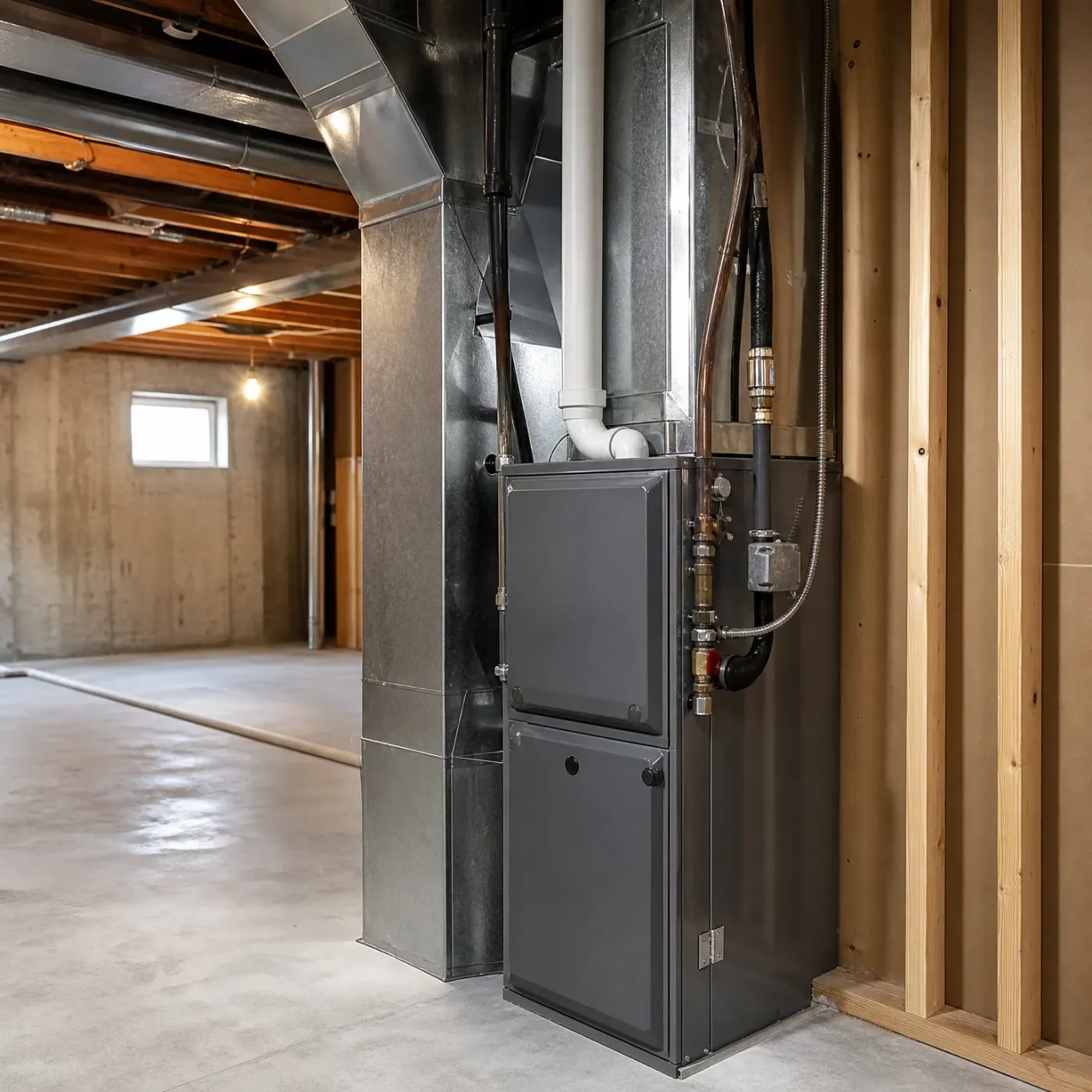
A gray furnace with copper and flexible piping stands against a wood-framed wall in an unfinished basement, connected to galvanized sheet-metal ductwork and PVC venting, with a concrete floor and exposed joists.

Get the right pro for your furnace

One installer gets your project, so there's no bidding war over it.

Get in touch with a local installer about a new furnace.

Get a licensed local pro

Asking costs nothing, and the choice to hire stays yours.

Winter nights average 41°F statewide

Winter nights here average 41°F, but that number hides the cold snaps that drop well below it. A furnace sized right for your house rides those nights out without strain. One that's too small shows it the moment a front moves through.

NOAA nClimDiv 1991-2020 county normals weighted by homes

A furnace is sized by the BTUs it can put out per hour, not by how big the unit looks in the closet or garage. A bigger cabinet doesn't mean more heat.

If the one in your house was sized for a smaller home or a milder winter than the ones Texas actually sends through, it will run hard and still fall short on the coldest nights.

An older woman with gray hair in a bun and glasses, wearing a beige knit sweater, smiles while looking to the side in a warmly lit kitchen, with a loaf of bread on the counter in the foreground and a snowy scene outside the window.
A woman with her hair in a bun holds a sleeping young child against her chest, both wrapped in a textured beige knit blanket on a sofa in a dimly lit room with a lamp, framed picture, and bookshelf behind them.

Where That Leaves Your Furnace

  • A furnace that runs long on every cold front and still leaves rooms short of the thermostat setting is working past its limit.
  • The pattern shows up fastest during a hard freeze, when the gap between a sized-right system and an undersized one is widest.
  • A furnace matched to your house holds a steady temperature through a cold snap instead of cycling on and off trying to catch up.
  • A local contractor who installs furnaces in Texas homes all winter knows which sizes actually hold up to the state's worst fronts.
  • Getting matched with one licensed local contractor means a single call back from someone who works on this equipment, not a stack of competing calls.

The signs come down to one question: does your furnace hold the temperature through a hard freeze, or does it fall behind? If it runs long, cycles hard, and the house still feels a few degrees short where you've set the thermostat, it's undersized for what Texas winters ask of it. A furnace matched to your house doesn't struggle that way. It fires, holds steady, and shuts off, even when a front drops temperatures fast and stays put for a day or two.

That gap only widens with a bigger system behind it, which is why sizing matters more than the age or the brand of what's in your closet right now. The furnace that was right for a smaller house, or for a milder stretch of winters than the state has been seeing, won't suddenly keep up because it's newer or costs more to run. It has to be sized for your house as it actually is.

Getting that right starts with someone who installs furnaces in homes like yours every winter and has seen which sizes hold up to a Texas cold snap and which ones don't. When you're matched, it's with one licensed, local contractor, not a handful of companies competing for the job. That means one call back, from someone who already knows what tends to go wrong when a furnace is working harder than it should, and what it takes to fix the sizing instead of just patching the symptom.

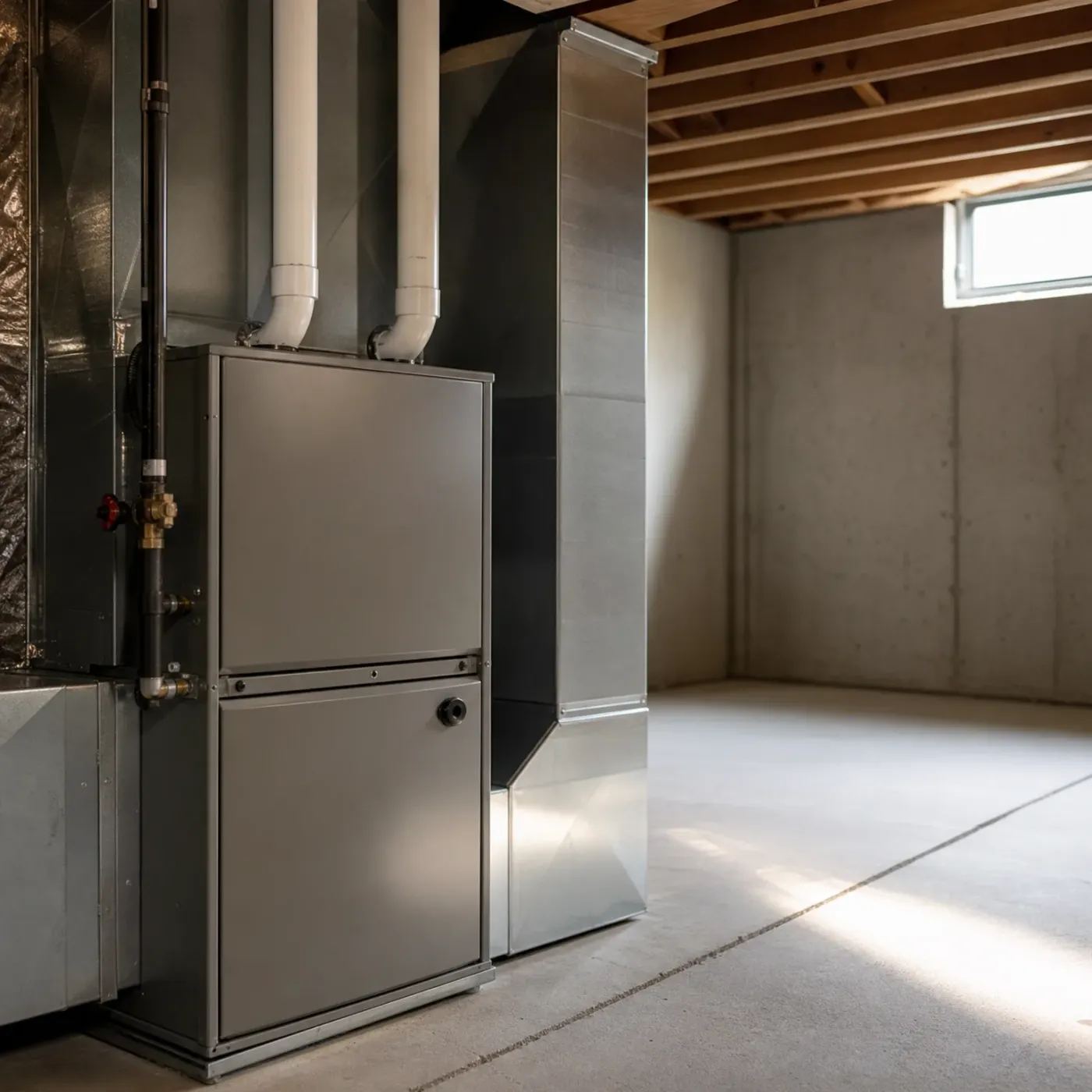
A gray furnace with PVC vent pipes and sheet-metal ductwork stands against a wall in an unfinished basement with concrete floor and walls, exposed wood joists, and a small window.

A pro who works on furnaces

Reach a local pro

Your request goes to one pro, not a list of companies.

No fee to send it, and nothing to sign.