Mini Split Installation in San Marcos, TX
A new system here will heat from November through March and cool from April through October every year. Tell us about the house, and a licensed contractor who covers Hays County will get in touch.
Tell us about the job
It takes about a minute.
San Marcos asks a mini-split to work almost year round
Cooling season runs April through October here, seven months of summer afternoons averaging 94°F. Heat is needed November through March. Between the two, a mini-split in San Marcos is doing something almost every month of the year.
A new system installed here has to meet the federal minimum for split-system heat pumps, 14.3 SEER2 for cooling and 7.5 HSPF2 for heating. Winter nights average 41°F, mild enough that a heat pump can carry the heating load on its own most days. Most homes in the area already heat with electricity, and a mini-split fits that setup directly.
- 5 months
- November through March, your system heats
- 7 months
- April through October, it cools
- 41°F
- the average winter night it heats against
- 94°F
- the average summer afternoon it cools against
NOAA nClimDiv, 1991–2020 normals
Texas requires HVAC contractors to hold a state license.
The Texas Department of Licensing and Regulation issues that license to the contractor, not to the job, so the same license that covers a furnace across town covers a mini-split installed at your house.
A mini-split installation moves refrigerant through lines run into your house, and in most cities and counties in Texas that work needs a permit from the local building office, with an inspection once it is done. That is where someone checks the installation itself, separate from the license the contractor already holds.
Source: Texas Department of Licensing and Regulation
- Is a mini split worth it?
- For most homes, yes, especially if you're heating or cooling a room your main system doesn't reach well. San Marcos needs cooling from April through October and heat from November through March, so a system running nearly year round has to work efficiently. A mini split uses a heat pump to move heat rather than generate it, which costs less to run than window units or electric resistance heat. It also skips the duct losses that come with a central system, since it delivers air directly into the room.
- How many rooms can a mini split cover?
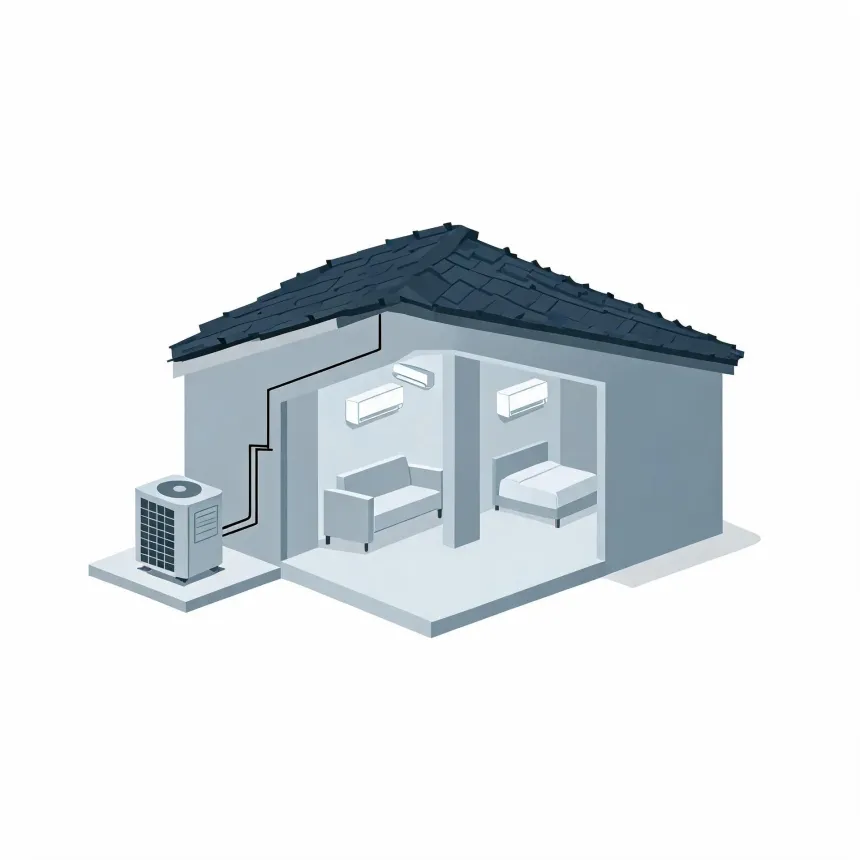
- A single outdoor unit can run up to eight indoor heads, depending on the system. Each indoor head is sized for the room it serves, so a contractor will look at the square footage and layout of each room before recommending how many heads you need. Larger homes or homes wanting every room covered often use a multi-zone system rather than one oversized unit.
- Can a mini split heat a whole house?
- It can, if it's sized and placed for that. A multi-zone mini split with a head in each main room can heat an entire home the same way it cools it, since the heat pump works in both directions. Winter nights here average 41°F, well within the range these systems are built to handle. The main thing is coverage. A single indoor head warms the room it's in well, but it won't push heat through closed doors or down a hallway, so a whole-house setup needs enough heads placed where people actually spend time.