
Mini Split Installation in Austin, TX
A new system here will heat from November through March and cool from April through October every year. Tell us about the house, and a licensed contractor who covers Travis County will get in touch.
Tell us about the job
It takes about a minute.
Travis county asks for cooling more than heat
Your mini-split will run cooling seven months a year here, April through October, with summer afternoons averaging 95°F. Heat only comes on for five months, November through March, and winter nights average 40°F. That is a system doing far more cooling than heating over its life, so the compressor and outdoor coil take the bigger share of the wear.
A new mini-split installed here has to meet the federal minimum for both jobs. That means 14.3 SEER2 for cooling and 7.5 HSPF2 for heating. Those numbers are the floor, not a target, and it is worth asking your contractor what the unit you are getting actually rates.
- 5 months
- November through March, your system heats
- 7 months
- April through October, it cools
- 40°F
- the average winter night it heats against
- 95°F
- the average summer afternoon it cools against
NOAA nClimDiv, 1991–2020 normals
Texas requires HVAC contractors to hold a state license.
That license belongs to the contractor, not to any single job, so the same license that covers a furnace install in one house covers the mini-split going into yours.
In most Texas cities and counties, this install needs a permit from the local building office, with an inspection once the work is done. That permit and inspection are separate from the state license, and they apply to the installation itself, in this county as in most others.
Source: Texas Department of Licensing and Regulation
- Is a mini split worth it?
- For the right room, yes. A mini split cools that room in summer and heats it in winter, and since Austin needs one or the other twelve months a year, the unit stays useful in every season. It also gives you a backup source of heat or cooling in a single room if your main system ever goes down, which matters here given how often storms knock out power across Texas.
- How many rooms can a mini split cover?
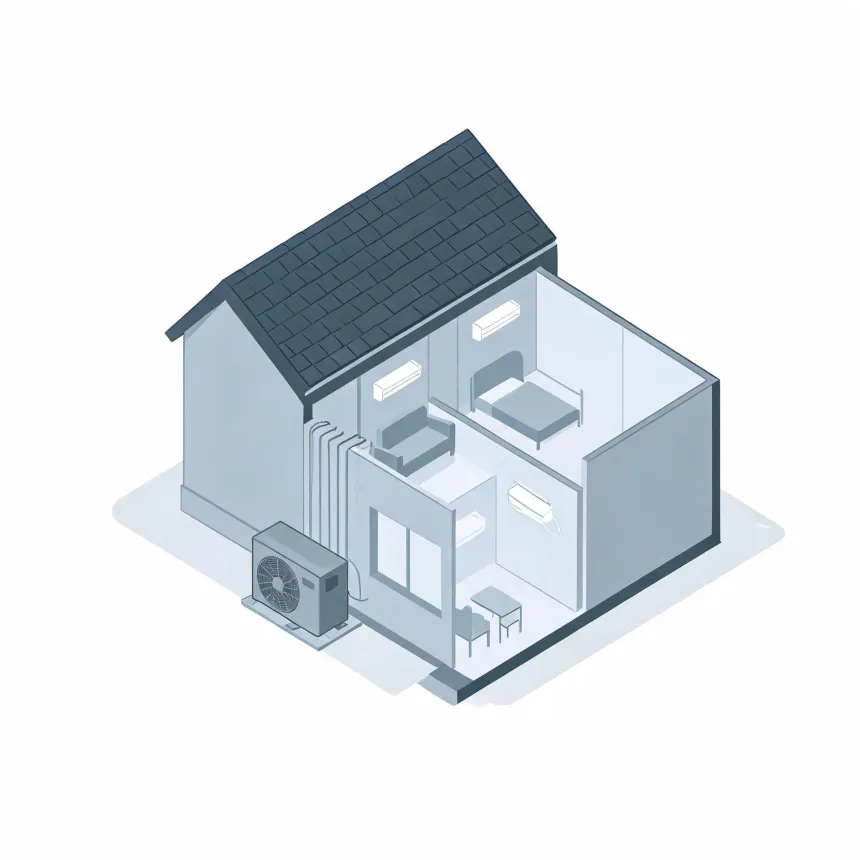
- A single indoor unit covers one room or one open area. If you need more rooms covered, a multi-zone system runs several indoor units off one outdoor unit, so a contractor can cover a bedroom, a living room and an office each with their own unit and their own thermostat. How many zones your house can support depends on the outdoor unit's capacity, so a contractor will size that to the rooms you want covered.
- Can a mini split heat a whole house?
- It can, but only if it's designed for that from the start. A multi-zone mini split with enough indoor units, one for each room, can heat an entire house down to Austin's winter lows, which average 40°F overnight from December through February. That's a different job from adding one or two units to take pressure off an existing furnace, so tell a contractor upfront if whole-house heating is the goal.