Mini Split Installation in Killeen, TX
A new system here will heat from November through March and cool from April through October every year. Tell us about the house, and a licensed contractor who covers Bell County will get in touch.
Tell us about the job
It takes about a minute.
Killeen asks a mini-split to run almost all year
Seven months of cooling, April through October, with summer afternoons averaging 95°F. Five months of heat after that, November through March, with winter nights averaging 39°F. That leaves a mini-split idle for maybe a few weeks total. It runs nearly the whole year.
A new system installed here has to meet the federal minimum for split-system heat pumps, 14.3 SEER2 for cooling and 7.5 HSPF2 for heating. That's the floor, not a Killeen-specific rule, but with this much run time the difference between a unit that barely clears it and one built to hold up shows up fast. Bell County has also seen 44 damaging wind events and 4 winter storms over the past ten years, and most homes here heat with electricity. When the power goes out, so does the mini-split, until it comes back on its own.
- 5 months
- November through March, your system heats
- 7 months
- April through October, it cools
- 39°F
- the average winter night it heats against
- 95°F
- the average summer afternoon it cools against
NOAA nClimDiv, 1991–2020 normals
Texas requires HVAC contractors to hold a state license.
That license means the state tested the contractor and keeps a record of who holds it. It sits with the business, not the crew that shows up or the specific job they're doing, so the same license covers a mini-split install and a furnace repair alike.
For this job, the license tells you the contractor met the state's bar to work on HVAC systems in Texas. Beyond that, most cities and counties in the state require a permit for the installation and an inspection once it's done, which is separate from the license and checks the work itself rather than the person doing it.
Source: Texas Department of Licensing and Regulation
- Is a mini split worth it?
- For most homes it comes down to what you're trying to fix. If you've got a room that never gets comfortable, a sunroom, a garage conversion, a bonus room, a mini split heats and cools that space directly without extending ductwork. Killeen homes need heat or cooling all twelve months, so a system that handles both jobs well earns its keep here. A mini split heat pump does the work of a furnace and an air conditioner in one unit, so you're not running separate systems for the cold months and the hot ones.
- How many rooms can a mini split cover?
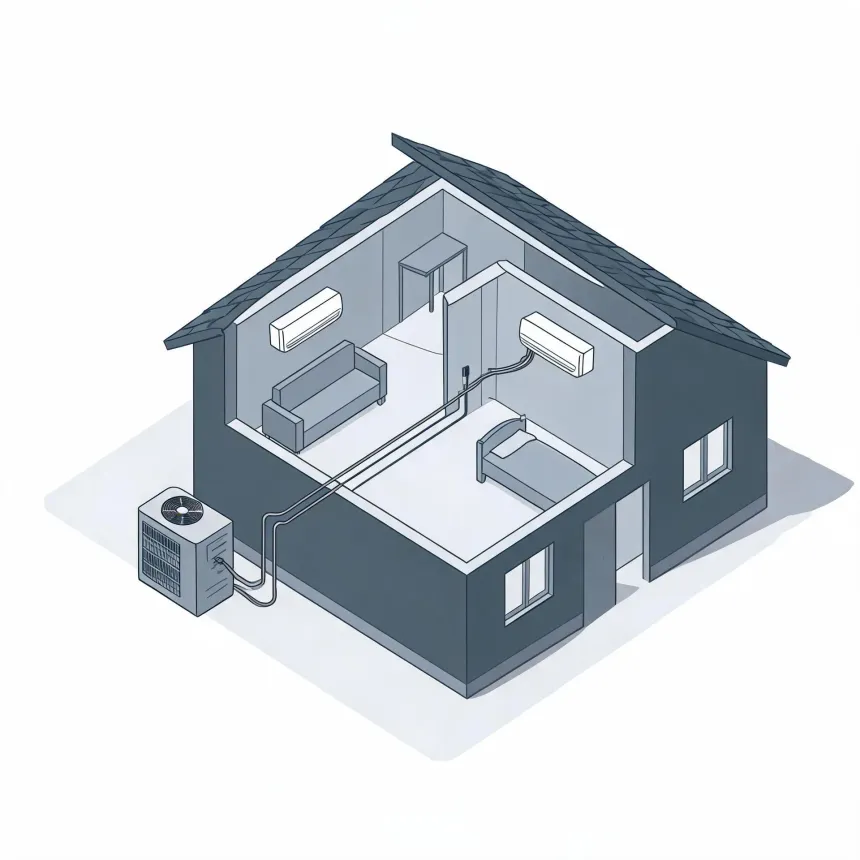
- A single indoor unit is built for one room or one open area. If you need to cover several rooms, a multi-zone system connects several indoor units to one outdoor condenser, and each indoor unit gets its own thermostat. That means a bedroom can run cooler at night while the living room stays warmer, all from the same outdoor unit. How many zones make sense for a house depends on its layout, and that's something a contractor will work out room by room.
- Can a mini split heat a whole house?
- Yes, a mini split can heat a whole house if it's sized and placed for that job. A multi-zone system puts an indoor unit in each room or area that needs heat, all tied to one outdoor heat pump. Winter nights in Killeen average 39°F, well within the range these heat pumps are built to handle. Whether whole-house coverage or a partial setup makes more sense for a particular home is something a contractor can lay out after seeing the floor plan.