Heat Pump Installation in Fort Worth, TX
A new system here will heat from November through March and cool from May through October every year. Tell us about the house, and a licensed contractor who covers Tarrant County will get in touch.
Tell us about the job
It takes about a minute.
Eleven months of work for one machine
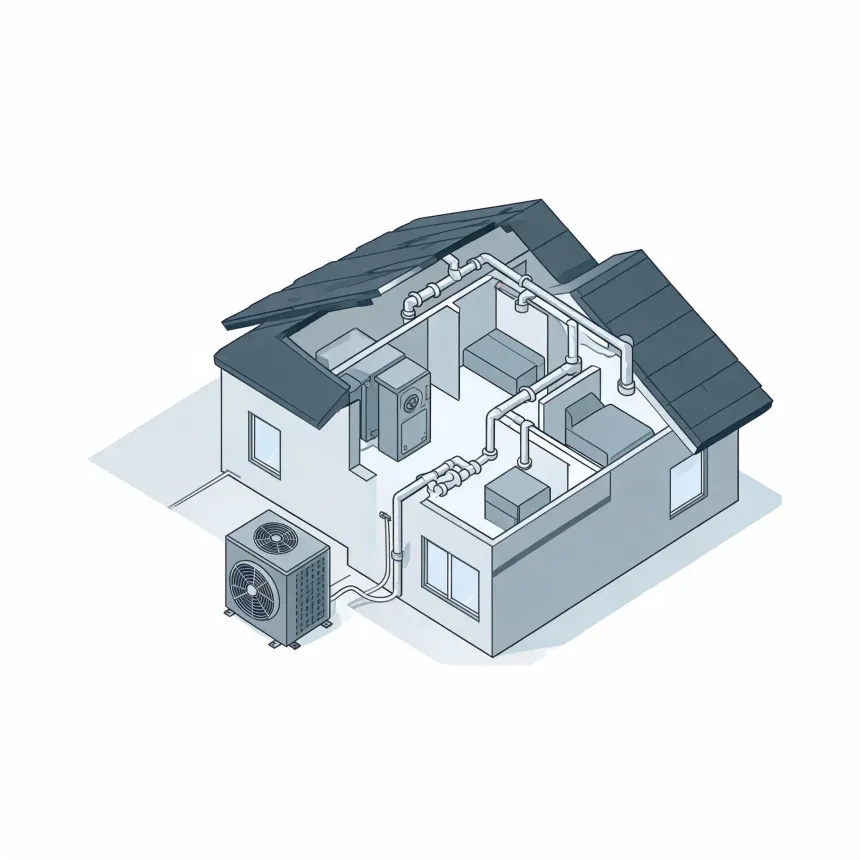
In Fort Worth, a heat pump does not get much rest. Homes here need heat from November through March, then cooling picks up and runs May through October. That is eleven months of the year the system is working, with barely a break between seasons.
Summer afternoons average 94°F, so the compressor spends most of the year on the hot side of its range. Winter nights average 37°F, which is the other end of the load it has to cover. Any new split-system heat pump has to meet the federal minimum of 14.3 SEER2 for cooling and 7.5 HSPF2 for heating, so it is built to handle both sides of that work. Two thirds of homes here heat with electricity, which makes how that equipment holds up through the year worth getting right.
- 5 months
- November through March, your system heats
- 6 months
- May through October, it cools
- 37°F
- the average winter night it heats against
- 94°F
- the average summer afternoon it cools against
NOAA nClimDiv, 1991–2020 normals
Texas requires HVAC contractors to hold a state license.
The Texas Department of Licensing and Regulation tests and keeps the record for HVAC contractors statewide, and the license belongs to the contractor, not to any one job. So the same license that would cover a repair down the street covers a heat pump installation at your house.
Because Texas licenses the contractor, that license is what stands behind the work here. The installation itself still needs a permit from the local building office in most cities and counties, and an inspection once the work is done, so someone outside the job checks it too.
Source: Texas Department of Licensing and Regulation
- Is a heat pump better than a furnace?
- It depends on what you're weighing. A heat pump moves heat instead of burning fuel to make it, so it can cool your home in summer and heat it in winter with one system, and a furnace only heats. Winters here are mild, with lows around 37°F, which is the kind of climate where a heat pump can carry the heating load on its own without much strain. A furnace still puts out hotter air at the register, so on the coldest nights some homeowners notice the difference. Either one gets sized and chosen based on your house, so a contractor can tell you which fits yours.
- What's the difference between a heat pump and an air conditioner?
- An air conditioner only cools. A heat pump does the same job in summer, moving heat out of your house, but it can also run in reverse and move heat into your house in winter. Mechanically they're close cousins, both use a compressor and refrigerant to move heat rather than create it. The difference is the reversing valve that lets a heat pump switch directions, which is why it can replace both your air conditioner and your furnace.
- Does a heat pump work in cold weather?
- Yes, a heat pump heats your home by pulling heat from the outside air, even when that air is cold, and moving it inside. It works because there's still heat energy in air well below freezing. Winter nights here average 37°F, which is well within the range a heat pump handles without trouble. As outdoor temperatures drop further, a heat pump's heating output drops too, which is why some are paired with a backup heat source for the coldest stretches. A contractor can tell you whether your home needs that backup based on how it's built and sized.