Once you send the form, finding a pro is off your list.
A rattle in your furnace usually means something is loose or something is about to fail. In Texas, most homes heat with electric furnaces, and that changes what you're likely dealing with. A loose panel will buzz against the cabinet every time the blower kicks on. A failing blower wheel or a worn motor mount will knock or rattle at startup and sometimes smooth out once it's running. Heat strips that have warped slightly from years of cycling on and off can tick and rattle as they heat up and cool down. None of these get quieter on their own.
Furnaces don't run long here. You might only need yours a handful of weeks a year, between the muggy summers and the short cold snaps. That light use is exactly why a rattle is worth paying attention to. A furnace that only gets asked to work occasionally still needs its parts seated right and its blower balanced, and a problem that shows up in December can mean it's been sitting there since last winter, unnoticed.
Once you send in the details, you're done hunting. You won't be fielding calls from three different companies trying to win your business. One licensed contractor local to your area gets the job, someone who works on Texas furnace setups all year and has heard this exact rattle plenty of times before. They'll know within a few minutes whether it's a panel, a motor, or a heat strip, because they've already seen it in houses like yours.
That's the part that's supposed to feel like a relief. You don't have to figure out what's wrong, or vet who's qualified to fix it. You fill out what you know, and the job of finding the right person for your furnace stops being something you have to manage. From there, it's in the hands of someone who does this for a living, in your part of Texas, on exactly this kind of equipment.
A rattle usually comes from one of a few places. The panel that covers the furnace can work its screws loose over time, and once it's not seated tight, the blower makes it buzz every time the system runs. The blower wheel itself can rattle if it's come loose on its shaft or picked up dust and gone out of balance. On an electric furnace, the heating element can rattle in its housing if a clip or bracket has worked free, and the ductwork near the unit can tick or rattle if a seam has loosened. A soft rattle that comes and goes is usually the panel or a duct. A rattle that's loud, constant, or gets worse the longer the furnace runs points to the blower wheel or the element, and that kind is worth having looked at before it causes the blower motor to wear out early or the element to fail outright.
Hand off the furnace problem
Your request goes to one pro, not a list of companies.
After you send the request, you're done searching.
No charge to send it. You decide if you hire them.
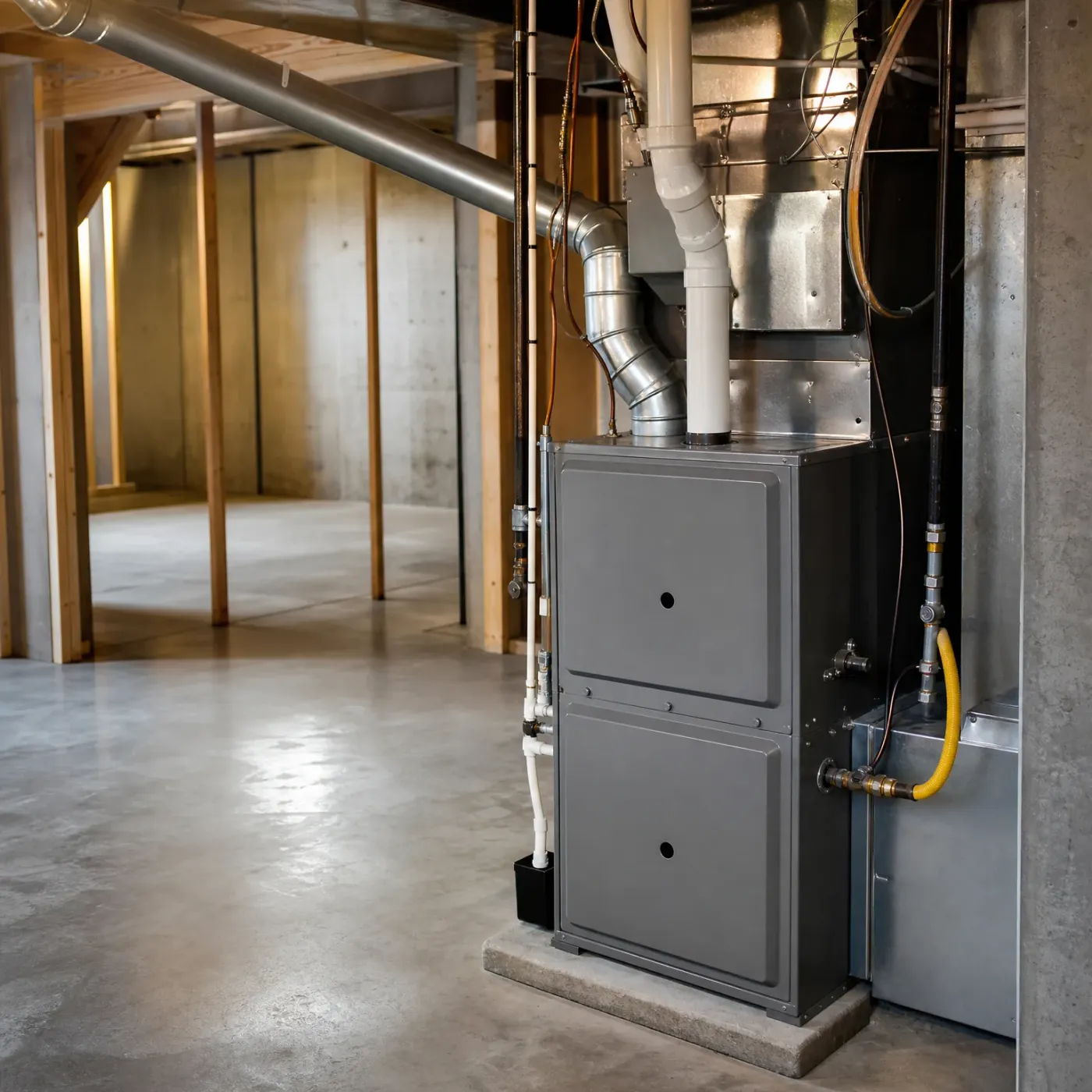
A furnace like this runs quiet when the panel is screwed down tight and the blower wheel sits balanced on its shaft.
Rust on the cabinet and plenum like this often comes with loose seams and mounts, and that's where the rattle starts.
Winter nights average 41°F statewide
At 41°F on a typical winter night, your furnace isn't running flat out the way it would somewhere colder. It cycles on and off rather than staying on for hours straight, and that start-stop is exactly when a loose panel or a worn blower wheel makes the most noise.
NOAA nClimDiv 1991-2020 county normals weighted by homes
Running quiet
This is a furnace with a blower wheel that's balanced and a cabinet that's still tight. Air moves through the ductwork without anything loose to buzz against. The panel stays flush against the frame no matter how many times the blower kicks on.
Worn and rattling
This cabinet shows its age, dust built up on the louvers and a finish that's starting to go. A unit like this has had years of screws working loose and mounts shifting, and the rattle you hear is what that wear sounds like once it reaches the blower or the panel.
Before you get your furnace repairAfter you get your furnace repair
What the Rattle Comes Down To
A rattle almost always traces back to a loose panel, a worn blower wheel, or a cracked mount somewhere in the cabinet.
Electric furnaces are what most Texas homes run, and that narrows down which parts are actually making the noise.
Mild winter nights mean your furnace cycles on and off instead of running long stretches, and that's when loose parts rattle most.
A furnace with a tight panel and a balanced blower wheel runs quiet no matter how often it cycles.
Rust on the cabinet or plenum is often a sign the seams and mounts underneath have already worked loose.
A qualified contractor can tell which of these it is and tighten or replace the part before it gets worse.
The noise has a cause, and it's one of a short list of things. A panel screw backs out, a blower wheel loses its balance, a mount cracks where the cabinet meets the plenum. None of that is mysterious once someone's hands are actually on the unit. Because your furnace is almost certainly electric, the search narrows fast. There's no gas valve or burner assembly to check, which means the rattle is mechanical. It's coming from something loose or spinning wrong, not from combustion. The mild nights here make it worse in a specific way. Instead of running for hours straight the way a furnace would somewhere colder, yours starts and stops all night, and every start is a jolt. A loose panel or an off-balance wheel announces itself right at that moment, then goes quiet until the next cycle. A furnace that's tight and balanced doesn't do this regardless of how often it kicks on. Rust on the outside of the cabinet is worth a second look too, since it usually means the metal underneath has been loosening at the seams for a while, not just rusting for show. None of this needs guessing from you. A contractor who works on these systems every winter can open the cabinet, find which part it is, and tighten or swap it before the wear gets to something more expensive. You know what's making the noise now. Getting it fixed is a shorter job than finding out was.