



Texas HVAC Pros

Signs of a clogged dryer vent in San Antonio, TX

Hand it over

A dryer that takes two or three cycles to dry a normal load, a top that's hot to the touch, clothes that smell like nothing even after they dry, a laundry room that feels warmer and damper than the rest of the house. Any one of those points to a vent that's not moving air the way it should. In Bexar County, with summers as muggy and long as they are, a blocked vent means that moisture has nowhere to go but back into your house. Left alone, it's a fire risk, and it means your dryer works harder than it should on power that doesn't need to cost you more than it already does. You don't have to track down who handles this. Send the form and the search ends there. You'll be matched with one local contractor, not a handful of companies competing for your callback, someone who clears these vents regularly and knows what a blocked line looks like in a house like yours.

What are the signs of a clogged dryer vent?

You've noticed something off with the dryer lately and you're trying to figure out if it's the vent or the machine itself. Maybe a load came out still damp, or you caught a hot, stuffy smell in the laundry room. Before you call anyone, you want to know what a blocked vent actually looks like day to day, so you can check it yourself first.

A clogged vent shows up in how the dryer runs, not in how it looks

A blocked vent cannot push hot, damp air out of the house, so that air backs up into the dryer and the room around it. The drum keeps spinning but the moisture has nowhere to go, which is why a normal load takes two or three runs to dry. Lint trapped in the vent also holds heat, so the outside of the machine gets hot and the duct work near the wall can feel warm too. In Bexar County, where summers already run hot and humid for months, a blocked vent makes the laundry room noticeably worse to stand in, since the air it's fighting to push out is already thick to begin with.

A smiling bearded man in a dark green henley shirt sits on a blue-gray couch in a living room, with a bowl of popcorn in the foreground and a houseplant and window behind him.
A smiling man in a dark sweatshirt reclines on a gray sofa in a living room, with a wooden bowl of popcorn on a table in the foreground and a dining area, shelving, and pendant lamp behind him.
A smiling man in a navy long-sleeve shirt reclines on a sofa in a living room, with a bowl of popcorn on a wooden coffee table and framed pictures on the wall behind him.
A smiling man in a dark green long-sleeved shirt sits on a gray sofa in a living room, with a bowl of popcorn in the foreground and windows and a potted plant behind him.

Why does vent lint build up faster in some San Antonio homes than others?

  • 2.7 people per household on average

    With 2.7 people in the average Bexar County household, that's laundry piling up most days of the week, and every load pushes more lint through the same vent run.

  • Half the homes here were built by 1990

    Half the homes in Bexar County were built in 1990 or earlier, and older vent runs are more likely to use the long, bendy duct that traps lint instead of a short, straight shot outside.

  • Power here costs 12.38 cents per kilowatt-hour

    At 12.38 cents per kilowatt-hour, power here is cheap, but a clogged vent still makes the dryer run two or three cycles instead of one, and that adds up on the bill.

ACS 2020-2024 · EIA-861 2025

A dryer that's slow to dry can still be safe to run while you wait on a cleaning. A vent that's fully blocked is a different problem, because the heat and moisture have nowhere to go but back into the machine.

A blocked vent traps heat inside the dryer every time it runs, and lint is what catches fire first. That's why the slow-drying dryer is the one worth dealing with now, not after it stops drying at all.

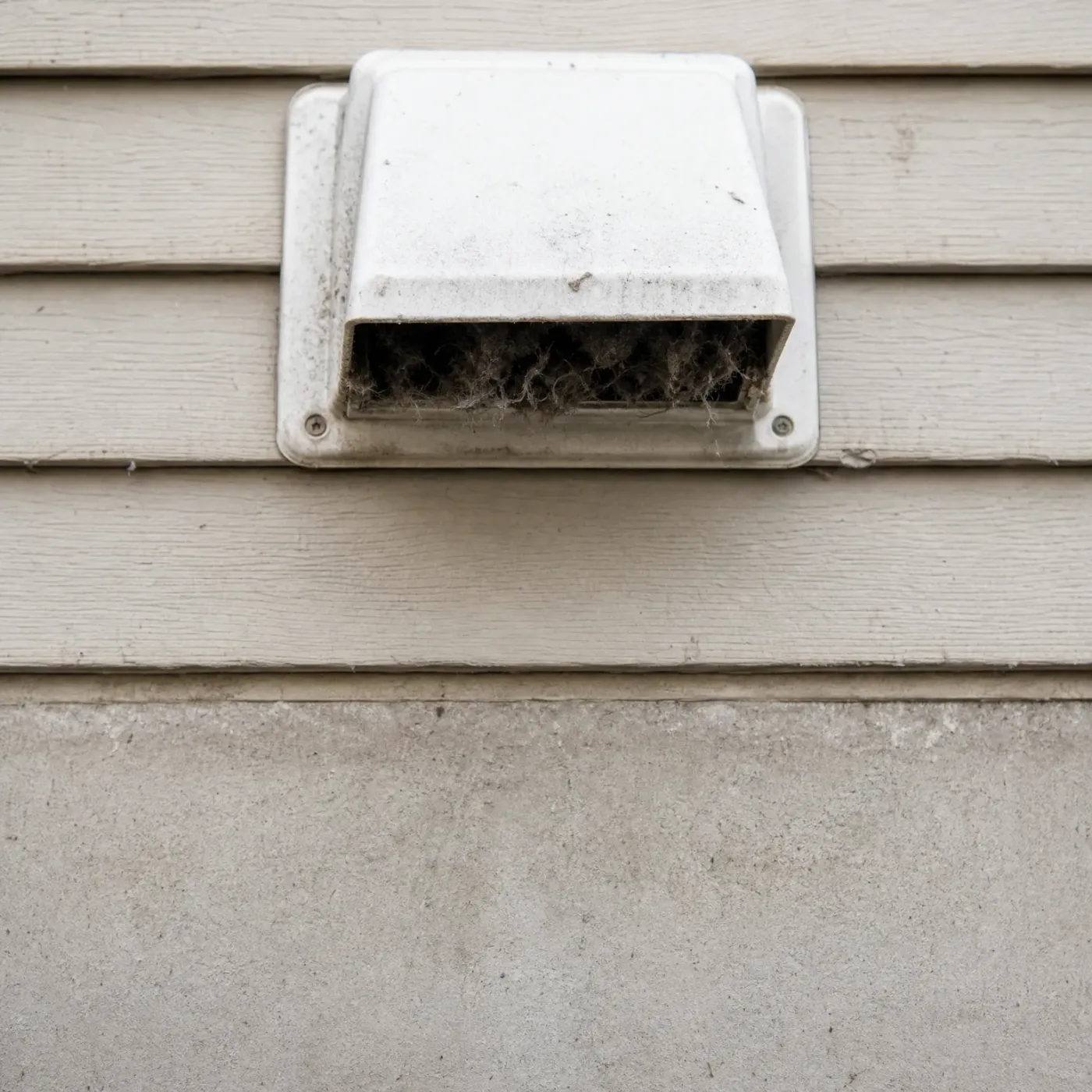
A white plastic dryer vent hood clogged with grey lint, mounted on beige horizontal lap siding above a concrete foundation wall.
Before you get your dryer vent cleaning
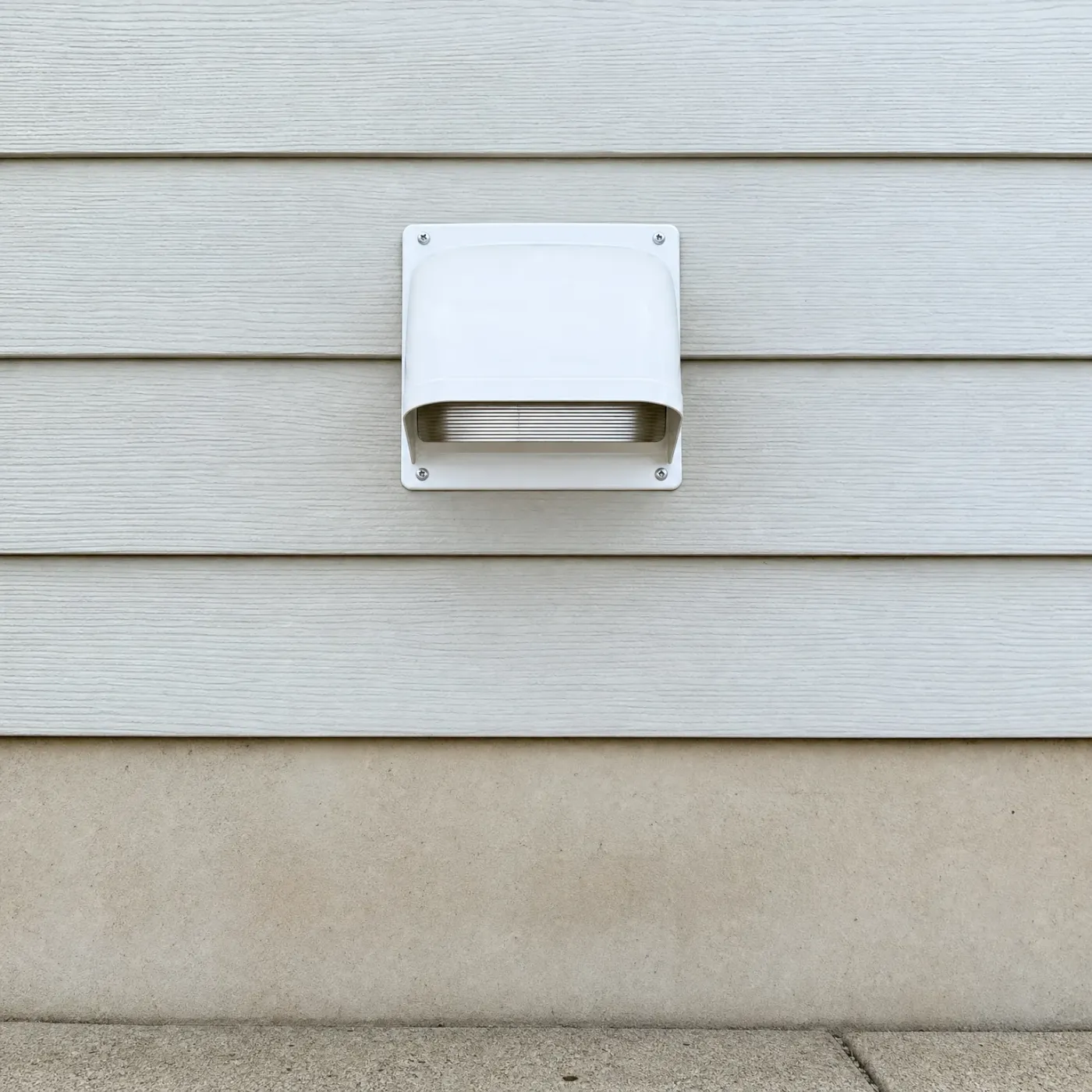
A white hooded dryer vent with a louvered opening mounted on light beige horizontal lap siding above a concrete foundation and sidewalk.
After you get your dryer vent cleaning

Why lint builds up where airflow slows

Lint doesn't stop moving through the vent on its own. It drops out wherever the airflow slows down enough to let it settle, which is usually at a bend, a seam, or the hood flap at the outside end. A straight, short run carries lint all the way out. A long run with a few turns in it gives lint more places to catch, and once a little builds up at a bend, more collects behind it on the next load. That's why two houses with the same dryer can have very different buildup, depending on how the vent is routed.

What the hood flap is supposed to do

The hood on the outside end of the vent has a flap that opens when the dryer is running and closes when it's off. That flap keeps rain, leaves, and small animals from getting into the duct between loads. When lint packs in around the hood, the flap can get stuck half open or jammed shut, so the dryer is pushing air against something that won't move. You can check it from outside while the dryer runs. If you don't see the flap swing open and feel steady air coming out, the blockage is likely right there at the hood.

2.7 people per household on average

At 2.7 people, most Bexar County houses are running a load most days, not once a week. That steady pace keeps pushing lint through the same vent run, so the buildup that causes slow drying or a hot dryer top shows up sooner than it would in a house doing laundry once or twice a week.

ACS 2020-2024

A pile of beige, navy, and teal towels sits on top of a washer or dryer in a dim laundry room with a window and an upper cabinet.

It's almost nine and you're still in the laundry room. This is the third time you've pulled the same load out, towels still heavy and damp, and set them on top of the dryer while you figure out what to do. The machine ticks as it cools, the top warm under your hand. The room feels close, warmer than the rest of the house, like the air has nowhere to go. You've got work in the morning and a stack of towels that won't dry. You open the dryer door again, more out of habit than hope, and let the load sit while you decide whether to run it a fourth time or just give up for the night.

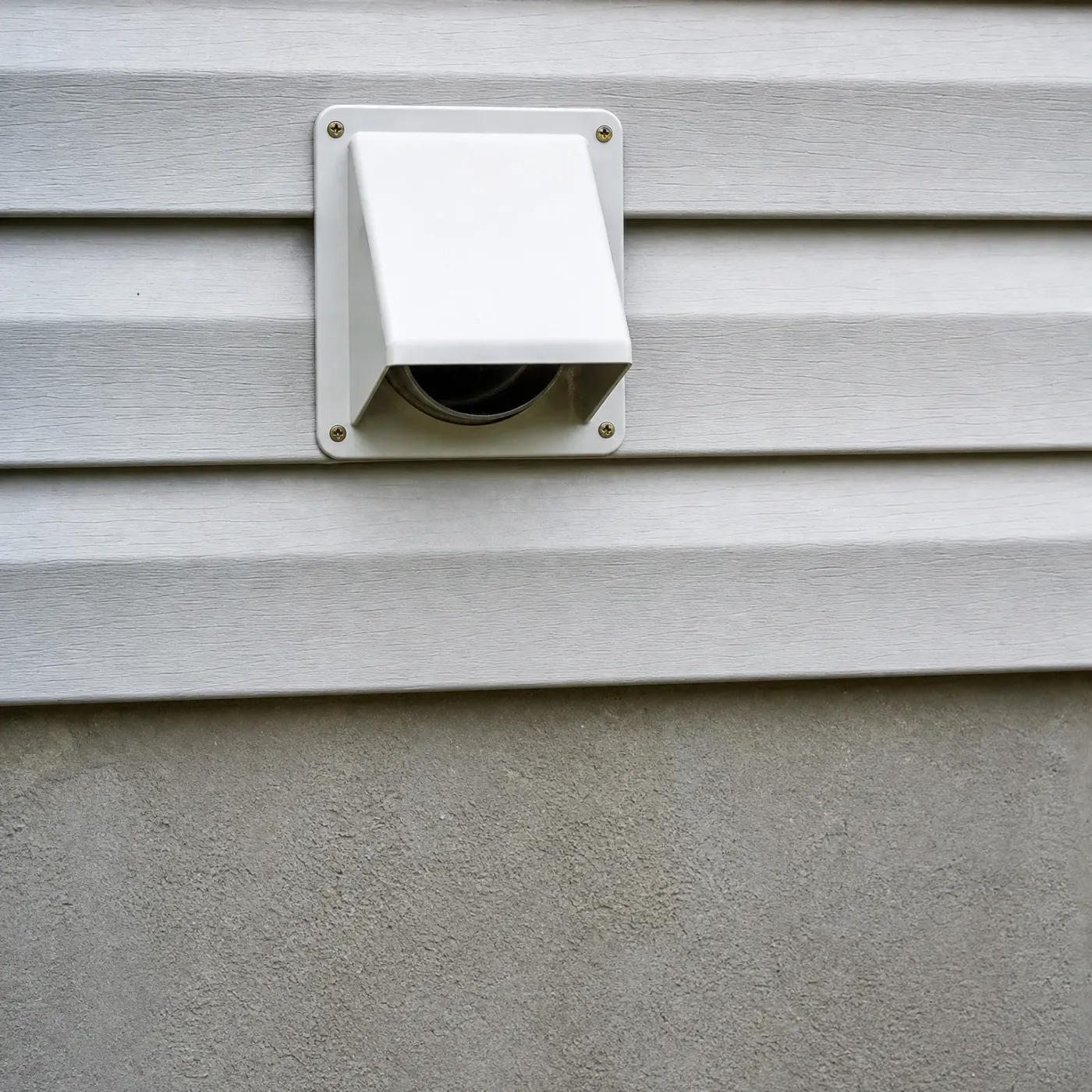
A white hooded dryer vent with a square mounting plate screwed onto light gray horizontal vinyl siding, above a gray stucco-textured lower wall.
A vent like this lets the moist, heated air escape outside fast, so the dryer runs one cycle and shuts off on schedule.
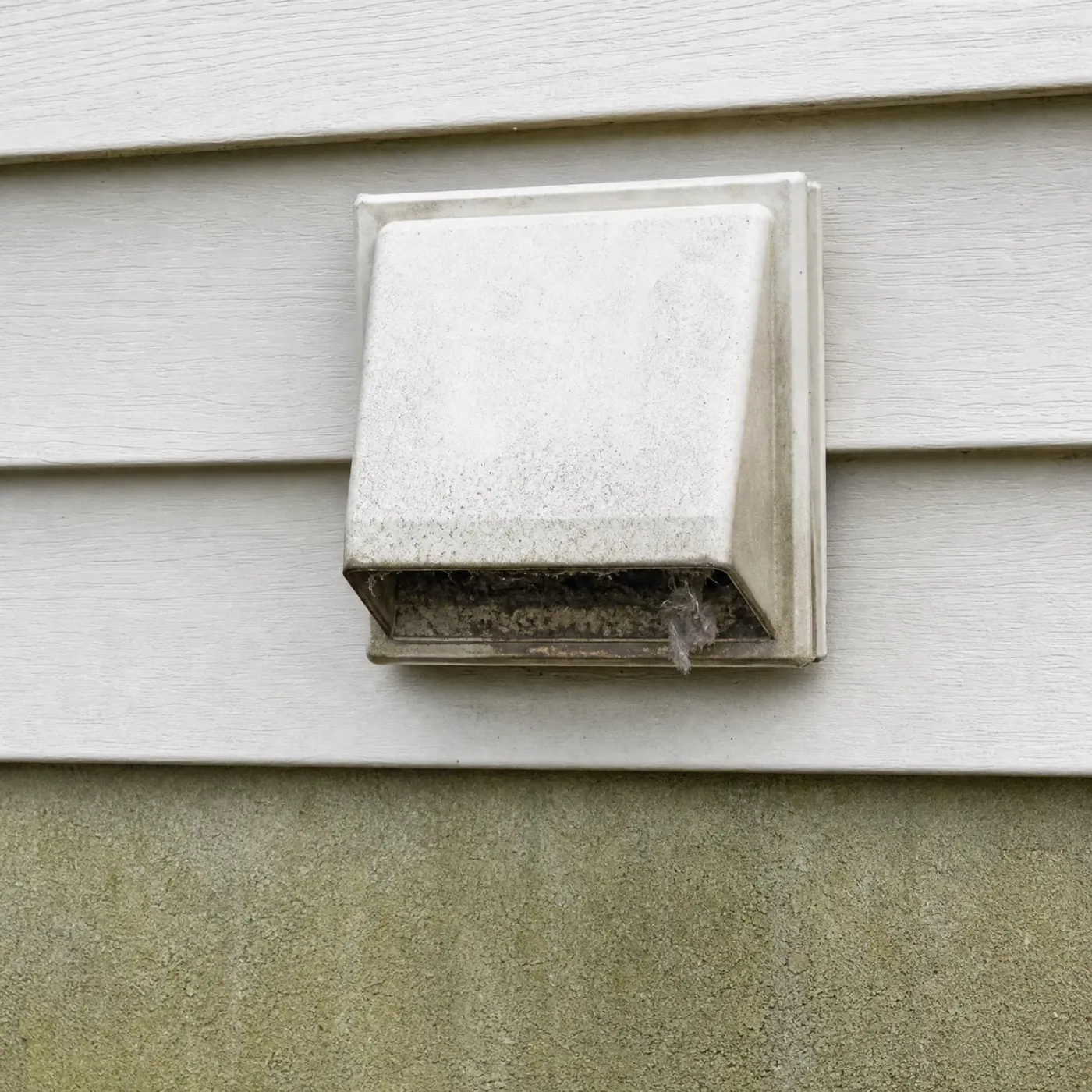
A white plastic dryer vent hood mounted on light-colored horizontal lap siding, with lint caught in its lower opening and a green-stained foundation wall below.
A vent clogged like this traps hot, damp air in the duct, forcing the dryer to run longer and heat up more than it should.
A woman with dark hair in a bun sits on a beige sofa under a knit blanket with her eyes closed and an open book in front of her, with a lit lamp and houseplant in the background.
A smiling bearded man in a dark sweater sits at a dinner table with lit candles, a glass of red wine, and bowls of food, in a dimly lit room with a lamp and houseplant behind him.

Stop chasing a dryer vent pro

The pro who gets in touch is licensed in Texas and works in Bexar County.

No fee to send it, and nothing to sign.

A white plastic hooded dryer vent with a louvered opening mounted on gray horizontal lap siding, beside a plain light-colored wall surface.

Rigid metal duct, kept clear

A short run of rigid metal duct with few bends gives lint the least chance to catch. Air moves straight through at full speed, out the hood, and the flap swings shut behind it. Dryers vented this way tend to run one cycle and stop. If this describes your setup, a clog is still possible, but it usually takes longer to build and a cleaning goes a long way.

A white hooded dryer vent cover screwed to beige horizontal lap siding on an exterior house wall, with a blank wall at left.

Long flexible duct, several turns

Flexible foil or vinyl duct snagged into tight turns slows the air down at every bend, and lint settles where it slows. A long run from the dryer to an outside wall, especially one routed through an attic or around framing, gives lint more places to catch along the way. These setups clog sooner and the signs, slow drying, a hot dryer top, show up more often.

What's actually going on in your laundry room

Walk in while the dryer's running and put your hand near the vent hood outside. If you don't feel much air moving, or the flap barely lifts, that's the vent telling you it's choked. Inside, check the lint trap. If it's coated with a fine film even after you pull the screen clean, lint is getting past it and settling in the duct. You might notice the room itself runs warmer than the rest of the house during a load, or the dryer shuts off mid-cycle and trips the thermal fuse. Left alone, a blocked vent keeps forcing the dryer to run hotter and longer than it's built for, which wears out the heating element early and raises the chance of the lint catching fire.

  1. Lint shaves off wet clothes and rides the airflow toward the vent.

  2. Lint drops out at bends, seams, and the hood flap where airflow slows.

  3. Buildup narrows the duct, so less air moves and heat stays trapped.

  4. The dryer runs hotter and longer trying to push air through.

A dryer that takes three cycles to dry one load, a top that's hot to the touch, a laundry room warmer than the rest of the house: that's a clogged vent, not a dying machine. Pull the lint, check the airflow at the hood outside, and you'll know which one you're dealing with. If it turns out to be the vent, a cleaning is what clears it, and that's a job for someone who runs vent cleanings in Bexar County homes all the time, not a general handyman guessing at it. You'll be matched with one licensed local contractor who does this work regularly and knows where lint actually catches in a run like yours, not a handful of companies competing for your callback. That's one call to make, one person who shows up already knowing what to check first. The dryer itself is probably fine. The vent is what needs the attention, and now you know what to look for either way.

A dark-clad house with large windows beside a gravel driveway lined with in-ground path lights, ornamental grasses and hydrangeas, with distant hills and an orange sunset sky.

Dryer Vent Cleaning

Send one request and you're done looking

Duct and vent cleaningBexar County, TX
Step 1 of 3

What kind of equipment?

  • A dimly lit living room corner with a beige upholstered sofa holding a dark green cushion and a chunky knit throw, beside a wooden sideboard with a lit ceramic table lamp, a small potted plant, and a wooden bowl, with a framed artwork on the wall and a mug on a book in the foreground.
    • Get matched with a pro who works on dryer vents in Bexar County.
    • Your request goes to a Bexar County pro who takes dryer vent jobs.
  • A round wooden coffee table holding a round stone vase of green foliage, a lit candle in a glass container, and a small dark bowl, with a beige sofa, cushions and knit throw behind and a window at left.
    • After this form, you can stop searching for a dryer vent pro.
    • One request and the search for a pro is handled.
  • Sunlit living room with a wooden coffee table holding a ceramic vase of leafy branches and a carved wooden tray with two stacked books, in front of a beige sofa with tan and green cushions and a potted plant near a window.
    • Skip searching for someone who cleans dryer vents in Bexar County.
    • Answer a few questions instead of calling shop after shop.
  • Interior corner with a lit ceramic table lamp and wooden bowl on a wood sideboard, a framed picture and branch-filled vase behind, a knit throw over an upholstered chair, and a lit candle in a glass holder, stoneware mug and round planter of green foliage on a wooden table in the foreground.
    • The pro who reaches out is licensed in Texas.
    • Only one pro gets your request, so you hear from one company.