Mini Split Installation in Brownsville, TX
A new system here will heat from December through January and cool from February through November every year. Tell us about the house, and a licensed contractor who covers Cameron County will get in touch.
Tell us about the job
It takes about a minute.
A Brownsville mini-split works nearly all year
Cooling season here runs February through November, 10 months out of 12. Summer afternoons average 94°F, and that's what a new mini-split is up against most of the time it runs. Heating is the short job, just December and January, with winter nights averaging 53°F. Almost the whole year, the system is either cooling the house or standing ready to.
Any mini-split installed new has to meet the federal minimum for a split-system heat pump, 14.3 SEER2 for cooling and 7.5 HSPF2 for heating. With cooling doing most of the work here, that cooling rating matters more than it would somewhere colder. Most homes in the area heat with electricity, and this area also sees a fair number of damaging wind events each year, so a mini-split that can hold up through storms and outages is worth planning for.
- 2 months
- December through January, your system heats
- 10 months
- February through November, it cools
- 53°F
- the average winter night it heats against
- 94°F
- the average summer afternoon it cools against
NOAA nClimDiv, 1991–2020 normals
Texas requires HVAC contractors to hold a state license.
The Texas Department of Licensing and Regulation tests and licenses the contractor, not the specific job. So the license on file tells you the person or company has met the state's requirements to do this kind of work in general, and TDLR keeps that record.
For a mini-split installation in Cameron County, the license is what stands behind the person doing the work, but the job itself gets its own check. Most cities and counties here require a permit for this kind of installation and an inspection once it is done, separate from anything TDLR handles.
Source: Texas Department of Licensing and Regulation
- Is a mini split worth it?
- For most Brownsville homes, yes, because the system runs nearly the whole year here rather than sitting idle for months. Cooling is needed February through November, and the same unit covers the cooler nights in December and January. One system doing both jobs, with no ducts losing air along the way, fits a climate that barely has a true winter.
- How many rooms can a mini split cover?
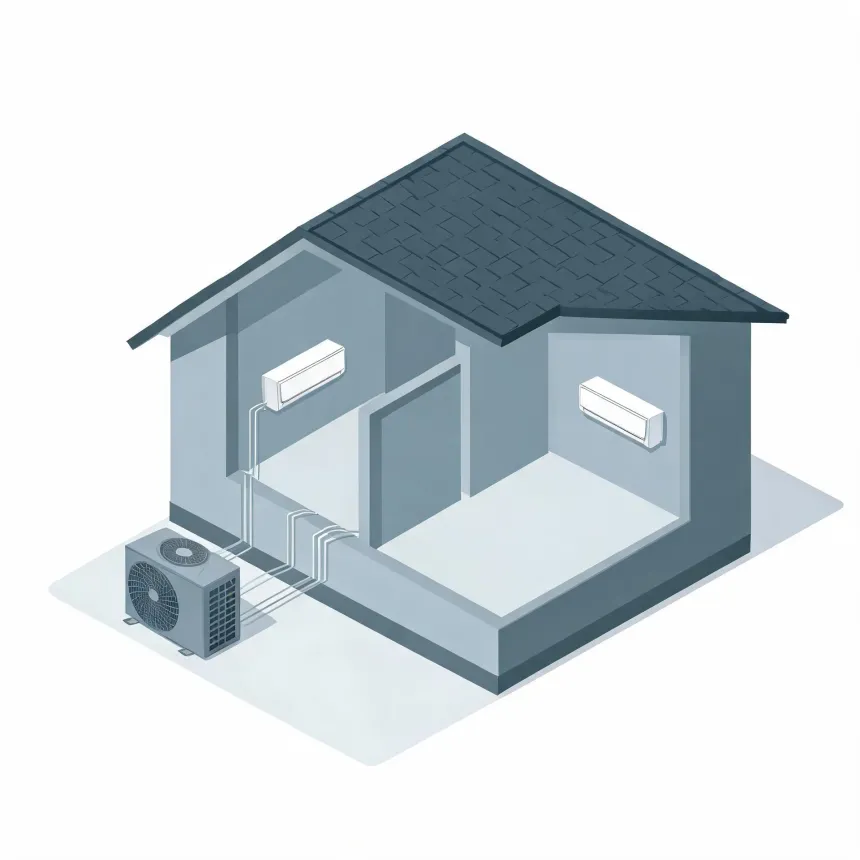
- A single outdoor unit can run multiple indoor heads, so it can cover several separate rooms or zones at once. Each indoor head is sized for the room it serves, and a contractor will size the whole system to the square footage and layout of the house. More rooms means more capacity needed from the outdoor unit, so this is a job for someone to calculate rather than guess at.
- Can a mini split heat a whole house?
- Yes, if there are enough indoor heads placed to reach every room, and Brownsville's mild winters make this easier than in colder places. Winter nights here average 53°F from December through February, well within what a heat pump handles without struggling. The question is really about coverage and duct-free reach into every room, which is something a contractor sizes room by room before installing.