




Is duct cleaning worth it in San Antonio, TX

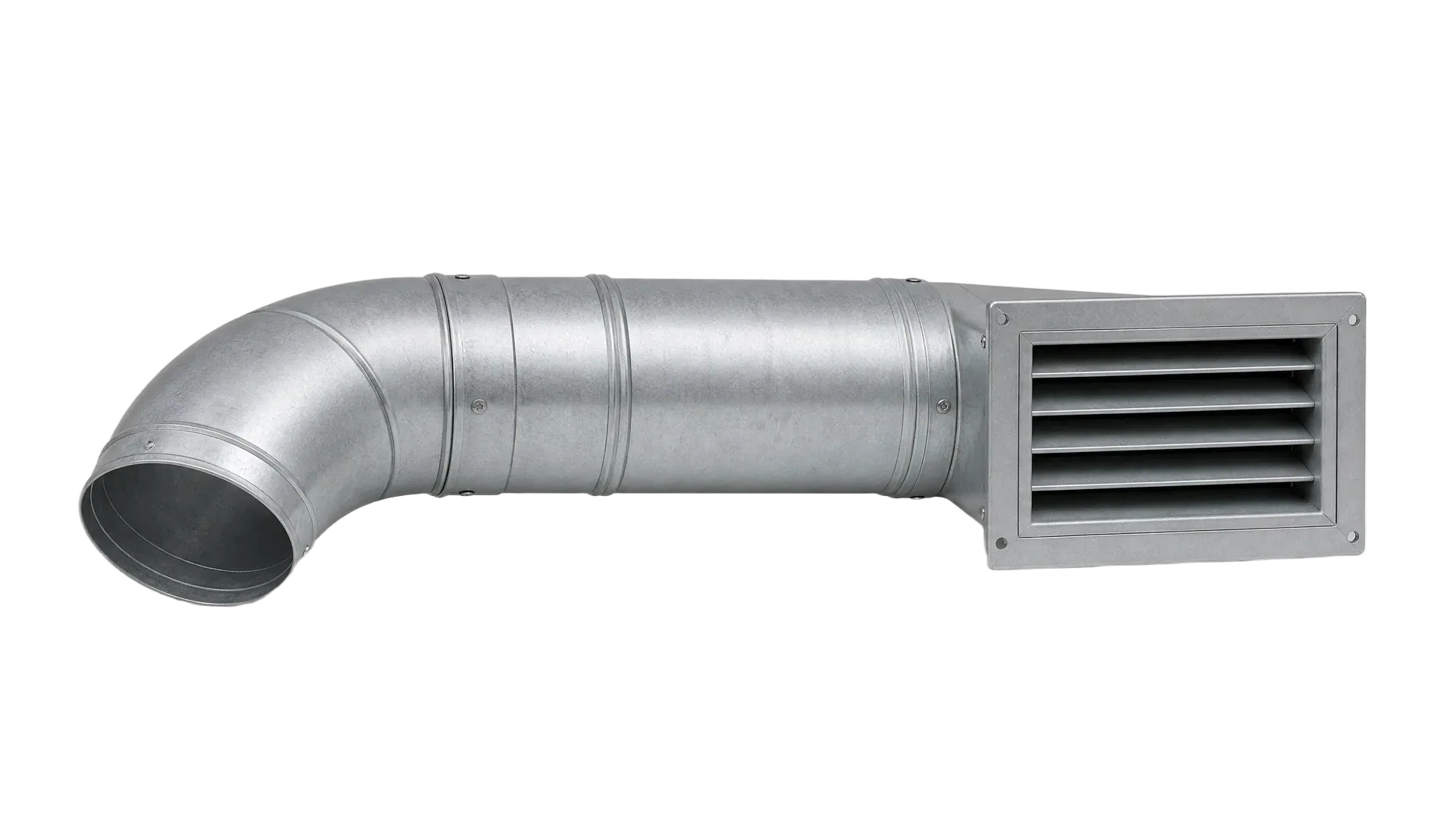
A galvanized metal round duct with a 90-degree elbow connected to a rectangular louvered vent grille, shown against a plain gray background.
Request a pro

For most homes around San Antonio, duct cleaning is not something you need on a schedule. It matters when there is a real reason for it: visible mold, a rodent or pest problem in the ducts, or dust coming out of the vents heavy enough to see on furniture soon after you dust it. Bexar County summers run long and muggy, and ducts that sweat or leak humid air into a hot attic are the ones more likely to grow mold, so that is worth checking if your system runs hard from April through October. Outside of a specific problem like that, cleaning the ducts does not improve the air or lower your power bill. If you are not sure whether what you are seeing is a real issue or just normal dust, a contractor can look at the ducts directly and tell you whether cleaning will do anything for your home.

An older man with gray hair and a beard, wearing a dark jacket dusted with snow, stands smiling in a dimly lit hallway with lamps and a living room visible behind him.
A gray-haired, bearded man in a dark snow-dusted coat stands smiling in a dimly lit entry hall with a staircase, a lit table lamp, a framed picture, and a living room visible through a doorway.
An older man with white hair and a beard, wearing a dark snow-dusted coat and scarf, stands in a warmly lit interior hallway with a framed landscape picture, a table lamp and a potted plant behind him, and a snowy view through a window at left.
A gray-haired, bearded man in a dark coat dusted with snow stands smiling in a dimly lit room with a lamp, mirror, framed art, and a sofa in the background.

How much do your ducts actually work each year?

  • Half the homes here were built by 1990

    Half the houses in Bexar County went up in 1990 or earlier, so a lot of duct systems here are original or close to it, and older duct runs are more likely to have gaps, loose joints or a section that was never sealed right.

  • Heat runs November through March

    Heat runs about five months here, November through March. That's five months where anything sitting in the ducts, dust, pet hair, construction debris, gets pushed into the rooms you're heating.

  • Cooling runs April through October

    Cooling runs about seven months, April through October, longer than the heat does. That's more months moving air through whatever is actually inside the ductwork.

ACS 2020-2024 · NOAA nClimDiv 1991-2020

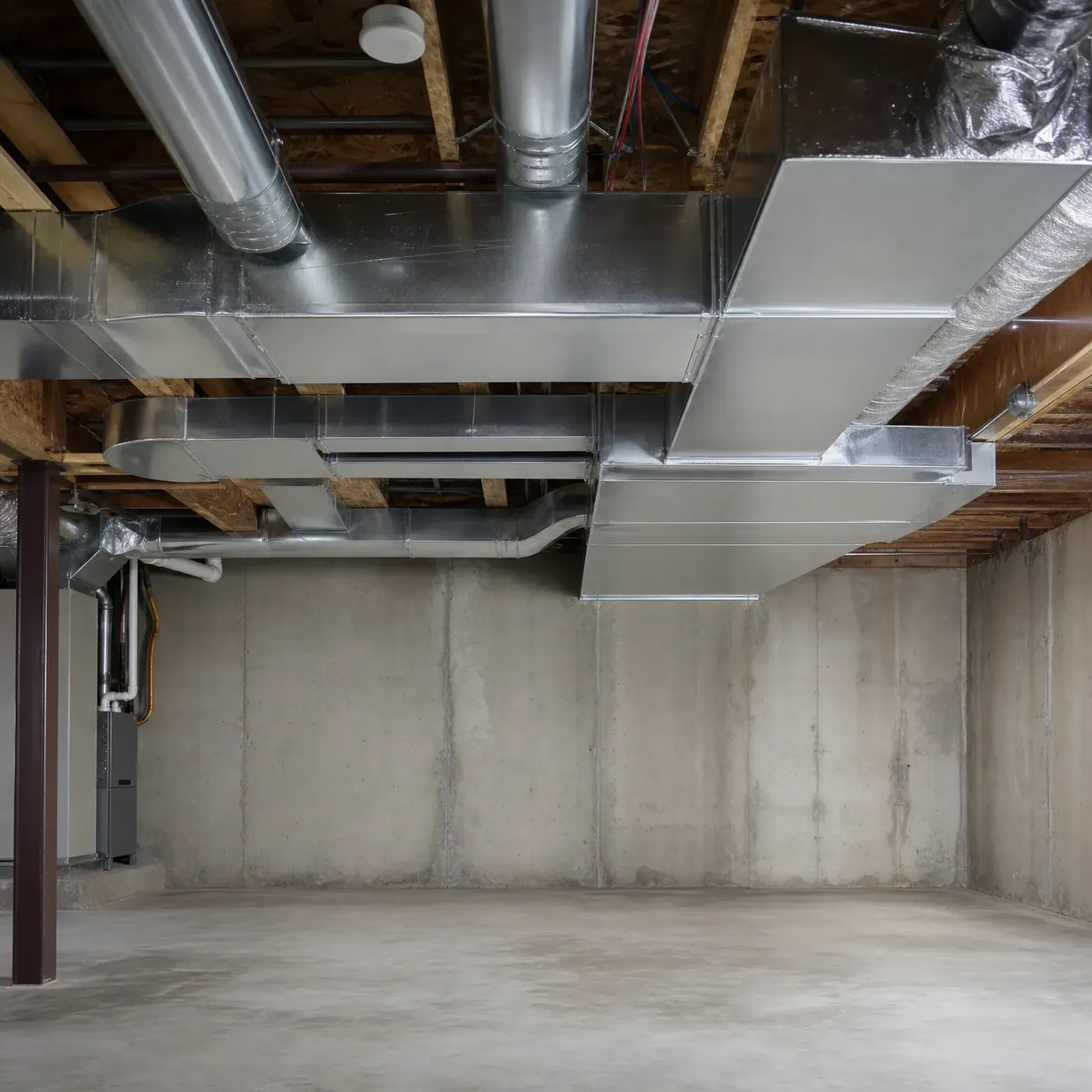
Unfinished basement with concrete walls and floor, a steel beam on posts, and exposed wooden joists with sheet-metal ductwork and piping overhead.

Ducts doing their job

This is what a duct system should look like: sealed joints, runs that connect cleanly, nothing hanging loose over the joists. Air moves through metal and reaches the room. If your ducts look like this, cleaning them won't change how your house feels.


Unfinished basement with bare concrete walls and floor, and galvanized sheet-metal HVAC ducts, pipes and wiring running along the wood-joist ceiling.

Ducts worth a second look

Here the runs sit exposed next to plumbing and wiring, with no sign of damage but no sign of care either. If you've never had someone look at this ductwork, or you can't remember the last time, that's reason enough to have it checked before deciding whether cleaning makes sense.

Does Your Duct System Need Cleaning

Worth cleaning

  • Mold you can see inside the ducts or on a vent cover is a reason to clean, not a reason to wait and watch.
  • A rodent or pest problem in the ducts leaves droppings and nesting material that air handling will keep moving through the house.
  • Dust heavy enough to settle visibly on furniture soon after cleaning points to a duct problem, not just a dirty filter.
  • A home that sat through a renovation with ducts open to drywall dust and debris needs that debris cleared before the system runs normally again.
  • If a past owner or tenant smoked in the house, the residue sits in the duct lining in a way that a filter change never reaches.

Not worth it yet

  • A duct system with no visible mold, pests or heavy dust buildup is doing its job and cleaning it won't improve the air further.
  • Cleaning on a fixed schedule, like every year or two, isn't something duct systems need the way a filter needs swapping.
  • If the only sign is some dust in the filter itself, that's the filter working as it should, not a reason to clean the ducts behind it.
  • Sealed joints and clean runs mean air is reaching the rooms the way it was designed to, and cleaning won't change that performance.
  • Paying for cleaning on a system with no real problem spends money without a result you'd notice in the house.
Basement interior showing a furnace with sheet-metal ductwork, a round flue pipe and copper lines running beneath exposed wooden floor joists next to a plain light-colored wall.

Why your AC runs the air through dust

Your air conditioner moves the same air through the ducts over and over, all summer long. It doesn't bring in fresh air from outside. So whatever is sitting in the ducts, whether that's dust, pet hair or something worse, gets pulled through the system and pushed back into the rooms every time the AC kicks on from April through October.

Interior corner of a building with a large blank white wall beside an unfinished ceiling showing wood joists, galvanized sheet-metal ductwork, and white and copper pipes.

What the filter catches, and what it doesn't

The filter is there to protect the blower and the coil, not to scrub the air clean. It catches larger particles before they reach the equipment, but it won't stop everything, and it does nothing for what's already settled inside the duct runs themselves. A dirty filter gets changed. A duct system with mold or pest droppings inside it needs more than that.

Does duct cleaning actually remove mold, or just the dust?

Mold is the one thing on this page that isn't just about dust. If you've seen dark spots inside a vent or on a register cover, you want to know whether a cleaning actually takes care of it or just clears out the debris around it and leaves the real problem behind.

It has to treat the mold directly, not just vacuum the duct

Pulling dust and debris out of a duct run doesn't kill mold growing on the metal or the insulation around it. A contractor dealing with mold has to clean the surface it's actually growing on and treat it, not just run a brush or vacuum through the duct the way they would for dust. If the ducts have insulation and the mold has gotten into it, that section may need to come out rather than be cleaned. Any cleaning that skips this step leaves the mold in place, and it will keep shedding spores into the air the system moves through your house whether the ducts look clean afterward or not.

  1. A technician opens access points in the main trunk and branch runs.

  2. A vacuum collection unit attaches to the duct system and pulls a negative pressure.

  3. Compressed air tools knock dust and debris loose inside each run.

  4. Loosened material is drawn into the vacuum unit and hauled away.

Basement interior with galvanized rectangular and round sheet-metal ductwork and copper piping running below a wood-joist ceiling, above a concrete wall and bare concrete floor.
Before you get your ductwork cleaning
Unfinished basement with bare concrete walls and floor, exposed wood joists, and large sheet-metal HVAC ducts and pipes running along the ceiling.
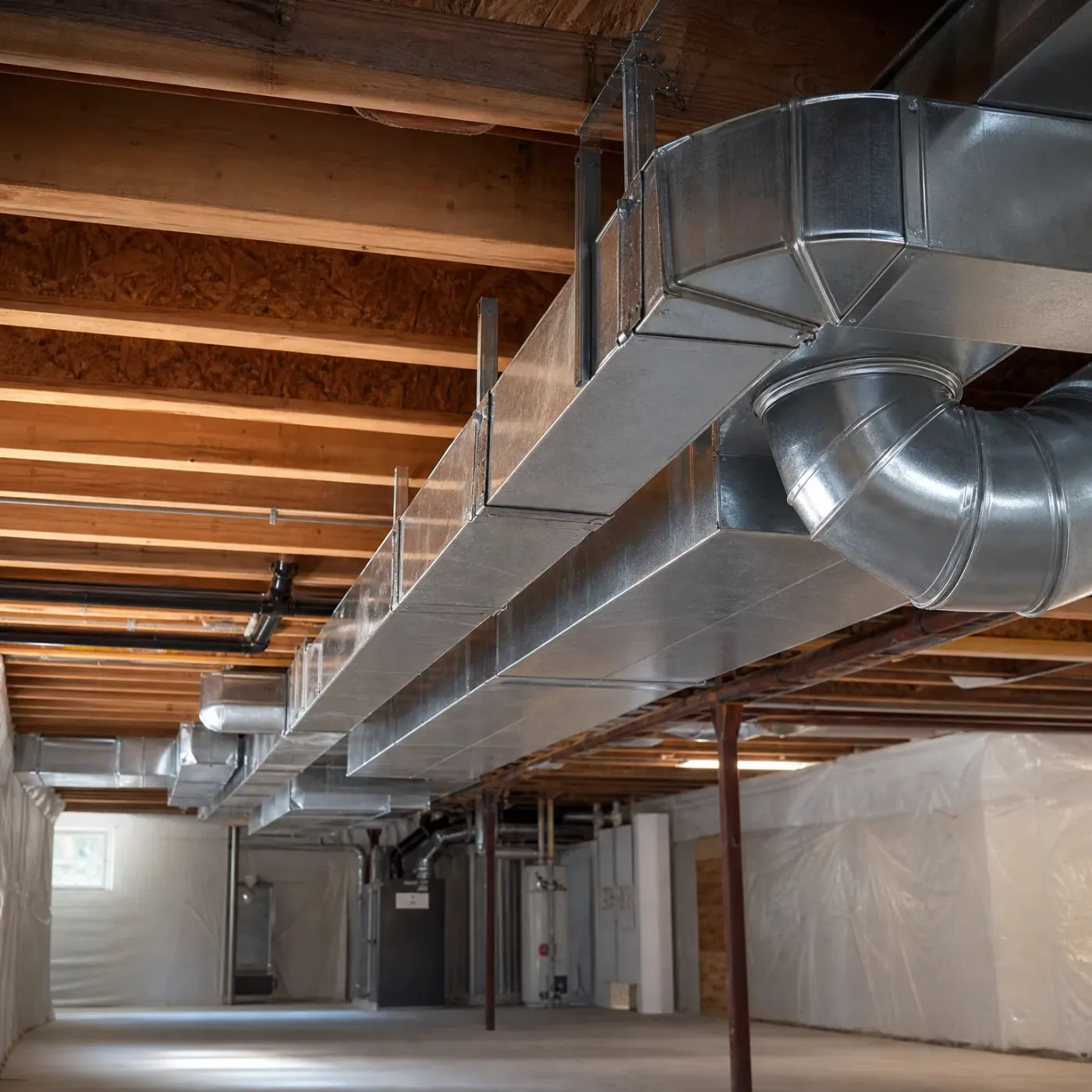
After you get your ductwork cleaning
Unfinished basement with galvanized sheet-metal trunk ductwork and round branch ducts suspended beneath wood floor joists, with support posts, plastic sheeting on the walls, and a furnace and water heater along the far wall.

Get matched with a duct system pro in Bexar County

Skip searching for someone who cleans ducts in Bexar County.

Get matched with a Bexar County pro who cleans ducts.

Skip the search

You're not committing to anything by asking.

A woman stands in the open front doorway of a single-story house with a dark hipped roof and light siding, while a man in a navy jacket and cap is seen from behind in the foreground on the paved walkway.

What it looks like in your house

A dusty duct system doesn't announce itself. It shows up as a thin film on the TV screen a few days after you wipe it, or a register cover that's gray again a week after cleaning it. Run your hand near a vent and check what's on your fingers. That's a fair read on what the air moving through your house all summer is carrying with it.

If what you're seeing is ordinary dust, you don't need to chase it with a duct cleaning. If it's heavier than that, or you've found mold or signs of pests in the runs, it's worth having someone look before you decide. Getting matched with a contractor who knows Bexar County duct systems means you describe it once and get an honest read on whether cleaning is the answer, instead of calling around town trying to find someone who'll tell you straight.

A living room with a cream sofa and knit throw beside a window, with a wooden coffee table in the foreground holding a round woven tray, a small bowl, and a speckled vase of green leafy branches.
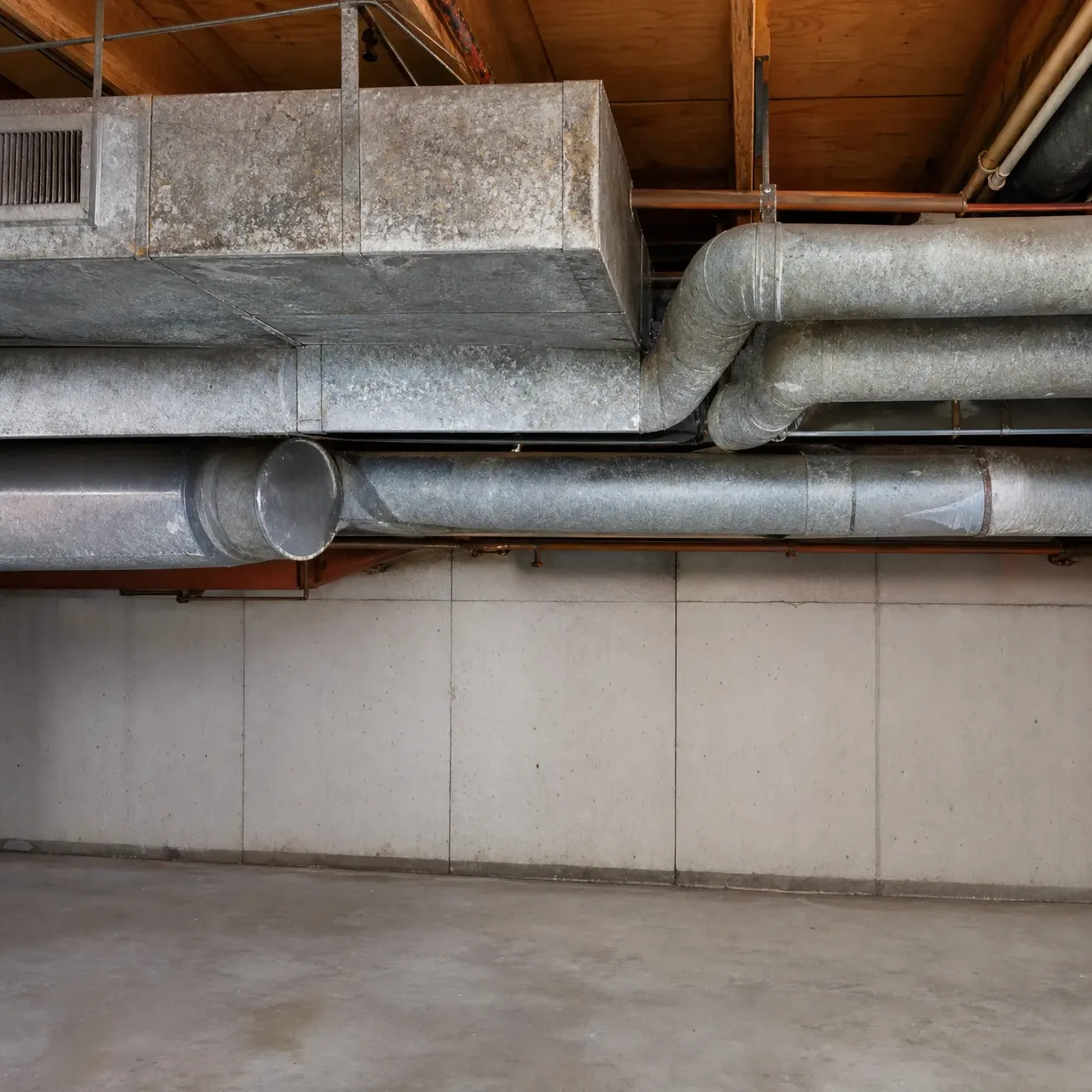
Unfinished basement with bare concrete floor and walls, showing galvanized sheet-metal HVAC ducts, pipes and recessed lights beneath a wood-joist ceiling.

Ducts holding up fine

Dust sits light on the metal and the runs look about the same from one joist to the next. No dark streaks, no buildup you can see without looking hard. Air moves through clean and reaches the room the way it should.

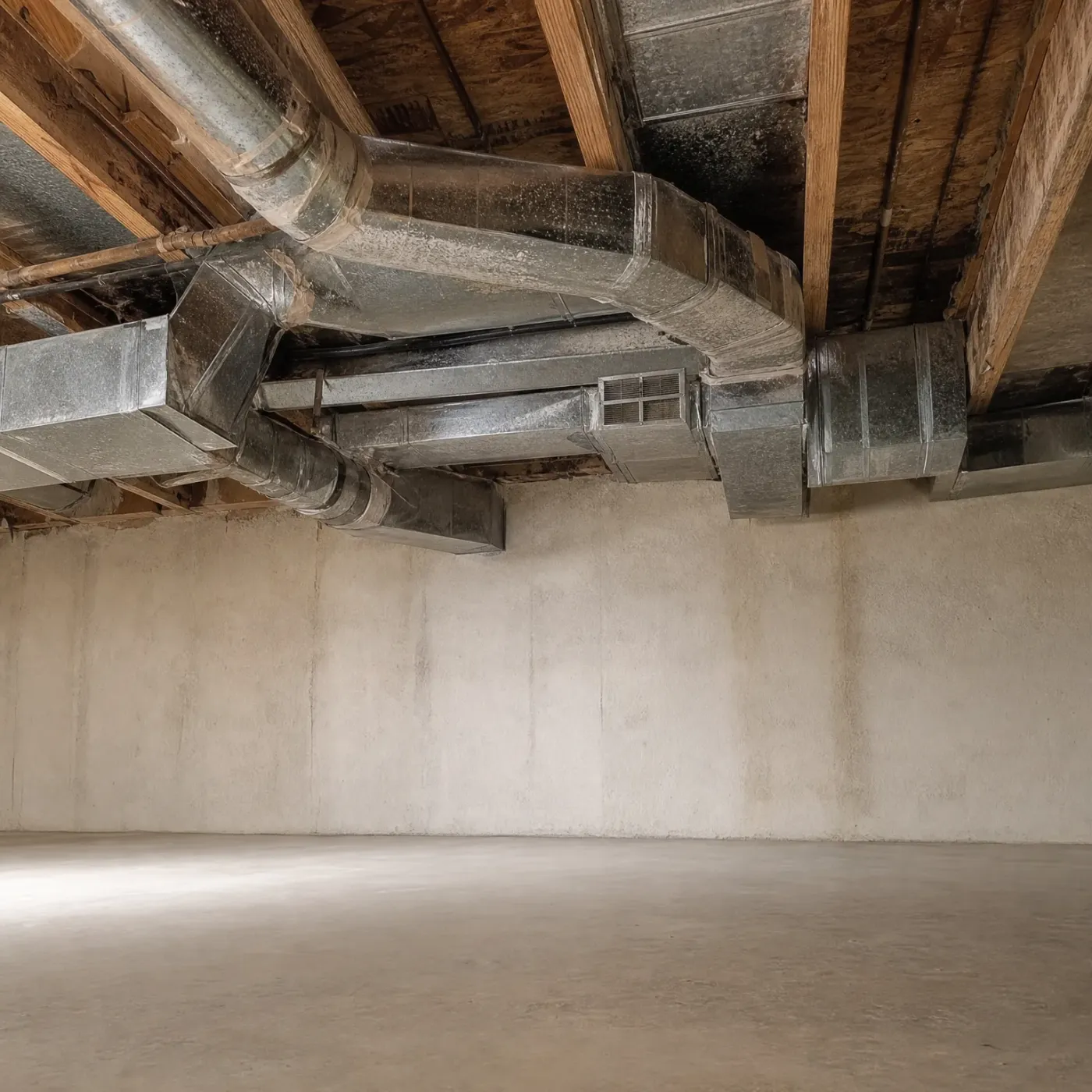
An empty basement room with bare concrete walls and floor, with galvanized sheet-metal HVAC ductwork and a vent grille running along the wooden joist ceiling.

Ducts past due

Dust has built into a dark film along the seams and hangs thick enough to see from across the basement. Years of air moving past it packed it onto the metal. That's a duct system that's earned a cleaning, not one you're guessing about.

A woman wrapped in a thick textured blanket sits on a sofa with an open book on her lap, beside a lit lamp and bookshelf, with a frost-patterned window behind her.
An older woman with grey-blonde hair in an updo and a beige turtleneck sweater smiles while looking to the side in a warmly lit kitchen, with a round loaf of bread on the counter in front of her and a dark window showing snow outside.

When cleaning fixes the problem

A duct system that's just dusty from years of normal use gets fixed by cleaning. Dust buildup, pet hair, debris from a renovation, a musty smell that isn't mold, all of that comes out when a technician runs the vacuum and air tools through the runs. Once it's done, the air moving through your vents is moving through clean metal again. If the reason you're calling is one of these, cleaning is the right call and it resolves the issue. You won't need to follow it with anything else unless the same problem comes back, which it shouldn't for years under normal use.

When cleaning isn't the fix

If the problem is a gap in a duct run, a disconnected section, or a leak at a joint, cleaning won't touch it. Those are sealing and repair work, not cleaning work, and a technician who finds them during a cleaning should tell you so rather than just running the job. Same with a moisture source feeding mold growth: clean the ducts and the mold comes back unless whatever's keeping them damp gets fixed first. And if the dust you're seeing is coming from inside the house, not the ducts themselves, cleaning the duct system won't change what's landing on your furniture.

Power here costs 12.38 cents per kilowatt-hour

At 12.38 cents per kilowatt-hour, running your AC to push air through dusty ducts all summer doesn't hit your bill hard the way it might somewhere else. That's not a reason to skip a cleaning that's actually needed, like mold or pests, but it does mean a mildly dusty system isn't costing you much just by sitting there.

EIA-861 2025

So, Is It Worth It

  • Most homes around San Antonio don't need duct cleaning unless there's a specific reason like mold, pests, or visible dust.
  • Finding a contractor who does this work right means checking licenses, reading reviews, and calling a few companies to compare what they actually offer.
  • A technician can look at your ducts and tell you in minutes whether cleaning will fix what you're dealing with.
  • Half the houses in Bexar County are old enough that their duct systems may have gaps or loose joints worth a look regardless of dust.
  • Skipping the search and the back and forth with multiple companies gets you to that answer faster.

The answer for most houses around San Antonio is no, not on its own, not without a reason. Mold you can see, a pest problem in the runs, or dust heavy enough to see on the furniture, those are reasons. A duct system that's just doing its job quietly for another year is not. Half the homes in Bexar County are old enough that a look still makes sense, even if cleaning turns out to be the wrong fix for what's going on in yours. That's the part that's hard to know from the house itself. A technician who's opened up ducts in this area for years can look at yours and tell you within minutes whether you're dealing with normal dust, a sealing problem, or something that needs more than a vacuum and compressed air. Getting to that answer on your own means finding a contractor who actually does this work, checking that they're licensed, reading through reviews, then calling around to a few companies to compare what each one is offering and for what. That's hours most people don't have for a question that might end with "your ducts are fine." Skipping that search and getting matched with someone who already does this work means you get the answer without the legwork. Whether the fix is cleaning, a repair, or nothing at all, you'll know what you're dealing with instead of guessing at it from a vent cover.

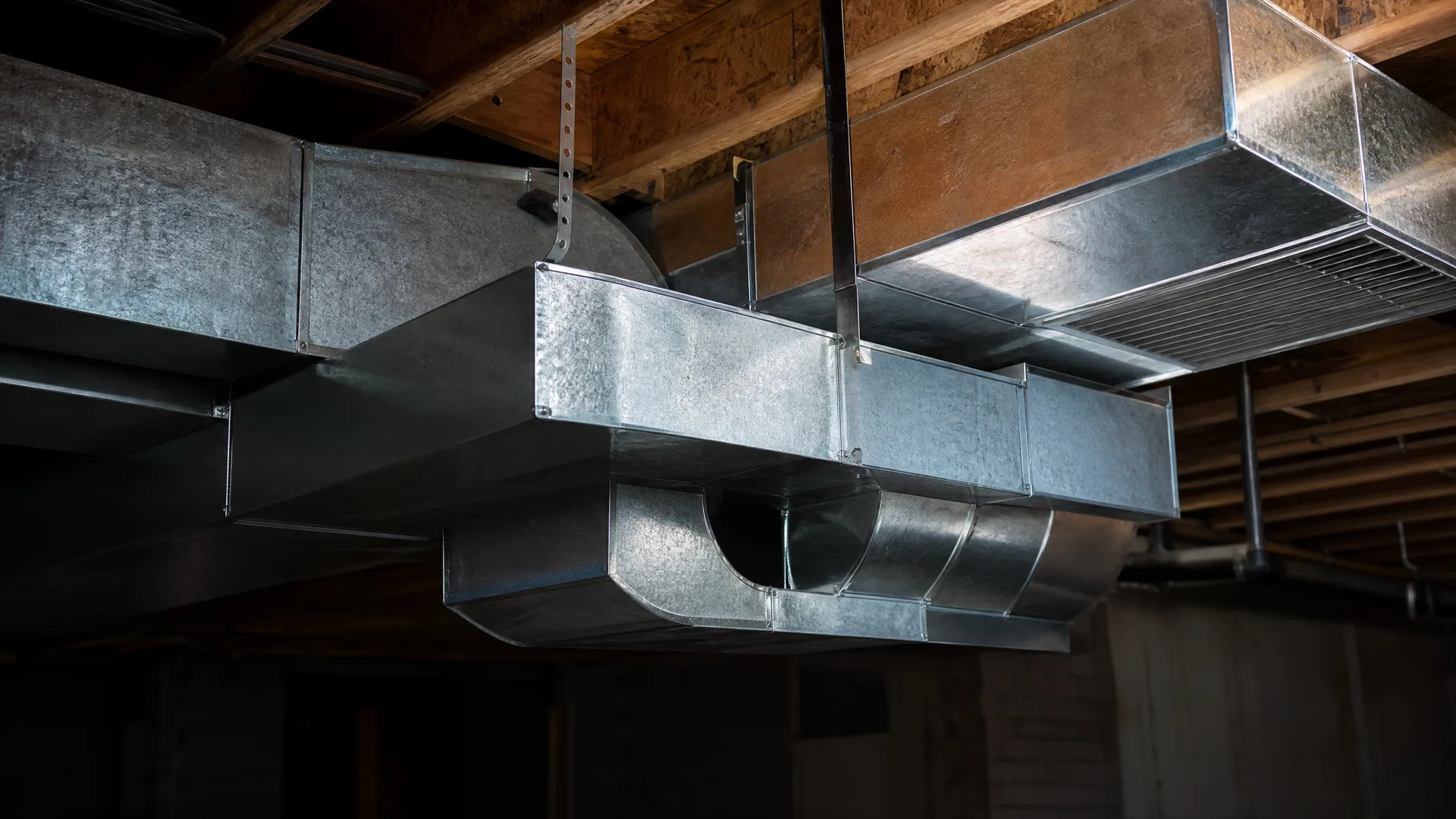
Galvanized sheet metal HVAC ductwork with rectangular trunks and round takeoffs suspended from wooden floor joists in an unfinished basement ceiling.

Find a duct system cleaning pro in Bexar County

Duct and vent cleaningDucts or ventsBexar County, TX
Step 1 of 2

What ZIP code is the job in?