
When the ducts are doing fine
If your vents blow steady air and your energy bills haven't crept up, the system behind the wall is likely clean enough. Dust on a grille wipes off easy and doesn't mean the ducts themselves need attention.
Your request goes to a Harris County pro who takes ductwork jobs.
Find a duct system proIt depends on what's going on in your ducts, but for most homes around Houston, it's worth checking rather than scheduling on a fixed timeline. Humidity here stays high most of the year, and that moisture lets dust and debris in the ductwork turn into something worse, including mold growth, if a duct has a leak or sits somewhere damp. If your system runs almost constantly through the summer, more air and more dust pass through those ducts than in a drier, milder climate. Signs that cleaning would help: dust coming out of the vents when the system kicks on, a musty smell when the AC runs, or visible growth inside the first foot or two of ductwork near a return. If none of that is happening, cleaning is cosmetic, not necessary. A contractor who inspects your ducts in person can tell you which situation you're in before anything gets scheduled.

If your vents blow steady air and your energy bills haven't crept up, the system behind the wall is likely clean enough. Dust on a grille wipes off easy and doesn't mean the ducts themselves need attention.

A musty smell when the AC kicks on, visible dust kicked out of the vents, or rooms that stay stuffy despite the system running all summer point to buildup inside. That's worth having a contractor inspect before it affects your air or your equipment.
Half the homes here were built by 1988
Half the homes in Harris County were built in 1988 or earlier. An older duct system has had more years to collect dust and more chances for a loose seam or a gap in the insulation.
Heat runs November through February
Cooling runs April through October here, about seven months. That's seven months of near-constant airflow pushing whatever is in the ducts through every room in the house.
Cooling runs April through October
Heat only runs November through February, about four months, and in most homes here that heat comes from electric equipment pushing air through the same ducts the AC uses.
ACS 2020-2024 · NOAA nClimDiv 1991-2020

It's late April, late afternoon, and the light through the window catches it: a gray film across the ceiling vent grille in the living room, thicker at the edges where the louvers meet the ceiling. You run a finger along the coffee table underneath and it comes back dusty, same as yesterday, same as the day before, even though you wiped it down Sunday. The AC kicks on and you can hear it push air, and for a second you watch a few flecks drift down and settle on the arm of the couch. Houston's already warming up, and this unit is about to run every day for months. You make a note to look at the vent later, then get pulled into something else and don't.

This is what a clean system looks like behind the wall. The metal is intact, joints are tight, and air moves through without picking up extra dust along the way. A system like this just needs the filter changed on schedule to stay this way.
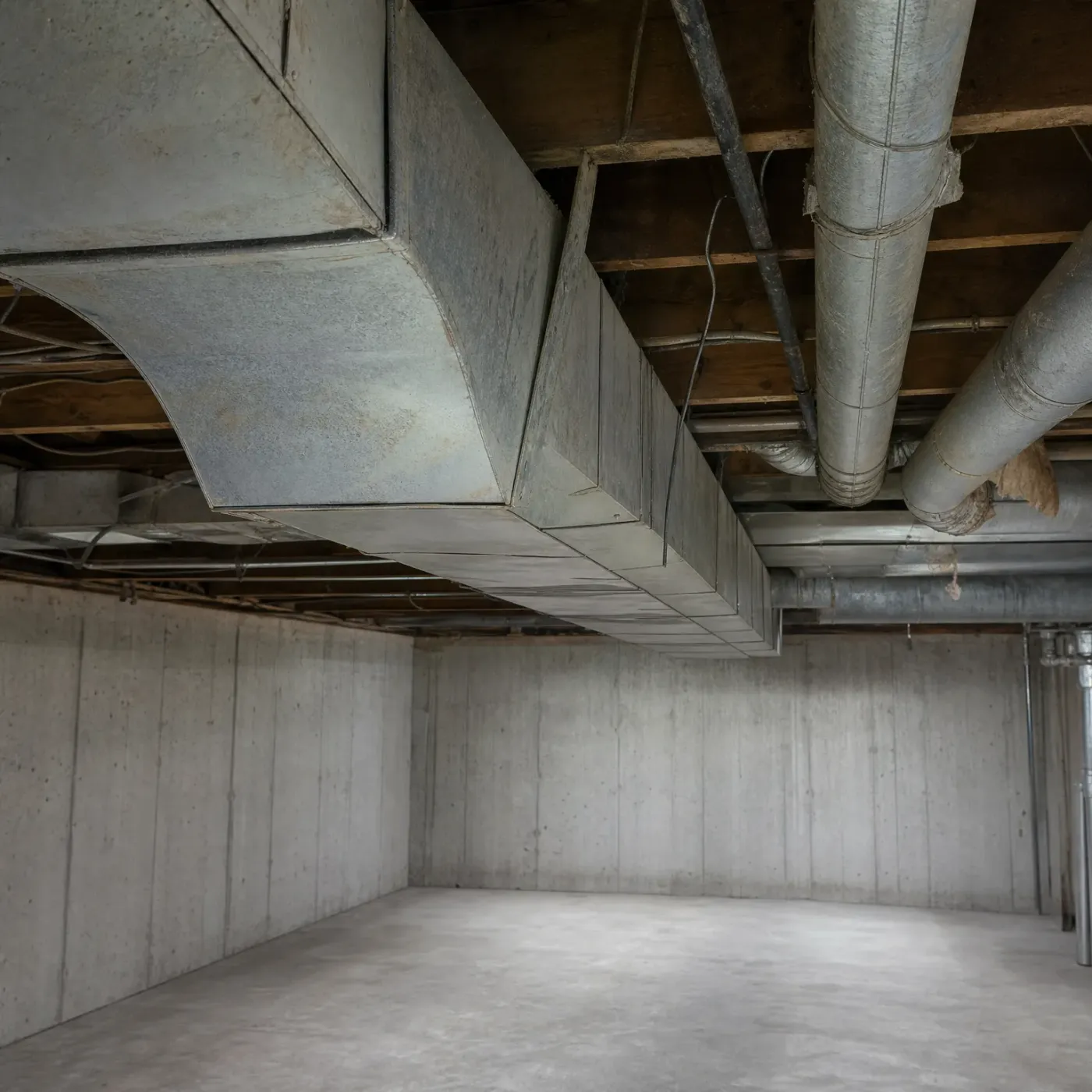
Runs like this collect dust and debris at every joint and turn, and Houston's humidity gives it something to cling to. A gap in a seam here lets conditioned air leak into the joists instead of your rooms, and that's something worth having a contractor look at.
Dust that comes back fast after you wipe it, within a day or two, points at the ducts instead of normal household dust. A musty smell when the air kicks on, especially after the system's been off for a while, usually means moisture got into the ductwork somewhere. One room that never cools like the rest, even with the thermostat set the same as everywhere else, can mean a blockage or a gap along the line feeding it. If anyone in the house has started sneezing more indoors than out, or a window AC unit nearby seems to need filter changes more often than it used to, the air moving through your vents is worth a look. None of this means damage yet. It means the ducts have something in them that wasn't there before.




Send it once and finding someone is no longer on you.
No charge to send it. You decide if you hire them.
A contractor doesn't just stick a hose in the nearest vent. The job starts with a camera run through the ductwork, so whoever's doing the work can see where the buildup actually is before anything gets switched on. From there, the whole system gets put under negative pressure, usually with a vacuum collection unit hooked up at the main trunk line, so loosened debris has somewhere to go instead of settling back down the line. While that vacuum is pulling, agitation tools work the inside walls of the ducts themselves, a rotating brush or a compressed air whip, knocking loose what's stuck to the metal. Both sides of the system get this treatment, supply and return, since air moves through them differently and debris doesn't collect the same way in each. The registers and grilles throughout the house come off their own separate cleaning, because that's where a layer of dust builds up that the vacuum working inside the duct never touches. A contractor who knows what they're doing will also check the coil and the blower housing while they're in there. Anything that gets past the filter tends to land on one of those two first, and if there's buildup on the coil, that's worth knowing about whether or not it's what brought the cleaning up in the first place.
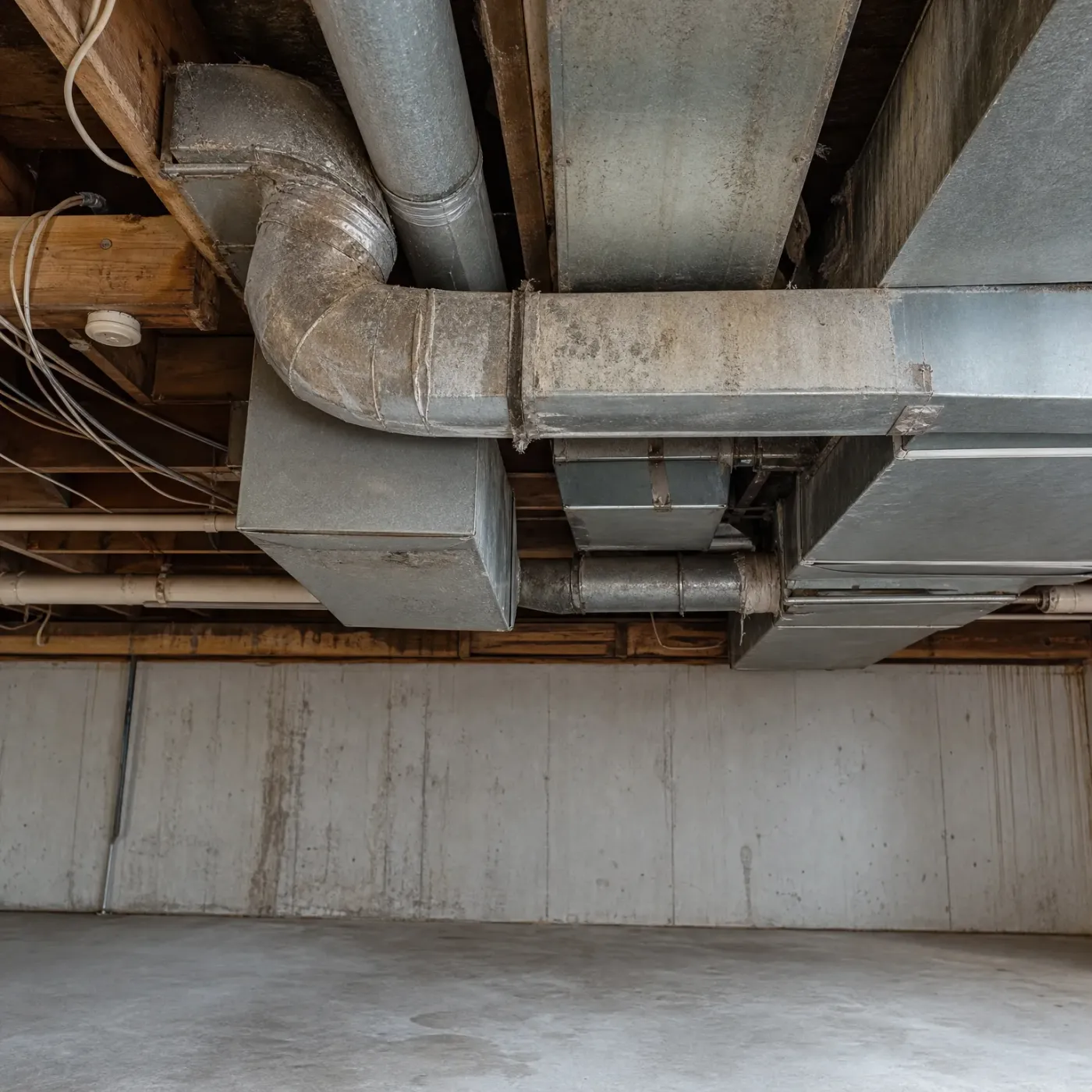
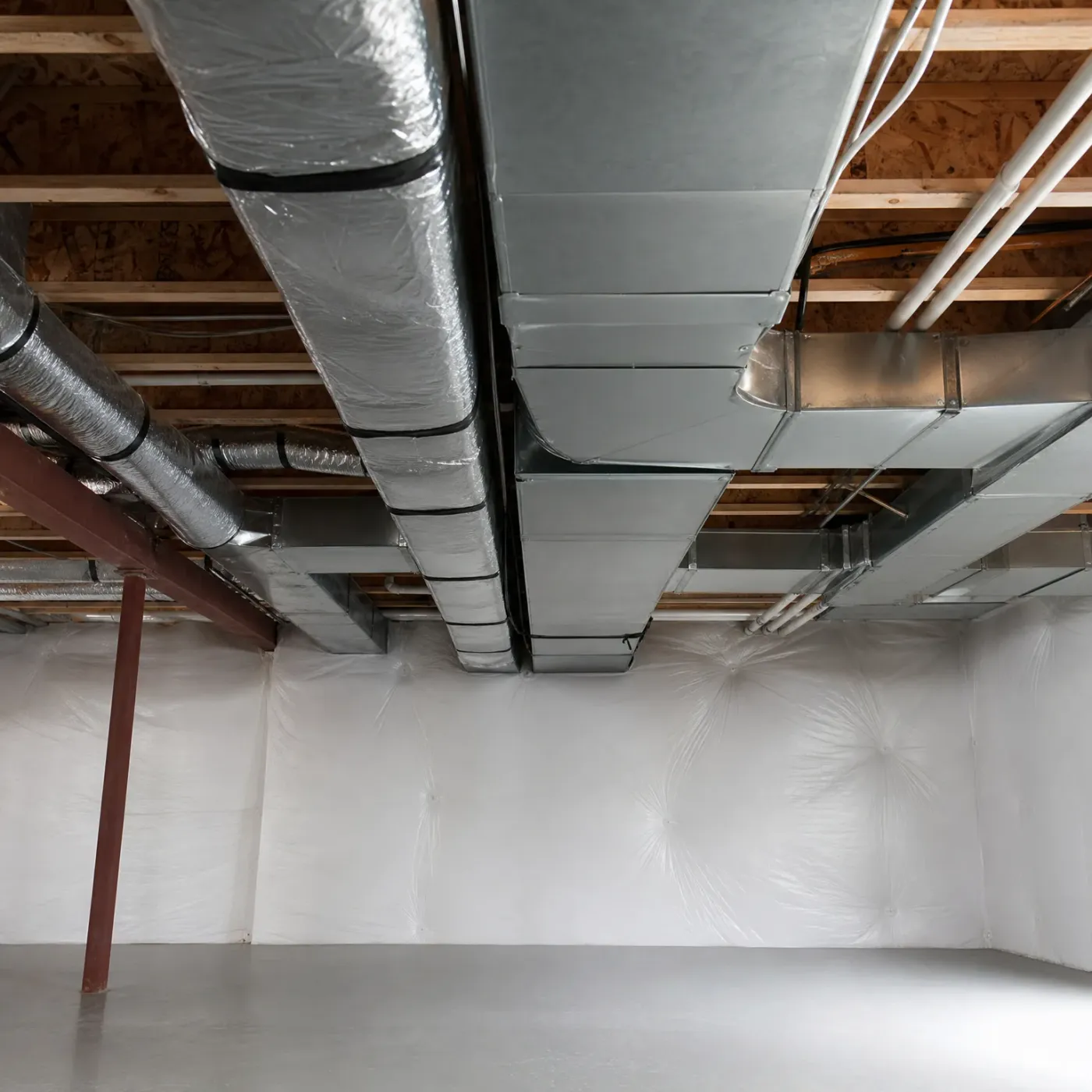
Houston's air stays humid close to nine months of the year, and HVAC ductwork run through attics here can sit well above 100 degrees in summer, which is exactly the kind of damp, warm environment mold needs to grow.
A camera inspection before cleaning shows whether that growth is actually there. If it isn't, you've confirmed the system's clean and saved yourself a service you didn't need.
At 16.78 cents per kilowatt-hour, every extra degree your system has to push air against clogged ducts shows up on the bill. A blocked or dusty duct run makes the blower work harder to move the same air through your house, and with cooling running most of the year here, that adds up fast.
EIA-861 2025

For most homes around Houston, a dirty duct system doesn't announce itself with a failure. It shows up as dust that resettles fast, a musty smell when the air kicks on, or a bill that's crept up without an obvious reason. None of that tells you for certain what's built up behind the wall. A camera inspection does, and that's the honest first step, not a guess made from the living room.
If you've gone through what's above and you're still not sure where your own ducts stand, that's the normal spot to be in. A contractor matched to your home can look at your actual system, built when it was built, run the way it's run, and tell you what's really in there. You won't be the one tracking down who does this kind of work or whether they're free this week. Send the form and that part is off your plate. The contractor reaches out to you from there.



Find a duct system cleaning pro in Harris County
Send the form and finding a duct cleaner is handled.

