Heat Pump Repair in Dallas, TX
Homes here need heat from November through March and cooling from May through October. If your system quits, tell us what it's doing and a licensed contractor who covers Dallas County will get in touch.
Tell us about the job
It takes about a minute.
Eleven months of work with almost no break
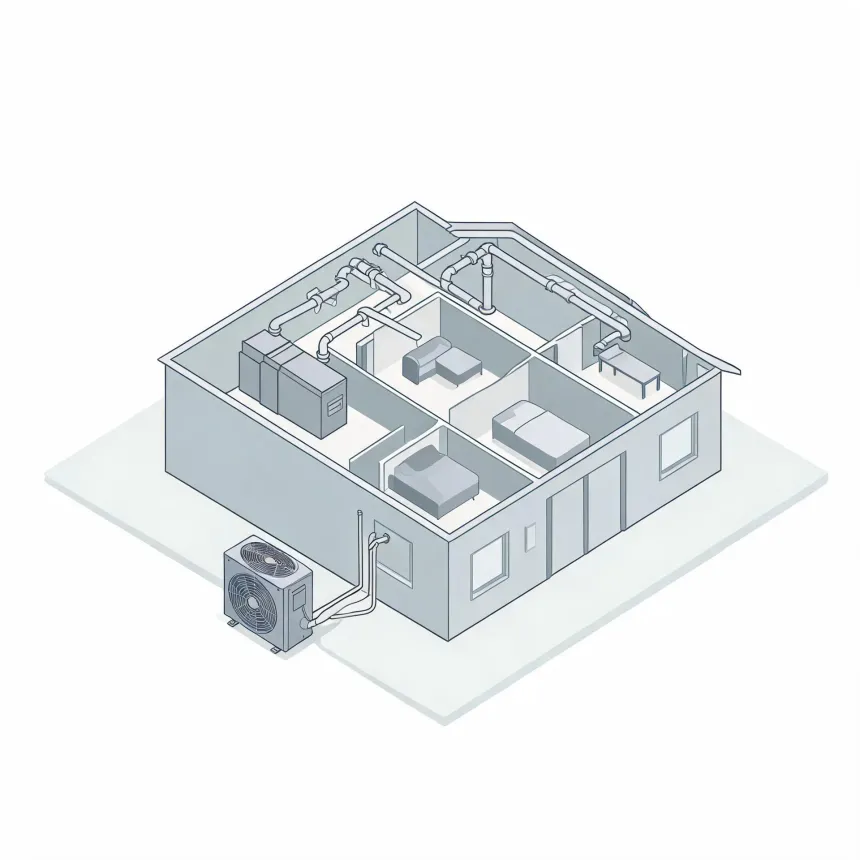
Your heat pump runs nearly the whole year in Dallas County, heat from November through March, cooling from May through October. It shifts back and forth between the two jobs with barely a month off, and each switch puts a load on the reversing valve that decides which way the system runs.
Summer afternoons averaging 94°F push the compressor hard for six months straight. Winter nights averaging 38°F keep it cycling on the heating side too, and a heat pump works harder to pull warmth from cold outside air than a furnace does burning fuel. When the compressor or the reversing valve starts to fail, you will notice the air coming from the vents is not as warm or as cool as it should be, or the system runs without getting the house to temperature. Dallas County has seen 145 damaging wind events over the past ten years, and a storm that knocks out power can leave the outdoor unit sitting idle until it comes back on.
- 5 months
- November through March, your system heats
- 6 months
- May through October, it cools
- 38°F
- the average winter night it heats against
- 94°F
- the average summer afternoon it cools against
NOAA nClimDiv, 1991–2020 normals
Texas requires HVAC contractors to hold a state license.
The Texas Department of Licensing and Regulation tests contractors before it licenses them and keeps a record of who holds one. That license belongs to the contractor, not to any single job, so the same license that qualifies someone to install a system is what qualifies them to repair yours.
A heat pump repair usually means opening the refrigerant side of the system, and federal law requires whoever does that to hold EPA Section 608 certification, no matter what state they work in. In Texas, that certification sits alongside the state license rather than in place of it, so the person working on your heat pump is answerable both to the state that licensed them and to the federal rule covering refrigerant.
Source: Texas Department of Licensing and Regulation
- Why is my heat pump blowing cold air?
- In heating mode, a heat pump moves warm air through the vents at a lower temperature than a furnace would, so air that isn't actually cold can still feel cool against your skin. If the air is truly cold with no warmth at all, check that the thermostat is set to heat and not fan only. A frozen outdoor unit, a low refrigerant charge, or a failed reversing valve will also stop the system from delivering real heat, and any of those needs a contractor to look at it.
- Why is there ice on my heat pump?
- Some frost during a defrost cycle in winter is normal, especially on cold nights when temperatures drop toward that 38°F average low. The unit should clear itself within an hour or so as it switches into defrost mode automatically. If ice is thick, covers the coil, or never melts off, something is keeping it from defrosting properly, like a low refrigerant charge, a bad defrost sensor, or a fan that isn't moving air across the coil. Running the system with heavy ice built up can damage the compressor, so it's worth shutting it off and having a contractor check it.
- Why is my heat pump running but not cooling?
- If the outdoor unit and indoor fan are both running but the air coming out isn't cold, the most common cause is low refrigerant from a leak somewhere in the line set or coil. A dirty outdoor coil can also block enough airflow that the system can't reject heat properly, especially after a summer of running through afternoons near 94°F. A stuck reversing valve is another cause, since it can leave the system in heating mode even though the thermostat is calling for cooling. None of these are things to diagnose by ear, so this is a call for a licensed contractor.